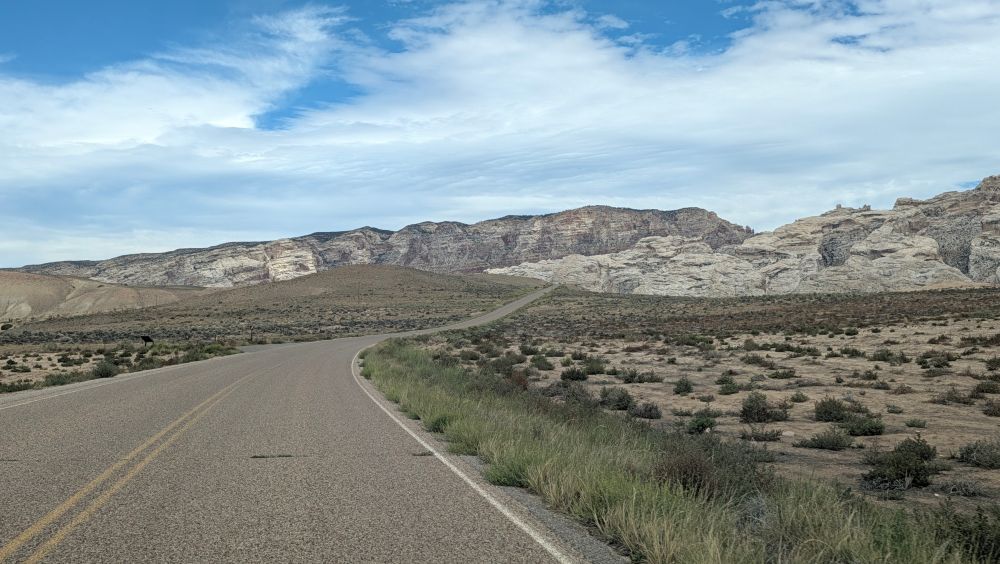
When people think of National Parks in Utah and Colorado, iconic spots like Arches or Rocky Mountain usually steal the spotlight. But tucked away in the northwest corner of Colorado and northeast corner of Utah lies Dinosaur National Monument—a massive, rugged landscape carved by rivers, rich in ancient rock art, and home to one of the most incredible fossil deposits on Earth.
This trip had actually been sitting on our list since 2022. We’d planned to visit that year, but I came down with Covid a few weeks before departure, and wasn’t recovered enough to trust myself on the trails — so we canceled. Looking back, it worked out: between the hikes and walks over the three days, this trip leaned on lungs and legs more than we expected, and I don’t think 2022 me would have kept up. We also knew we only wanted to do this park in summer or early fall, which meant waiting for the right window to get out there.
By the time this trip actually came together, it was also our third long weekend of the season involving significant driving — after Denver to Dodge City, Kansas, and a trip up to Leadville. So before committing to another road trip, I looked into flying into Provo or Salt Lake City instead, since both have frequent, reasonably priced /flights out of Denver. But once you factor in a rental car and still driving 3 hours from either airport, it didn’t actually save much time over just driving the whole way ourselves.
Trip Overview & Quick Stats
- Number Days: 4
- Total Distance Driven: 1,114 miles
- Basecamp: SpringHill Suites – Vernal, UT
- Total Expenses: $1,053.69
- Total Walking Steps: 47,645
The 4-Day Itinerary at a Glance
Trip Cost Breakdown
| Category | Cost / Details |
| Park Admission | $25 (Dinosaur National Monument 7-Day Pass) |
| Gas Expenses | $186.37 ($43.56 + $24.90 + $15.89 + $43.30 + $58.72) |
| Museum Fees | $20 (Utah Field House, $10/person) · Museum of Uintah County (Free) |
| Trail Donations | Red Fleet State Park (Donation) · McConkie Ranch (Donation) |
| Groceries | ~$25.20 (2 days of trail lunches from Smith’s) |
| Selected Dining/Drinks | $207.12 Swain Brothers ($98.03) · Anica Forma ($62.70) · Dinosaur Brew House ($36.23) · Taco Bell ($10.16) |
| Hotel | 3 nights $590 |
| Steps by Day | Day 1 (Vernal): 7,815 Day 2 (Utah Side): 18,375 Day 3 (North Side): 16,808 Day 4 (Colorado side): 4,647 |
Day 1: Saturday – Arrival & Vernal Warm-Up
We hit the road from Colorado around 7:00 AM, making the scenic drive west and arriving in Vernal right around 1:00 PM. Vernal makes the ideal basecamp for this trip: it sits just 20 minutes from the Utah entrance of the monument and offers plenty of lodging, dining, and grocery options.
Somewhere on the drive into Vernal, we started a game of “spot the dinosaur” — think Punch Buggy, minus the punching, since Vernal has dinosaur statues, signs, and decor scattered everywhere once you’re close to town. I won, by a lot, which Justin insists is only because I was driving and had more windshield time to look. I’m calling it skill.
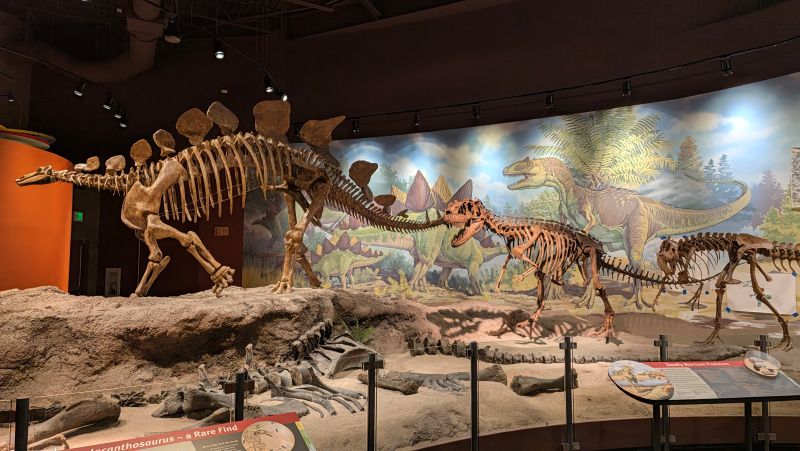
Utah Field House of Natural History State Park Museum: Located right in the heart of town ($10 per person). A great first stop with life-sized dinosaur reconstructions and clean, interactive fossil exhibits.
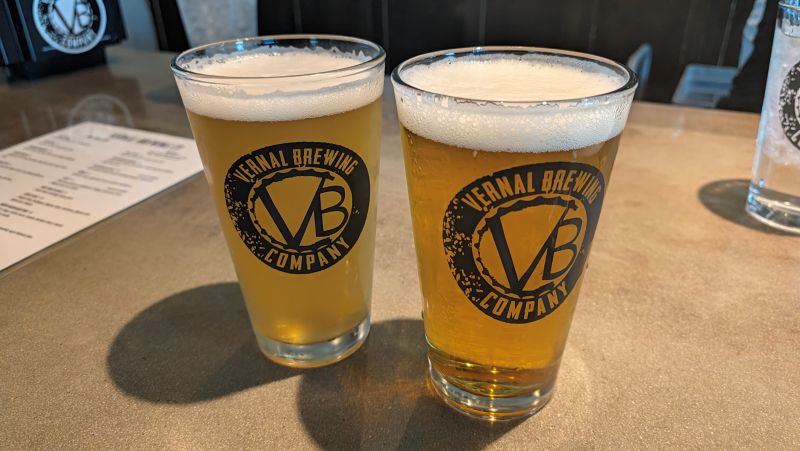
Vernal Brewing Co.: Grabbed a quick post-drive lunch and local brew.
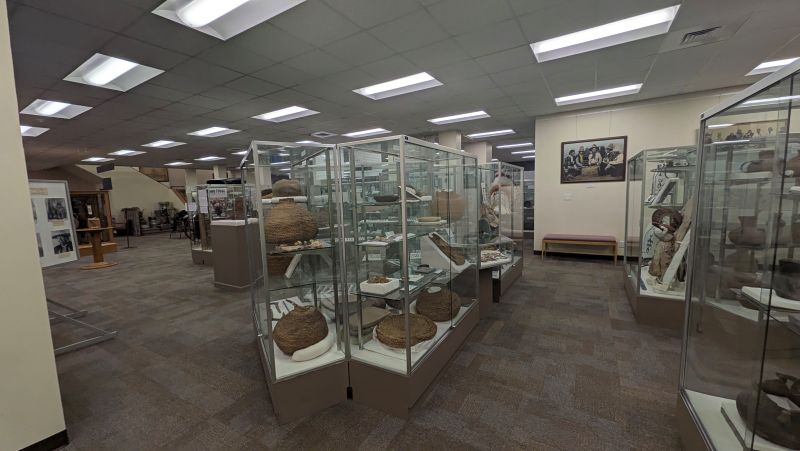
Museum of Uintah County: A free local museum covering regional pioneer history, local geology, and native artifacts.
Day 2: Sunday – Fossils, Canyons & Cub Creek Drive
Our first full day was dedicated to the Utah side of Dinosaur National Monument, home to the main fossil exhibits and scenic canyon hikes.
Morning: The Quarry & Fossil Discovery Trail
We arrived at the Quarry Entrance around 8:15 AM to beat the crowds and heat. A quick shuttle brought us up to the iconic Quarry Exhibit Hall, where over 1,500 dinosaur bones are preserved in a soaring rock wall. For $1, grab the informational brochure at the desk so you can identify which bones belong to Allosaurus, Camarasaurus, and Diplodocus.
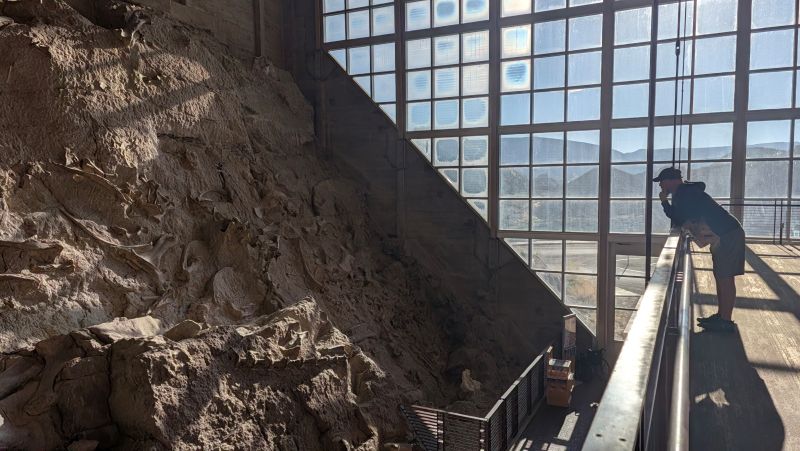
After about 45 minutes taking in the quarry wall, we hiked back down to the visitor center via the Fossil Discovery Trail. It’s an easy downhill walk through colorful, tilted rock strata, with short spur trails leading to embedded fossil footprints and petroglyphs.
Afternoon: Cub Creek Road & Box Canyon
Next, we put the camera on the car and set off down Cub Creek Road (Tilted Rocks Scenic Drive). We drove straight to the end at the historic Josie Morris Cabin. While mountain sheep blocked our path to one trail, we completed the short Box Canyon Trail (0.7 miles round trip), surrounded by towering vertical rock faces.
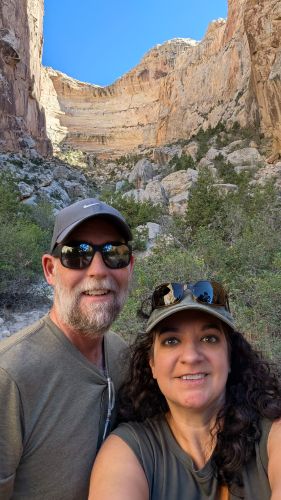
On the return drive, we made pitstops to scramble up to the famous Lizard Petroglyphs carved high into the sandstone faces, along with roadside rock art panels.
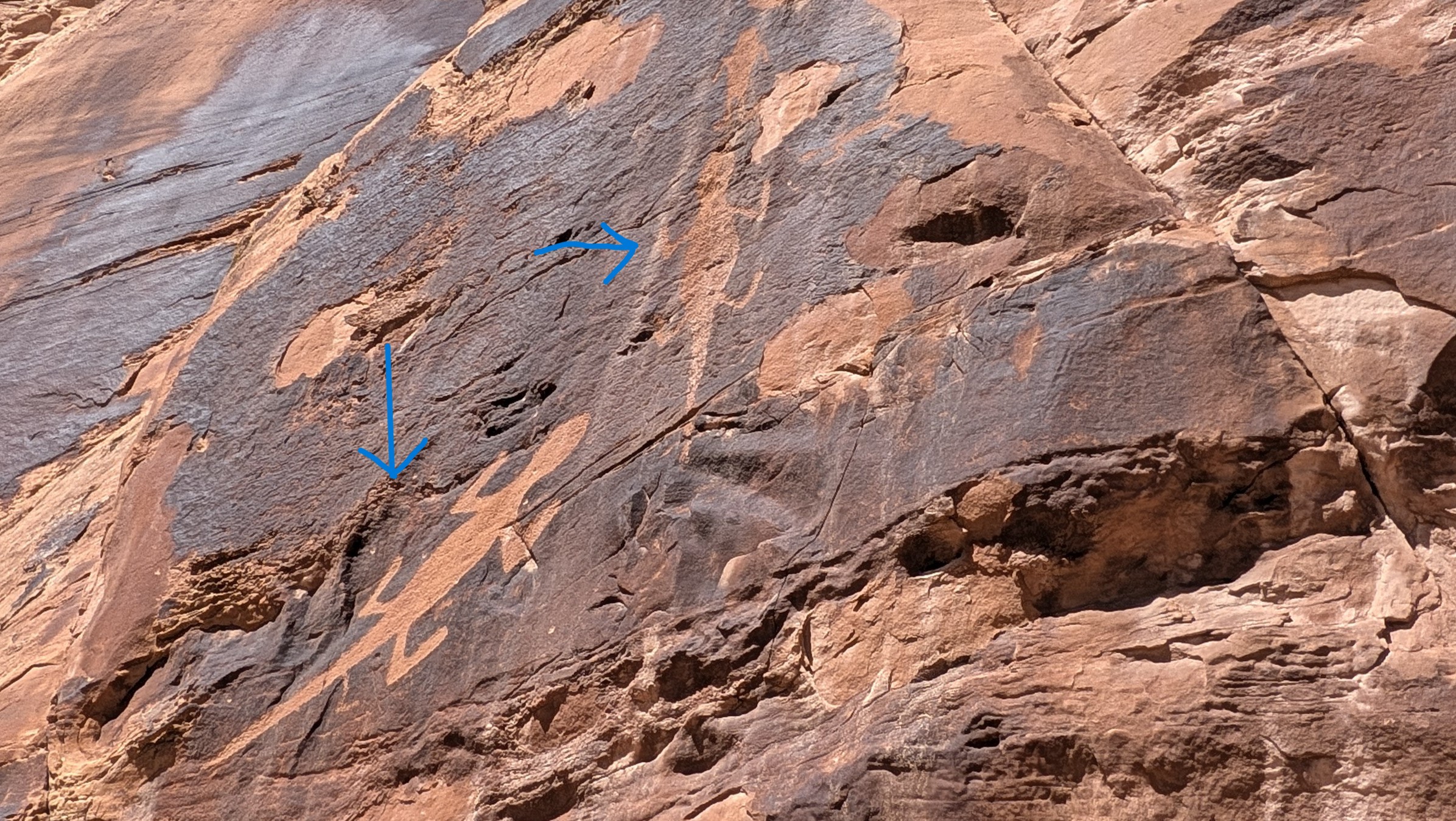
You can read more details of the Utah side of the park AND watch a video of the Cub Creek Drive here.
Late Afternoon Excursion: Red Fleet State Park
We left the monument around 1 PM and headed 30 minutes north to Red Fleet State Park to tackle the 1.8-mile hike out to real Dilophosaurus trackways embedded in the lakebed sandstone.
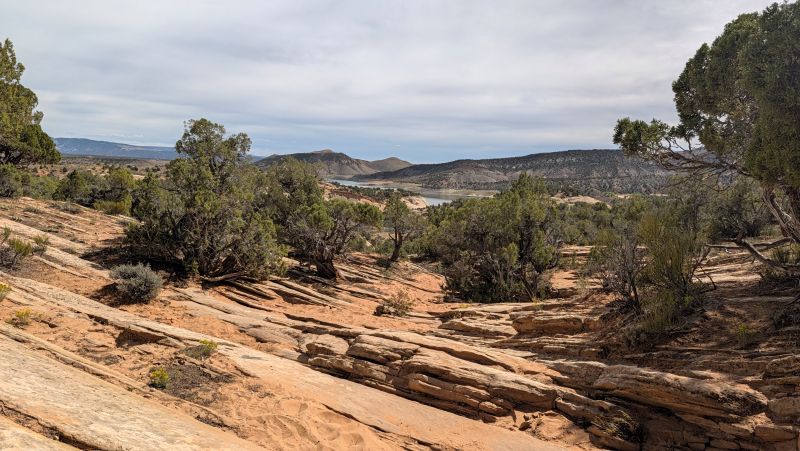
Day 3: Monday – The North Side Adventure & McConkie Ranch
Monday was our “big loop” drive. A few days before our trip, we saw photos of the dramatic northern canyon entrance and decided to make the trek out to the Gates of Lodore, even though it meant almost 5 hours of driving round-trip.
Google AI Myth vs. Dirt Road Reality
Note for drivers: Some old forum posts (and Google AI search summaries) warn of a terrifying 18% grade dirt road to get to the northern district. Rest assured—the road was fully paved years ago (holding a mild 14% grade over a brief section) and is completely accessible for standard passenger cars in dry weather!
Morning: Gates of Lodore & Vermillion Falls
We took the scenic loop north through Maybell, CO to the Gates of Lodore. This remote section of the park is where the Green River cuts directly through 500-million to 1-billion-year-old rock formations. We walked the canyon overlook trail and spent time soaking in the silence.
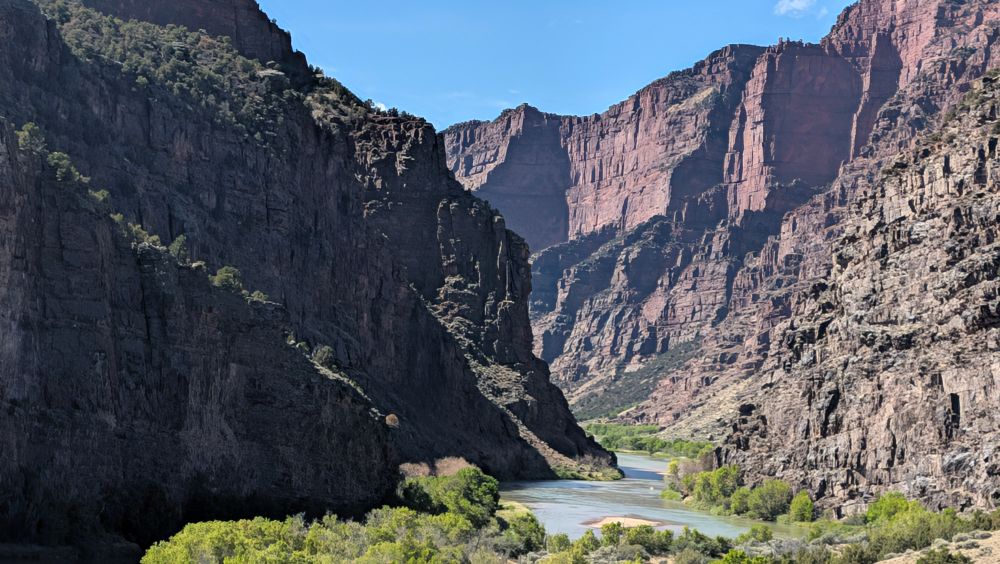
On the return drive, we made a quick side trip down a rough dirt road to Vermillion Falls, enjoyed a car picnic at the local wildlife sanctuary, and passed through the stunning Ashley National Forest landscape.
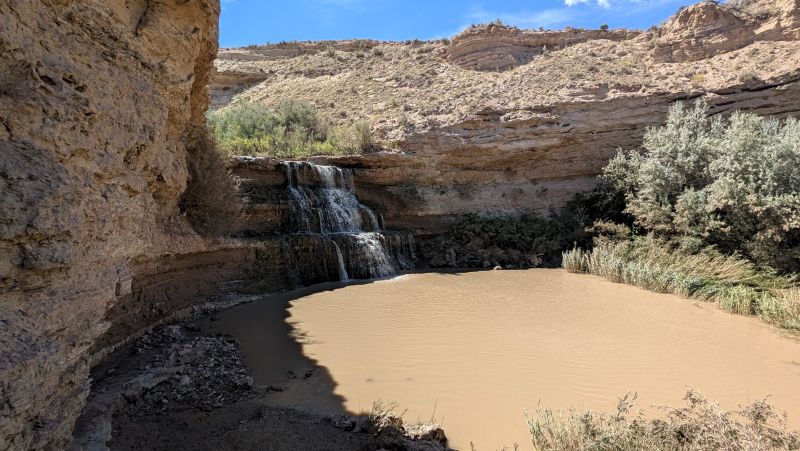
You can read more AND watch a video of the north side drive here.
Late Afternoon: McConkie Ranch Petroglyphs
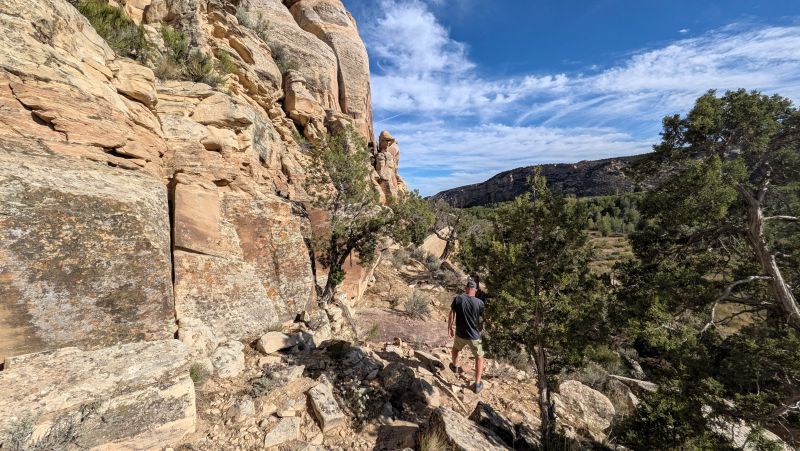
Before heading back into Vernal for dinner at Anica Forma, we made a late afternoon stop at McConkie Ranch, located on private land just 10 miles north of town. We hiked the Three Kings Trail, which features some of the best-preserved, most intricate Fremont culture petroglyphs in the Southwest.
Day 4: Tuesday – Colorado Side Canyons & Return to Denver
Before heading back toward Denver, we drove out to the Colorado Side of Dinosaur National Monument.
Unlike the fossil-heavy Utah side, the Colorado portion is all about grand scale and deep canyon overlooks. We drove the 31-mile Harpers Corner Scenic Drive all the way to the end, stopping at pullouts onn tne right hand side, like the Echo Park Overlook for panoramic views of the Green and Yampa Rivers carving through the canyon floors below. Due to time constrints, we did not do the hike at the end of Harpers Corner Drive.
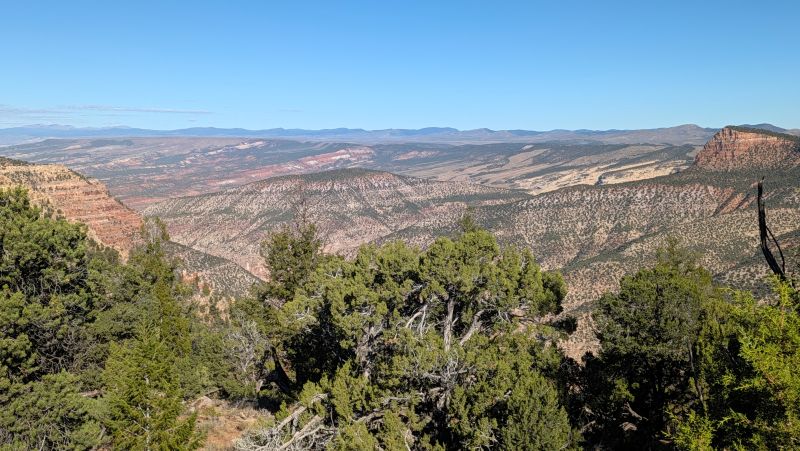
You can read about AND watch our drive of the Colorado side of Dinosaur National Momumnet on Harpers Corner Drive here.
The Drive Home
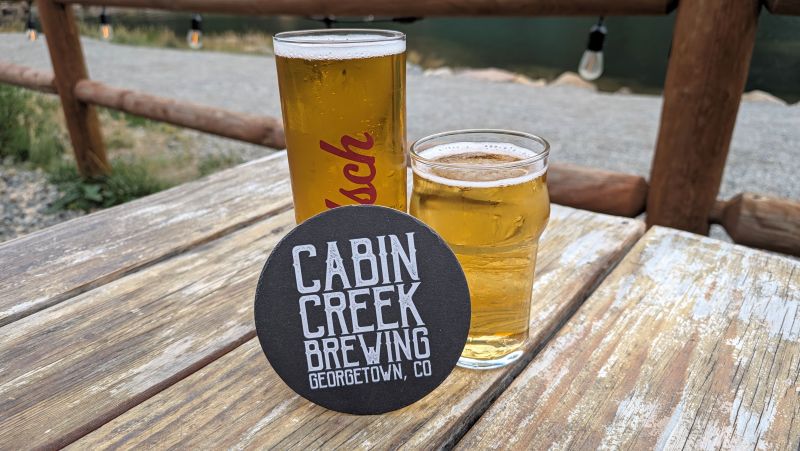
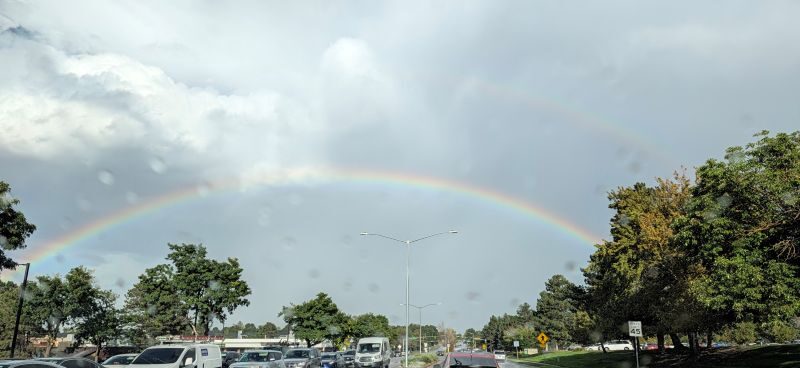
With a long drive back ahead of us, we began our return trip down US-40, making a pitstop for a quick beer at Cabin Creek Brewing in Georgetown, CO before tackling Denver traffic and catching a massive double rainbow right as we reached home.
Reading the Land: A Trip-Long Geology Lesson
One thing that shaped this trip more than we expected was how often the landscape itself tried to teach us something — and how many times the same idea showed up in different forms along the way.
Tucked away on the second floor of the Field House was a poster created by the Utah Friends of Palentology that ended up shaping the whole trip more than we expected: a full geologic timeline cross-referencing Utah’s rock formations with which dinosaurs lived in each one. Spending a few minutes with it gave us an actual mental map to work from — so later, standing at the quarry wall or looking at tilted rock along Cub Creek Road, we had some sense of what era we were looking at instead of just admiring pretty layers. (Small aside: I loved this thing and wanted it bigger — my eyes aren’t what they used to be, and a diagram this useful deserves a spot where you don’t have to squint.)
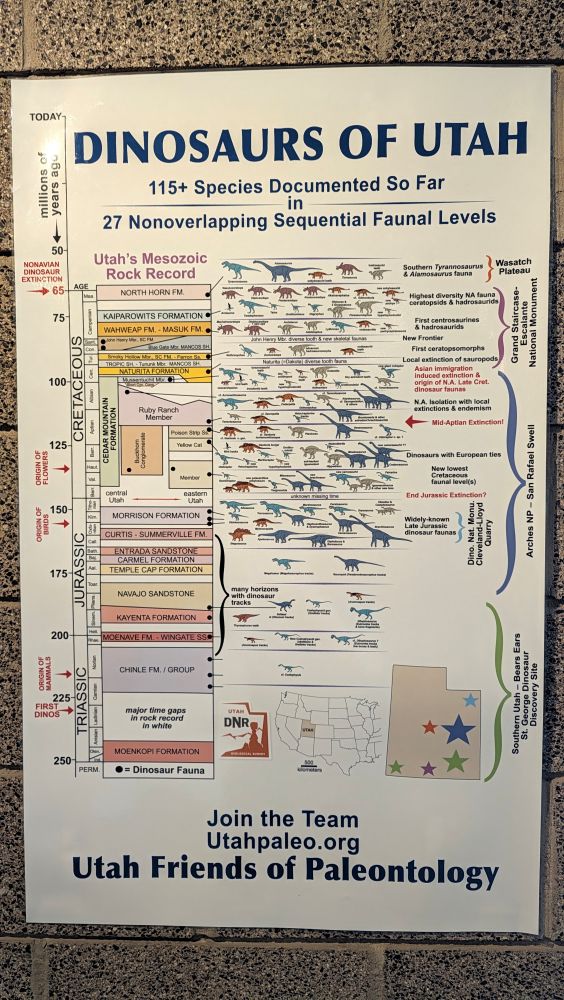
From there, the same basic idea kept resurfacing. The below image at the mueusem, the NPS brochure for the monument has a version of that rock-and-time chart right on the cover. The highway signs driving north out of Vernal have their own take on it. And once we were actually inside the monument, it stopped being a diagram and became the landscape itself — the tilted, striped rock along Cub Creek Road, the sheer walls of Split Mountain, the deep red walls of the Gates of Lodore cutting through rock older than complex life on land, the wide plateau country up on the Colorado side.
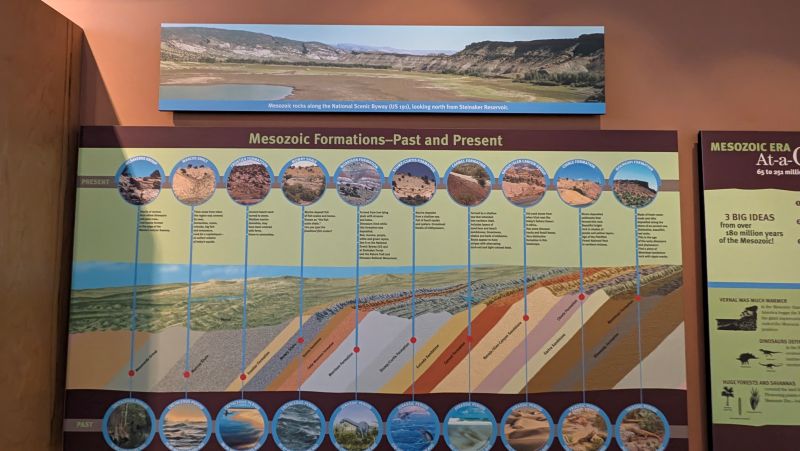
By day three or four, we were looking at a band of tilted rock on the drive, and trying to guess what it was ourselves — this layer’s an ancient seabed, that one’s an old sand dune field, that dark red band is close to a billion years old. It’s a small thing, but it changed how we experienced the driving itself. What could have been “pretty rocks” for four days instead felt like actually reading the land, one layer at a time.
More posts from this trip:
- Exploring the Utah Side of Dinosaur National Monument: Fossils, Rock Art, and Canyon Hikes
- Exploring the North Side of Dinosaur National Monument: Gates of Lodore & Ancient River Canyons Worth the Long Drive
- 2 Hours Driving the Colorado Side of Dinosaur National Monument: Harpers Corner Scenic Drive & River Canyons
- Beyond the Monument: Rock Art, Trackways, and Small-Town Treasures Around Vernal, UT