From the moment you arrive, New Orleans wraps itself around you — the smell of something frying nearby, the faint sound of a trumpet from a few blocks away, the iron-lace balconies casting shadows on streets that feel like they belong to another century. We spent a long weekend in New Orleans in December 2019, and it turned out to be one of those trips you keep talking about for years.
December, as it turns out, is a wonderful time to visit. The weather is warm and sunny — far from the brutal humidity of summer — and the city is dressed up for Christmas. Storefronts and markets carry a festive glow, holiday decorations weave between the Spanish moss and the Creole architecture, and the whole place hums with a particular kind of energy that you won’t find anywhere else on earth.
Quick summary of our itinerary for our long weekend in New Orleans:
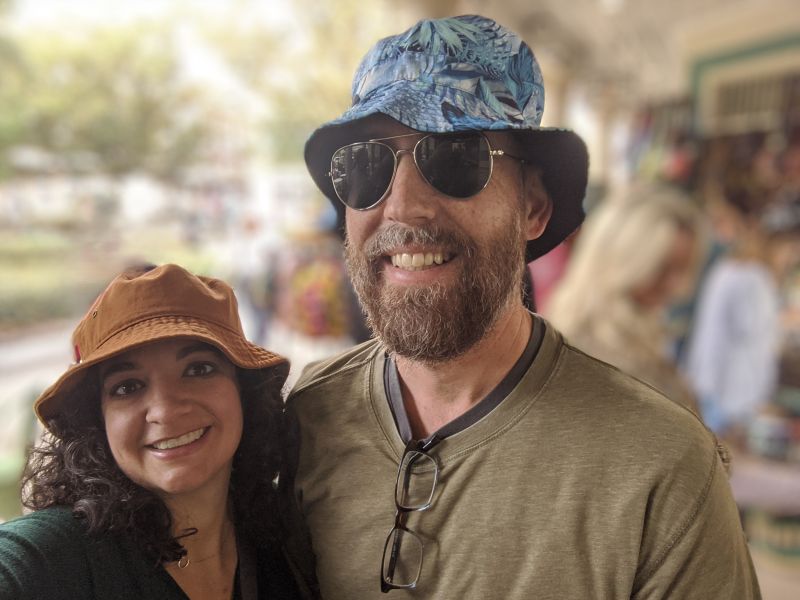
Day One: On Two Wheels Through History
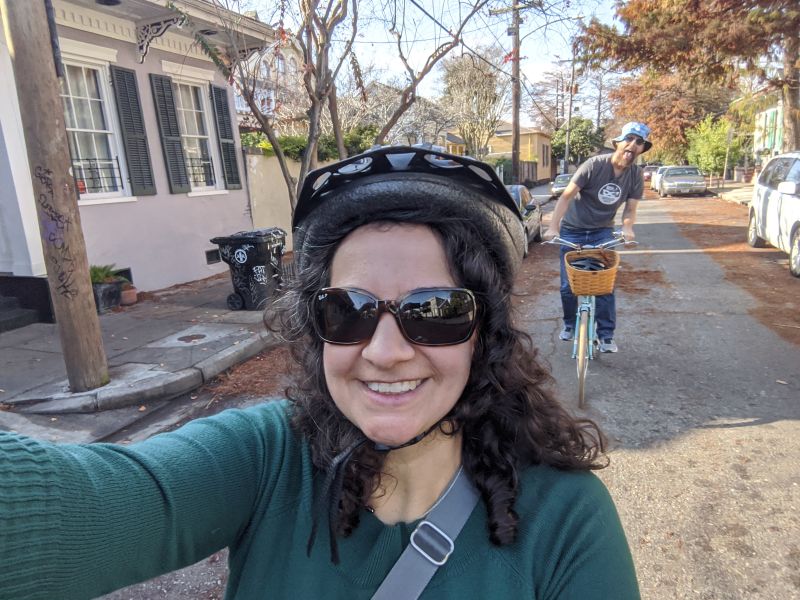
We kicked things off with a bike tour, which turned out to be one of the best decisions of the trip. There’s something about exploring a city at cycling pace — fast enough to cover ground, slow enough to actually see things — that feels exactly right in New Orleans.
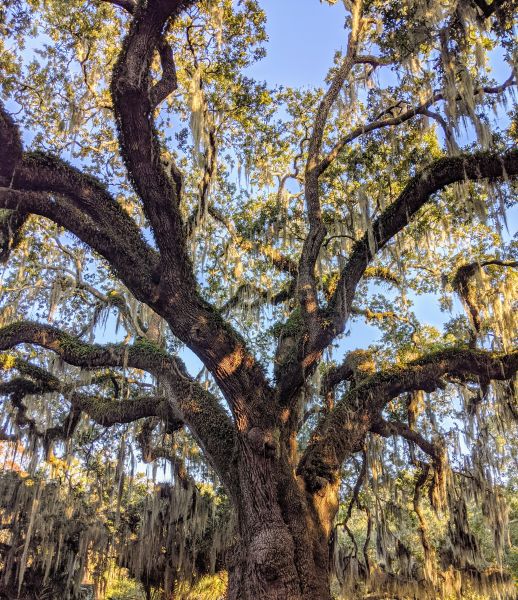
Our route took us past some of the city’s legendary live oak trees, and they genuinely stopped us in our tracks. These are ancient, sprawling giants, their thick limbs reaching out in every direction, some draped with wind chimes that caught the breeze and made the whole scene feel quietly magical. You don’t just walk past a New Orleans live oak — you pause, look up, and feel very small.
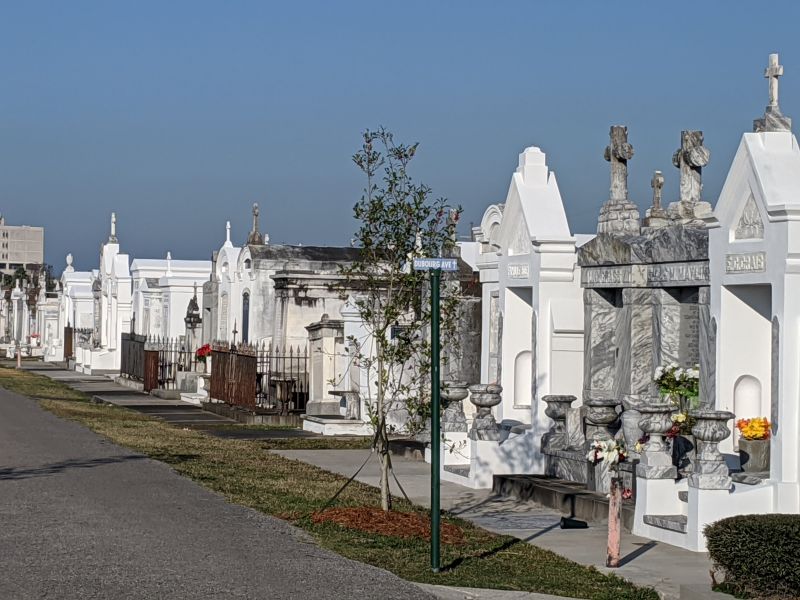
But the stop that really got under our skin was the cemetery. New Orleans cemeteries are unlike anything you’ve seen elsewhere, and our guide explained exactly why: because much of the city sits below sea level, traditional in-ground burial isn’t really an option. Coffins buried underground would quite literally float back up. So the city’s dead are interred above ground, in these stunning whitewashed stone tombs and ornate family vaults that line the wide, sunny lanes like a miniature city of the dead. Row after row of them, stretching as far as you can see, each one a piece of architecture in its own right — crosses, carved stonework, fresh flowers left by families who still visit. It’s eerie and beautiful and completely fascinating.
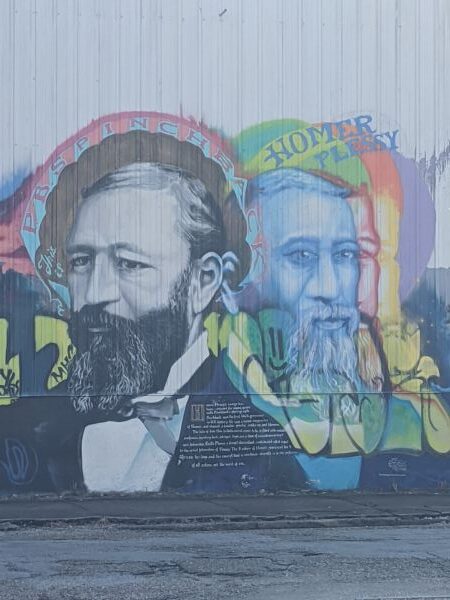
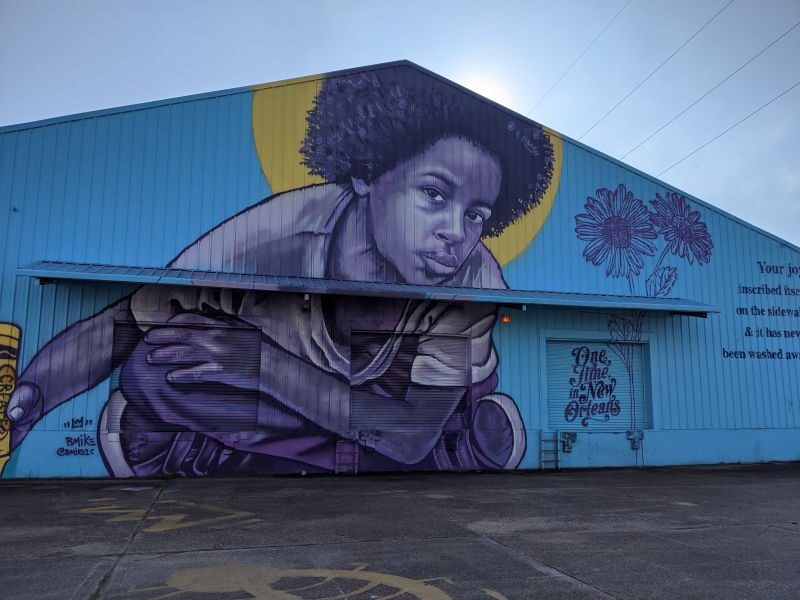
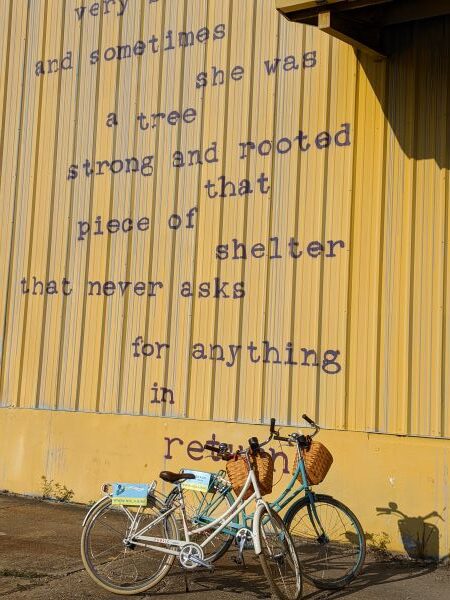
The bike tour also wound us past some remarkable street murals. New Orleans takes its public art seriously, and these weren’t decorative afterthoughts — they were statements. One enormous piece depicted Homer Plessy and his associate P.B.S. Pinchback, figures tied to the infamous Plessy v. Ferguson case that cemented segregation in American law. Another building bore a striking portrait of a young Black child by artist BMike, with the words “One time in New Orleans” painted in gorgeous script on the garage door below. Elsewhere, painted text on a yellow warehouse wall read like a poem: “sometimes she was a tree / strong and rooted / that piece of shelter / that never asks for anything in return.” The kind of thing you stop and photograph and then find yourself thinking about later.
Day Two: Voodoo, Breweries, and Bourbon Street After Dark
If Day One was about the past, Day Two was about the present — all of it, at once, in the way only New Orleans can manage.
We wandered the city on foot, soaking in the architecture. This is a city built in layers — French, Spanish, Creole, American — and you can read those layers in the buildings around you. The French Quarter’s wrought-iron galleries, the colourful Creole cottages of the Marigny, the grand Greek Revival homes of the Garden District. Every block offers something worth slowing down for.
It was also near Christmas, and the city leaned into it beautifully. Holiday markets, festively decorated shop windows, the odd string of lights threaded through a centuries-old courtyard. It gave the streets an extra warmth.
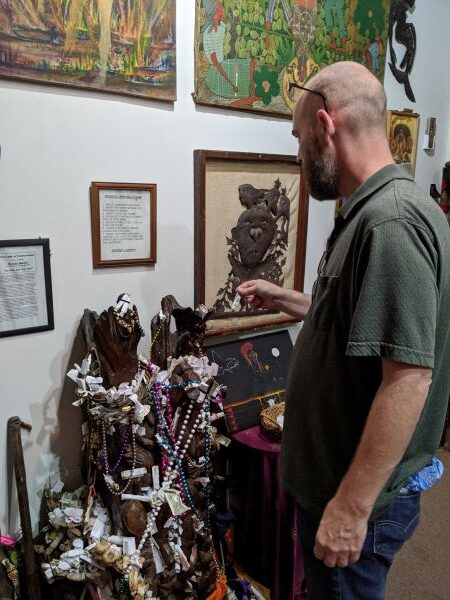
And then we found the voodoo place. I’ll be honest — we’re still not entirely sure whether it was a museum, a shop, or something else entirely. What we do know is that it was filled with fascinating and slightly unsettling objects: voodoo dolls in glass cases, ritual figures draped in beads, masks mounted on walls painted the colour of a swimming pool, and — the centrepiece — a Voodoo Wishing Stump. According to the instructions posted nearby, you write your wish on paper, roll it up with money, drop it into the stump, visualize your wish coming true, knock 9 times, offer a prayer and then thank the spirits.
Justin was in a rough patch professionally at the time — genuinely miserable at his job. He wrote down his intention, made his offering, and did the whole thing properly. A few weeks later, he landed a great new position. We are not saying the Voodoo Wishing Stump is responsible. We are also not not saying that.
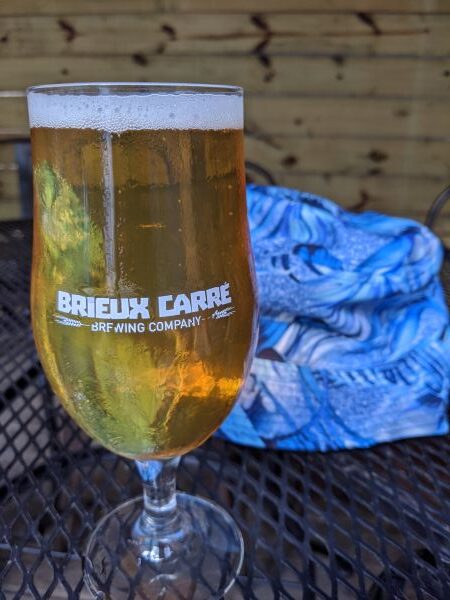
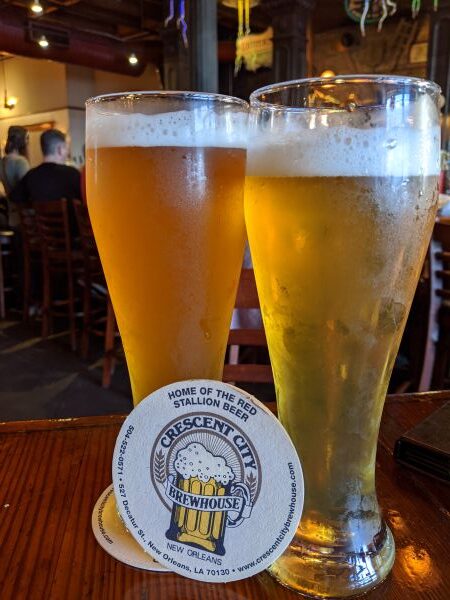
In the afternoon, we did what any reasonable people do in New Orleans: we visited breweries. Crescent City Brewhouse and Brieux Carré Brewing Company were both excellent stops — good beer, good atmosphere, and the kind of easy afternoon energy that makes you feel like you’re doing the city right.
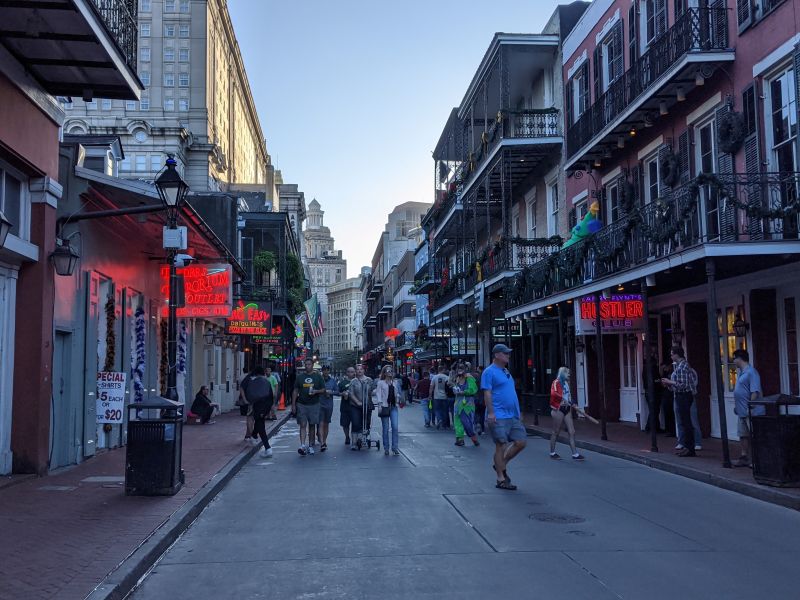
Then came night, and Bourbon Street. Now, a quick note: New Orleans is famously one of the few places in America where you can walk down the street with an open container, and Justin — let’s say he appreciated this policy deeply and personally. Bourbon Street at night is loud, chaotic, neon-soaked, and completely alive. We drifted in and out of bars, picking up drinks and setting them down again as the music changed — jazz here, blues there, something louder somewhere else. It’s a lot, in the best possible way.
Day Three: A Plantation, Then a Record-Breaking Night at the Superdome
This was the day of contrasts.
We drove about an hour outside the city to Whitney Plantation in Wallace, Louisiana — and I want to be clear upfront that this is not a typical plantation tour. National Geographic has called it the plantation every American should visit, and I understand why.
Whitney Plantation is the only plantation museum in Louisiana dedicated entirely to the history of slavery. The property dates back to 1752, when a German immigrant named Ambroise Heidel purchased the land and established an indigo operation. Over the following century, as the land passed through generations of the Haydel family and the crop shifted from indigo to sugar, the enslaved population grew dramatically. Sugar is brutally labour-intensive, and by the time the plantation reached its peak under owner Azelie Haydel in the mid-1800s, over 100 enslaved people were producing hundreds of thousands of pounds of sugar each year. Being sold south to a Louisiana sugar plantation, the site notes, was widely considered a death sentence among enslaved people in the upper South.
The property operated in some form until 1975. It was purchased in 1999 by attorney John Cummings, who spent 14 years and over $15 million restoring it — not to celebrate the antebellum era, but to bear witness to it. He donated the property and converted it to a nonprofit in 2019, just months before our visit.
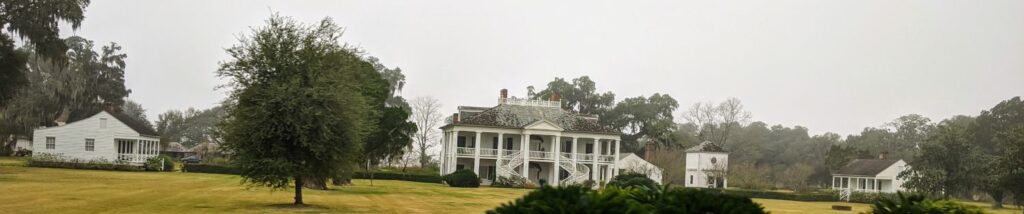
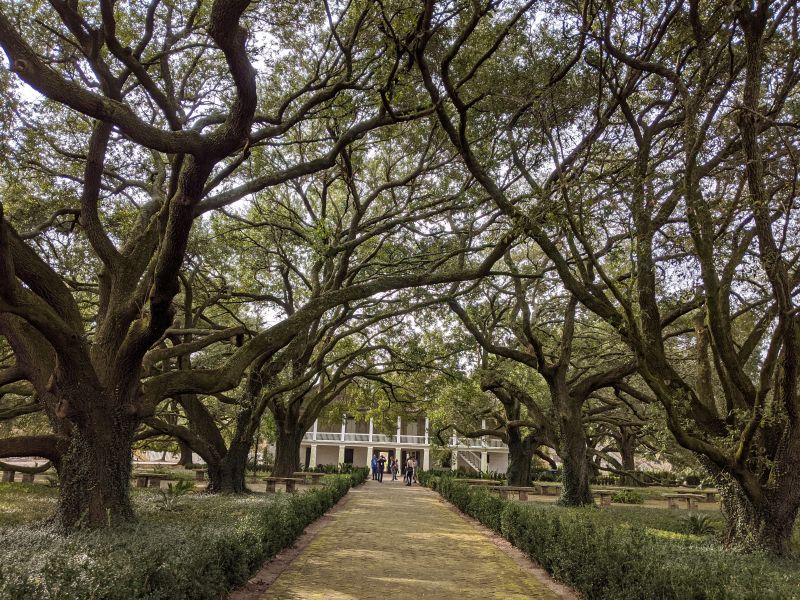
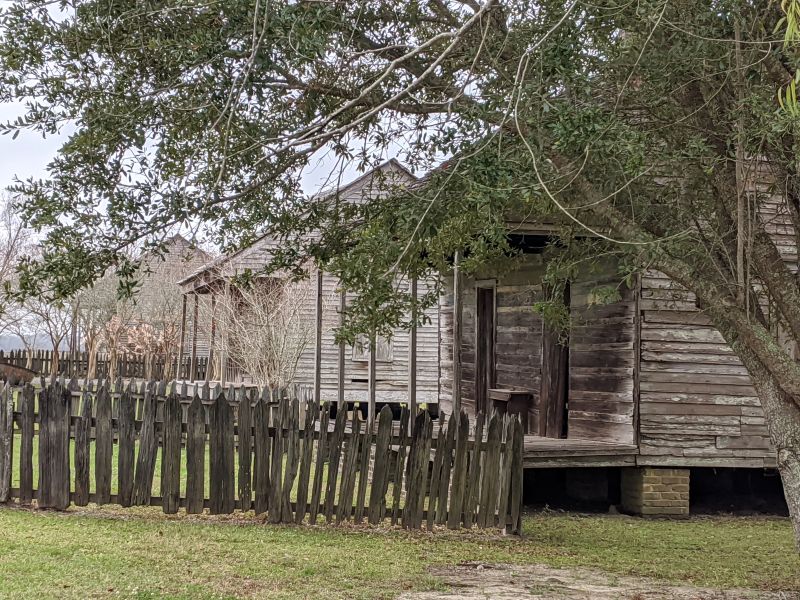
The grounds are undeniably beautiful — a grand white house framed by ancient trees, historic outbuildings, a little church with peeling white shingles. But that beauty is in constant, deliberate tension with what you’re learning as you walk. The tour doesn’t let you aestheticize the setting without reckoning with what happened here.
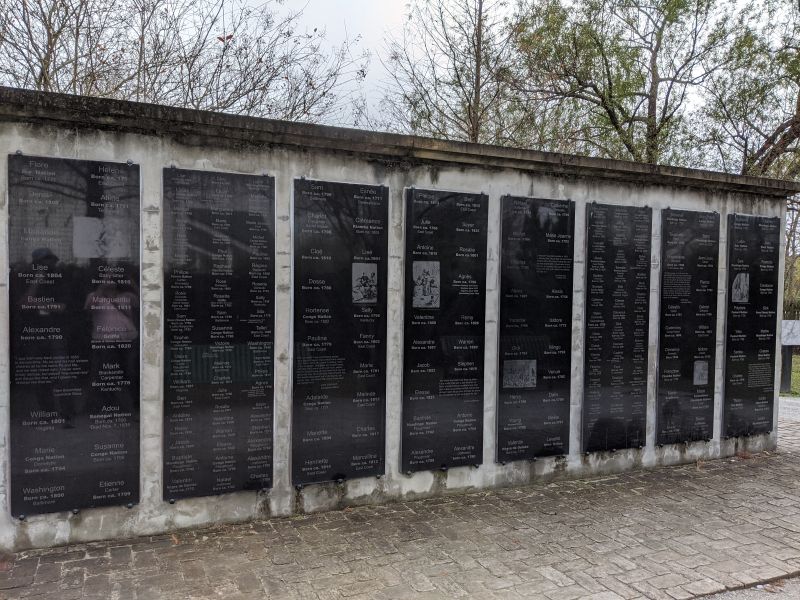
The most affecting part of the experience was the memorial wall. Long dark plaques mounted on stone bear the names of the enslaved people who lived and worked and died at Whitney — their first names, approximate birth years, and the African nations they or their ancestors had been taken from. Congo Nation. Senegal Nation. Ibo Nation. Names like Flore, Hortense, Washington, Céleste, Marie, and hundreds more, all recorded and returned to history after so long without it. It stops you cold. You stand there and you read the names, and the weight of it settles on you slowly.
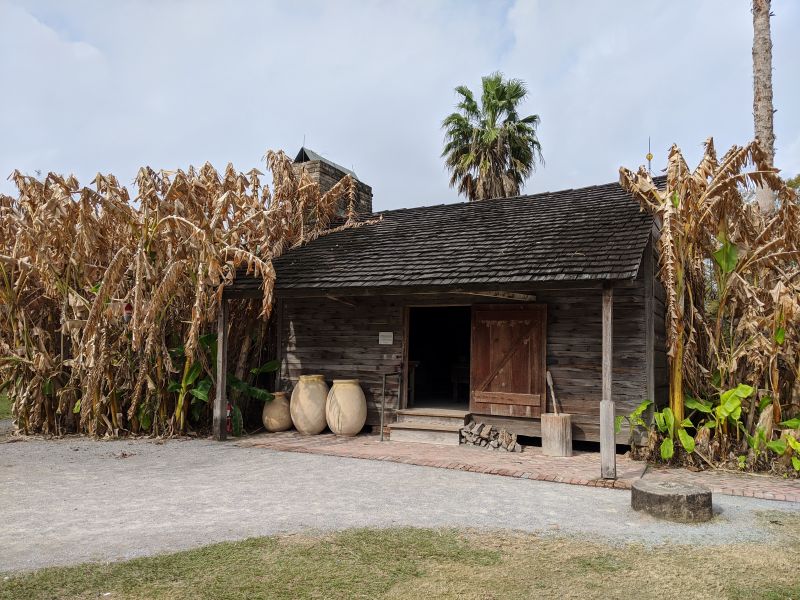
The old plantation kitchen, with its massive open-hearth fireplace and cast iron pots, is preserved intact — a reminder that the labor here touched every corner of daily life. It was actually my first time seeing a kitchen built as a completely separate structure from the main house. The reason is practical: open-hearth cooking was a constant fire hazard, and keeping the kitchen detached meant the main house was protected if something went wrong — though of course it also meant the enslaved people doing the cooking were the ones most exposed to that danger.
We didn’t talk much during that part of the visit. You don’t, really. You listen, you look, and you let it in. It was only later — over a drink, when some of the raw emotion had settled — that we could actually talk about what we’d seen and felt. That kind of silence isn’t awkward. It’s appropriate. If you’re planning a trip to New Orleans, make room for Whitney Plantation. It’s an hour’s drive and one of the most important things you can do.
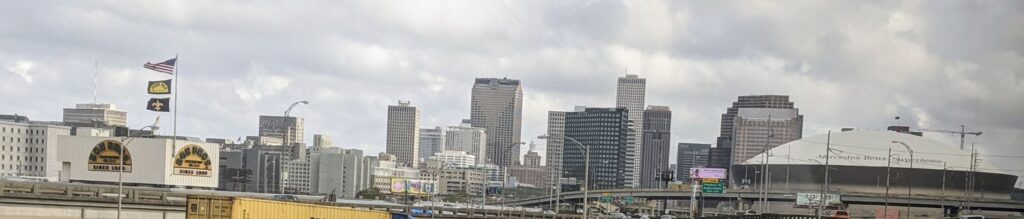
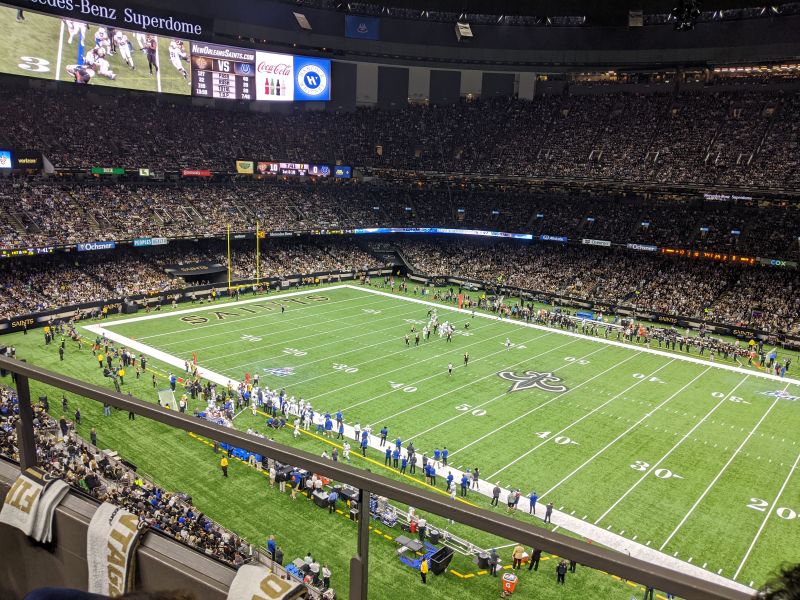
Then, that evening, something completely different: an NFL game at the Mercedes-Benz Superdome. New Orleans Saints vs. the Atlanta Falcons. We grabbed drinks outside the stadium first, absorbing the atmosphere — tailgate energy, Saints fans in black and gold, the whole city seemingly pointed in one direction. Inside, the noise was extraordinary. The Superdome is loud in a way that makes you feel it physically; during big plays, the roar bounced off the dome ceiling and became something almost overwhelming. You couldn’t think. You could only react.
And what a night to be there. The Saints won handily, 34–7, which was satisfying enough on its own. But the real moment came when Drew Brees threw his record-setting touchdown pass, officially becoming the NFL’s all-time leader in touchdown passes, surpassing Peyton Manning’s long-standing record. The crowd lost its mind. We lost our minds. It was the kind of sports moment that you know, even as it’s happening, that you’ll be telling people about for years.
Oh — somewhere in the chaos of that evening (or possibly while packing up the hotel room the next morning), I lost the yellow-gold bucket hat I’d picked up from a sidewalk vendor earlier in the trip. It was a cheerful yellow thing that, against all odds, actually looked quite good on me. I was bummed. Some losses are harder than others.
Day Four: Café du Monde, and Goodbye
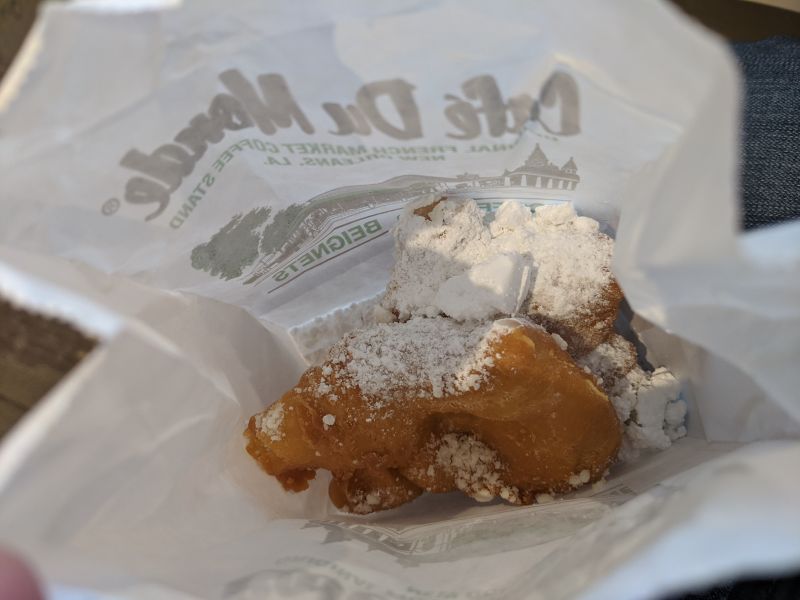
Before heading to the airport, we made one last stop: Café du Monde, the iconic open-air café on the edge of the French Quarter that has been serving beignets since 1862. Pillowy fried dough, buried under a snowfall of powdered sugar, with café au lait on the side. It’s simple, perfect, and absolutely necessary. You will get powdered sugar on your dark clothing. This is a place most tourists go — and so we went, even though I think its just all right.
A Few Things Worth Knowing
New Orleans has a reputation as a party city, and Bourbon Street is certainly evidence of that. But there’s so much more texture here — the history runs deep, the food is extraordinary, the music scene is genuinely world-class, and the architecture is unlike anywhere else in North America. The French Quarter’s cast-iron galleries and the Creole cottages of the Bywater and Marigny are endlessly photogenic. Walking these streets feels like wandering through a living museum that also happens to have a great bar on every corner.
One thing that often surprises visitors: New Orleans was not the birthplace of Mardi Gras. The celebration actually originated in Mobile, Alabama, which had its first Mardi Gras in 1703 — more than a decade before New Orleans was even founded. New Orleans, of course, has made it entirely its own, and few would argue it doesn’t do the festival justice. (Update: read about our trip to Mobile, AL here)
December is, genuinely, a wonderful time to visit. The city is festive, the temperatures are manageable, and you avoid the most intense heat and crowds of the summer and Mardi Gras seasons. If you’re looking for a long weekend that somehow manages to be festive and sobering, loud and reflective, deeply historical and completely alive all at once — a long weekend in New Orleans in December is your answer.