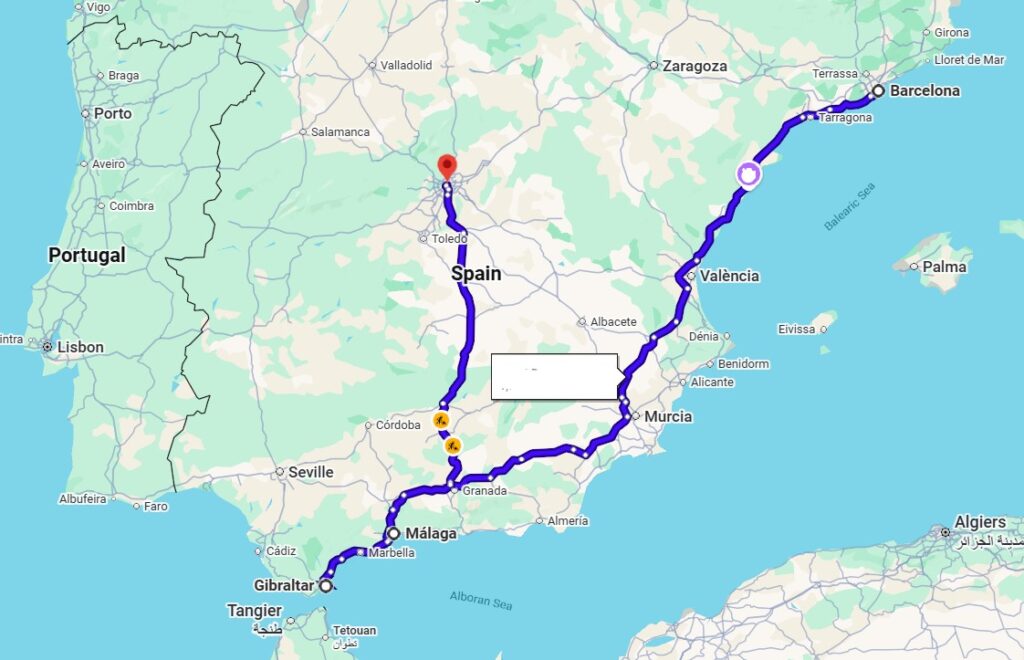
This was my first trip to Spain and I was excited, but also wished I spent a little time reviewing some Spanish words/phrases. Justin had a bit of a head start on me in the Spanish language department — I showed up knowing how to ask where the bathroom is, please, thank you, your welcome, and not much else. We traveled mid to late October 2018, hitting three cities in order: Barcelona → Málaga → Madrid.
Here’s everything about our 12 day itinerary Barcelona, Malaga & Madrid, day by day, including what went wrong.
In This Post:
Planning & Packing
We are committed carry-on travelers. No checked bags to allow us flexibility if needed. We each had one rolling carry-on suitcase and one personal item. The laptops stayed home. This was a real vacation.
October Weather in Spain
Mid-to-late October varies by region:
- Barcelona — mild, low-to-mid 60s°F (~17–19°C), but October is one of the rainier months. Pack a compact umbrella and a waterproof layer.
- Málaga — warmer than you’d expect. The Costa del Sol earns its name; daytime temps near 70°F (21°C). Light jacket for evenings.
- Madrid — crisp and cooling by late October. Highs in the low 60s°F, chilly evenings dipping into the 50s. Our weather seemed warmer – and layers worked perfectly fine, we didn’t need a real jacket or outerwear.
Packing for Spain Specifically
One thing I read ahead of time proved true: Spaniards dress up a bit more than the average American tourist, especially in the evenings. The paseo culture — a leisurely evening stroll — is very real, and people look put-together for it. We packed a few nicer tops that could carry us from sightseeing to dinner.
Packing priorities: versatile bottoms that dress up or down (dark jeans work overtime), 2–3 nicer tops for evenings, comfortable walking shoes/boots, a compact packable rain jacket and umbrella.
12 day Itinerary Barcelona, Malaga & Madrid: at a Glance
| Date | City | What We Did |
|---|---|---|
| Day 1 | Barcelona | Arrival, neighborhood walk |
| Day 2 | Barcelona | Montjuïc Castle, Barcelona Cathedral, downtown walk |
| Day 3 | Day Trip | Montserrat + Oller del Mas winery tour |
| Day 4 | Barcelona | Sagrada Família, Casa Batlló, market, Arc de Triomf |
| Day 5 | Travel → Málaga | Train to Málaga, Teatro Romano, Alcazaba |
| Day 6 | Málaga | Mediterranean, market |
| Day 7 | Day Trip | Gibraltar + churros & hot chocolate |
| Day 8 | Day Trip | Ronda |
| Day 9 | Day Trip | Córdoba — Roman Bridge, Mosque-Cathedral, bus tour |
| Day 10 | Travel → Madrid | Train to Madrid, Almudena Cathedral, Royal Palace, cooking class |
| Day 11 | Madrid | Bike tour of Madrid |
| Day 12 | Madrid | El Retiro Park, Spanish show |
| Day 13 | — | Flight home |
BARCELONA: 4 Days
Day 1 — Arrival
We landed and took a taxi to our hotel, which was a bit outside the city center — more on the outer edges of Barcelona rather than downtown. After a long travel day, Justin did what you’re absolutely not supposed to do when fighting jet lag: he took a long afternoon nap. I couldn’t bring myself to waste the daylight, so I headed out for a solo walk around the hotel neighborhood.
There was a river nearby, and a highway — but not a lot within easy walking distance. It was more industrial and residential than tourist-facing. Honestly? Day one was a bit of a wash. We didn’t make it into the city, didn’t find great food nearby, and Justin slept through the afternoon. If I were doing it again, I’d book accommodation in or much closer to the city center so that even a jet-lagged arrival day feels like the trip has started.
Lesson learned: hotel location matters more than you think on arrival day.
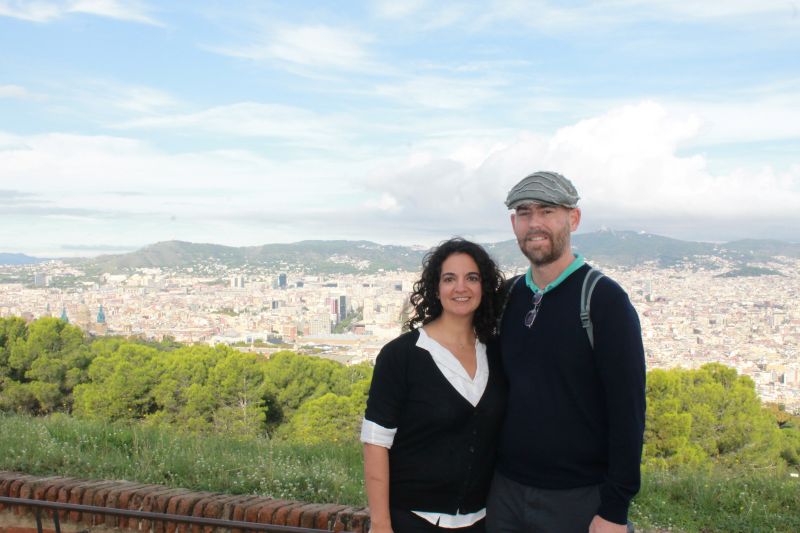
Day 2 — Montjuïc Castle & the Cathedral
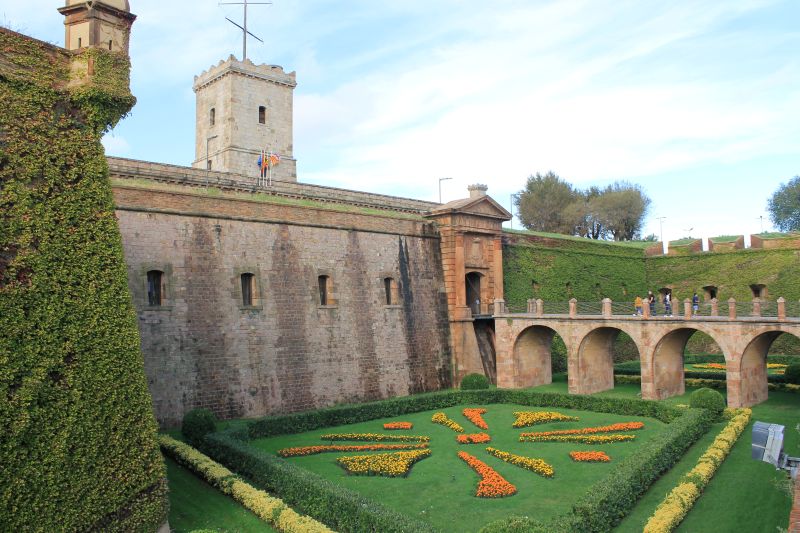
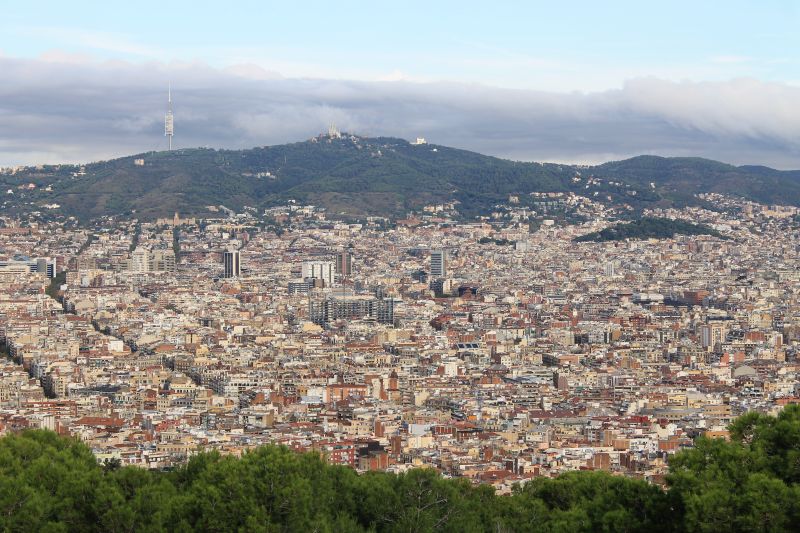
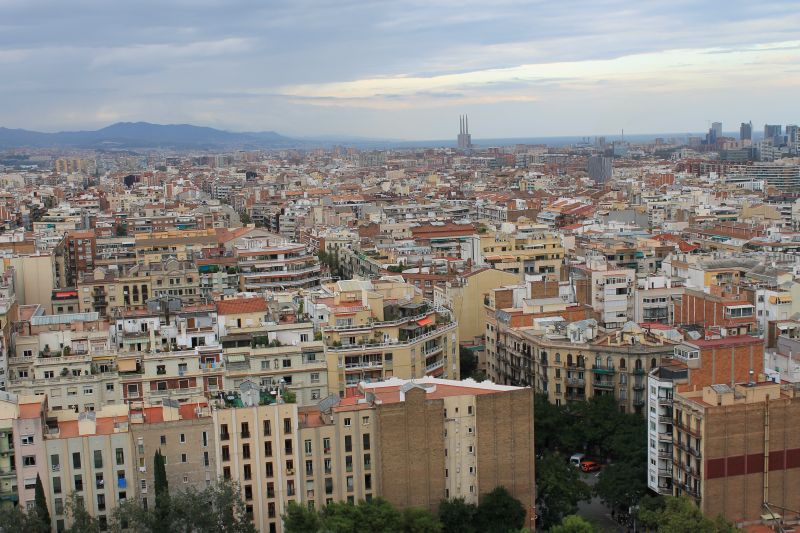
Montjuïc Castle sits on a hill overlooking Barcelona and the harbor, and the views alone make it worth the trip up. The fortress itself has a complicated history — it served as a military prison for centuries — but today it’s a peaceful spot with sweeping panoramas of the city and the Mediterranean. You can take the cable car up, which is a fun experience in its own right.
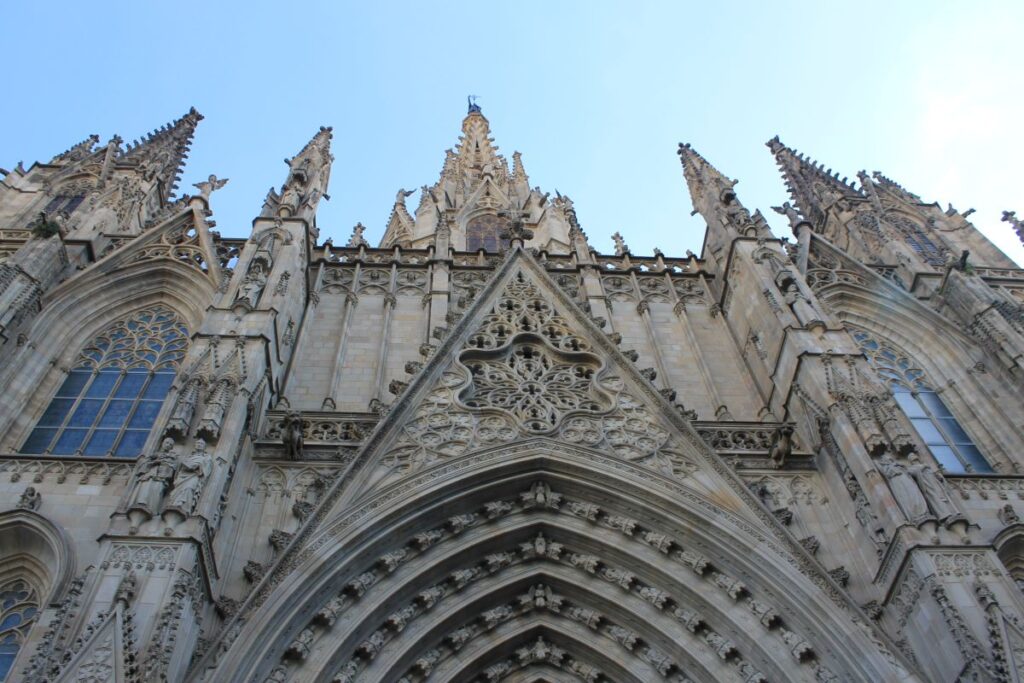
Barcelona Cathedral (the Catedral de la Santa Creu i Santa Eulàlia, if you want the full name) is a Gothic masterpiece in the heart of the Barri Gòtic. It dates to the 13th century, though the main façade wasn’t completed until the early 1900s. Don’t miss the cloister, where a small flock of geese lives — supposedly 13 of them, representing the age of Saint Eulàlia at her martyrdom. It’s one of those charming, slightly surreal details that makes European travel so wonderful.
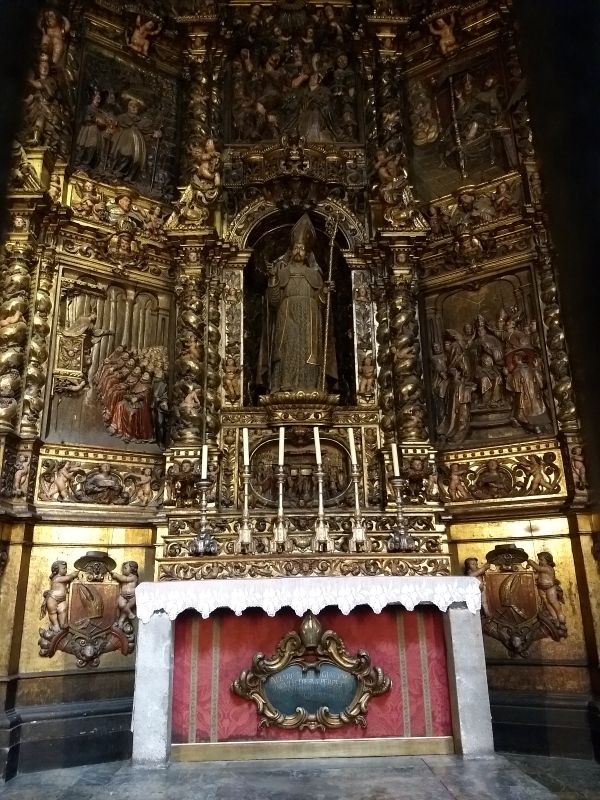
Basilica de Santa Maria del Pi
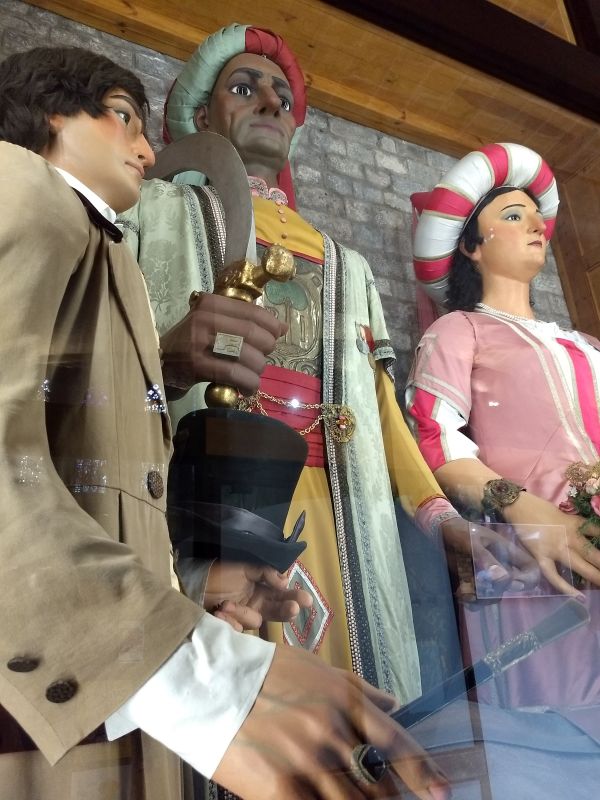
Tucked into the Gothic Quarter between two charming small plazas — Plaça del Pi and Plaça de Sant Josep Oriol — the Basilica de Santa Maria del Pi is one of those places you stumble upon and immediately stop walking. Built between 1319 and 1391 in the Catalan Gothic style, it has a single soaring nave with side chapels, and a cross-vaulted ceiling that is one of the highest in the country. The enormous rose window on the façade is the largest in Catalonia — a faithful replica of the 14th-century original, crafted after the original was destroyed during the Spanish Civil War by none other than Antoni Gaudí’s right-hand collaborator, Josep Maria Jujol. According to legend, the church takes its name — pi means pine in Catalan — from a 10th-century fisherman who discovered an image of the Virgin Mary in a pine tree he was about to cut down to build a boat; struck by the vision, he built a small chapel instead, which eventually grew into this Gothic basilica. A pine tree still stands in the square outside. Inside, keep an eye out for the gegants — the towering ceremonial giant figures that are a beloved Catalan tradition. Dating back to at least 1424, these giants were originally part of religious processions but gradually took on a purely festive, community identity. Each neighborhood and church in Barcelona has its own set, and the ones belonging to Santa Maria del Pi are stored here — elaborate, slightly uncanny, and utterly fascinating up close.
We spent time walking through the Gothic Quarter and just wandering. Those narrow medieval lanes reward aimless exploration.
Day 3 — Montserrat & Oller del Mas
This was one of the best days of the Barcelona stretch. Montserrat is a striking multi-peaked mountain about an hour outside the city, home to a Benedictine monastery that’s been a pilgrimage destination since the Middle Ages. The rock formations are genuinely otherworldly — jagged, almost alien — and the views from the hiking trails are spectacular. A rack railway (the cremallera) takes you up from the base.
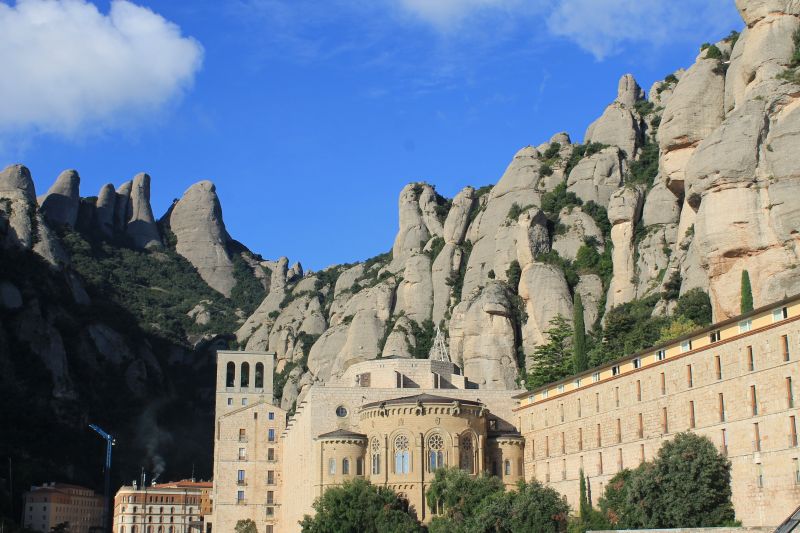
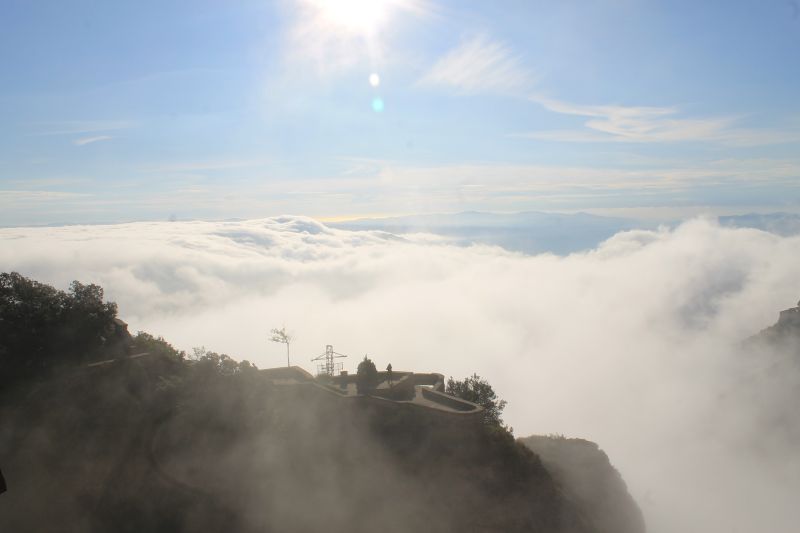
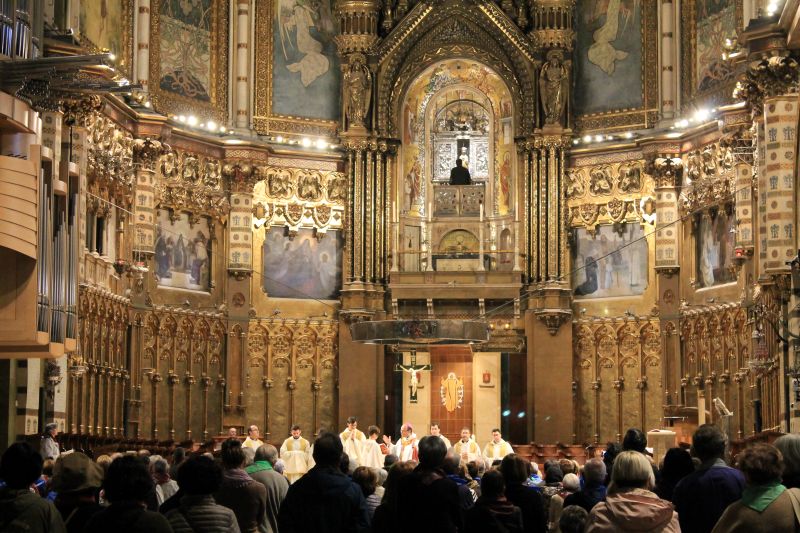
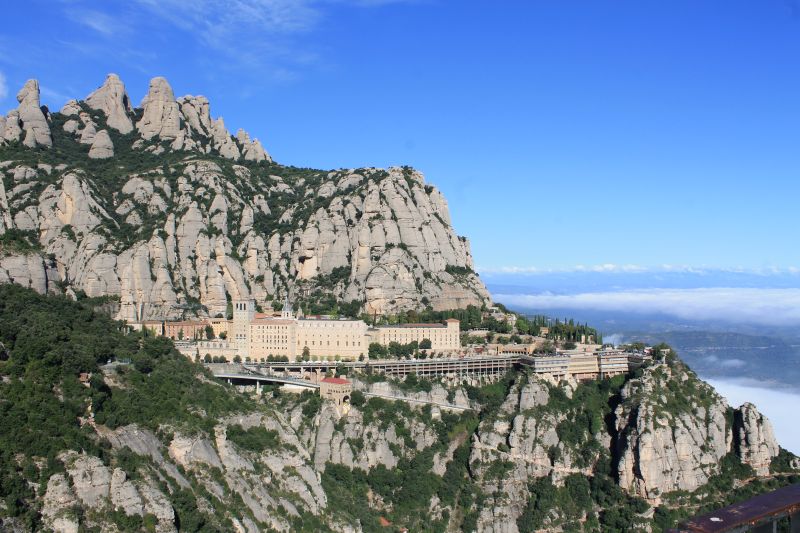
We paired Montserrat with a tour of Oller del Mas, a winery in the region producing wines under the Pla de Bages DO. The winery is a 1,000-year-old medieval castle with views of the Montserrat mountain. The wines they produce here are estate wines—meaning all grapes are harvested by hand and grown on their property. The tour included wine parings with tapas, and a chance to see the barrel room.
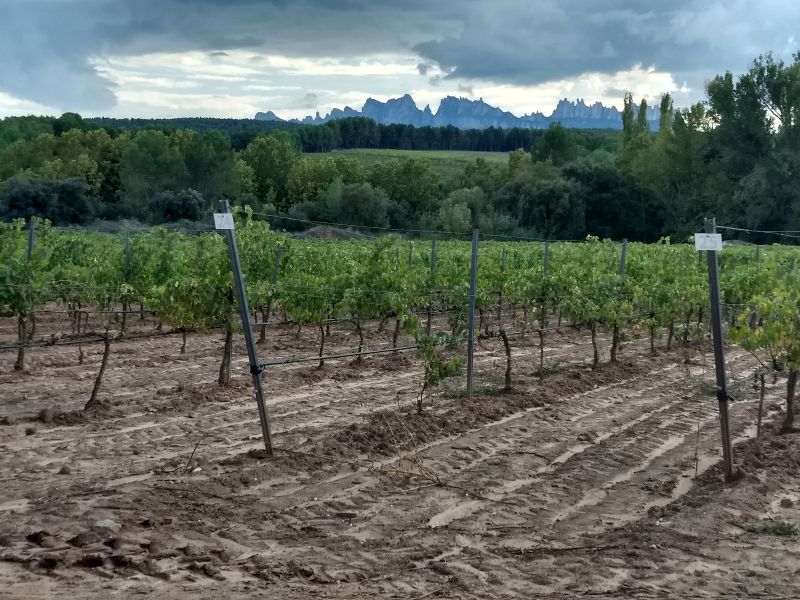
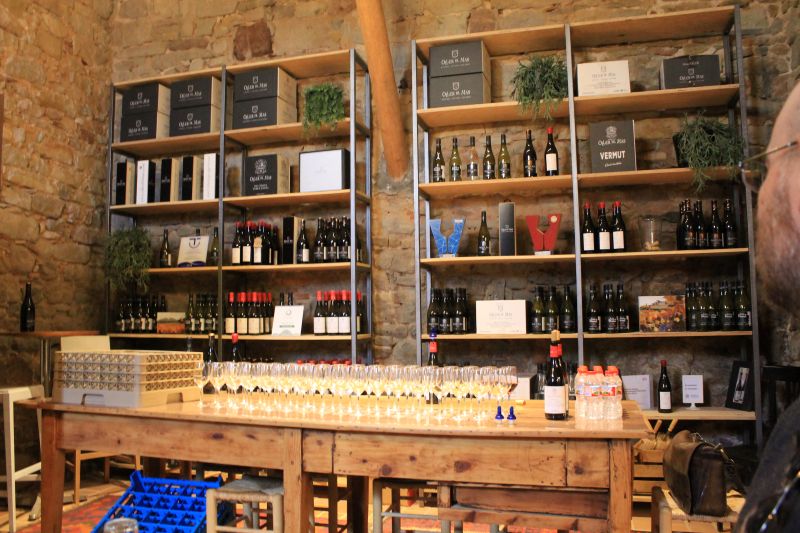
Read more about our Day Trip to Montserrat and Oller del Mas: An Unforgettable Tour from Barcelona
Day 4 — Sagrada Família, Casa Batlló & More
This was the full Barcelona tourist day, and it delivered.
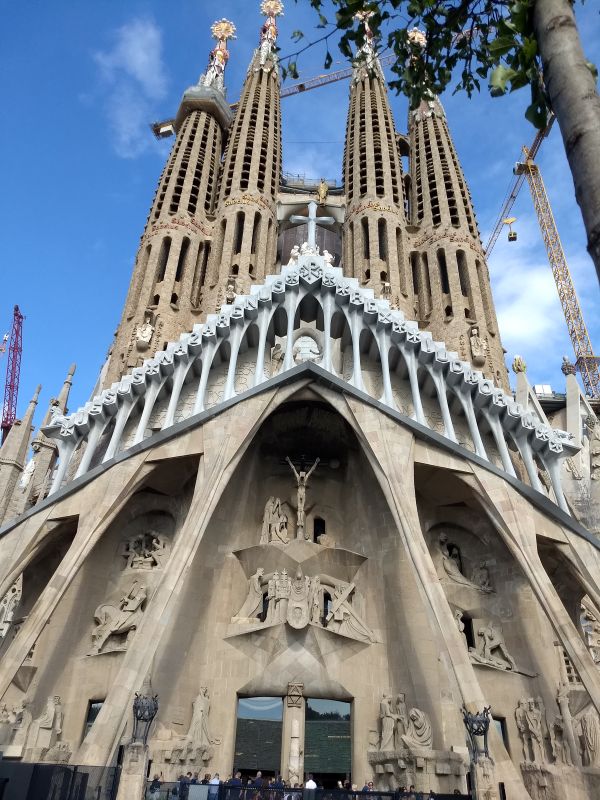
Sagrada Família — You’ve seen the photos. It’s still astonishing. Gaudí’s unfinished basilica is the kind of building that makes your brain short-circuit — organic, towering, covered in symbolism, unlike anything else on earth. Construction began in 1882 and continues today. Book tickets in advance – the lines without a reservation are brutal.
Casa Batlló — Another Gaudí building, just a short walk away on the Passeig de Gràcia. If Sagrada Família is Gaudí’s cathedral, Casa Batlló is his fever dream brought to life as a residential building. The undulating façade covered in mosaic tiles and the skeletal balconies are mesmerizing. The interior tour is worth every cent just to see something so strange. I wouldn’t have wanted to live here. It was an audio tour.
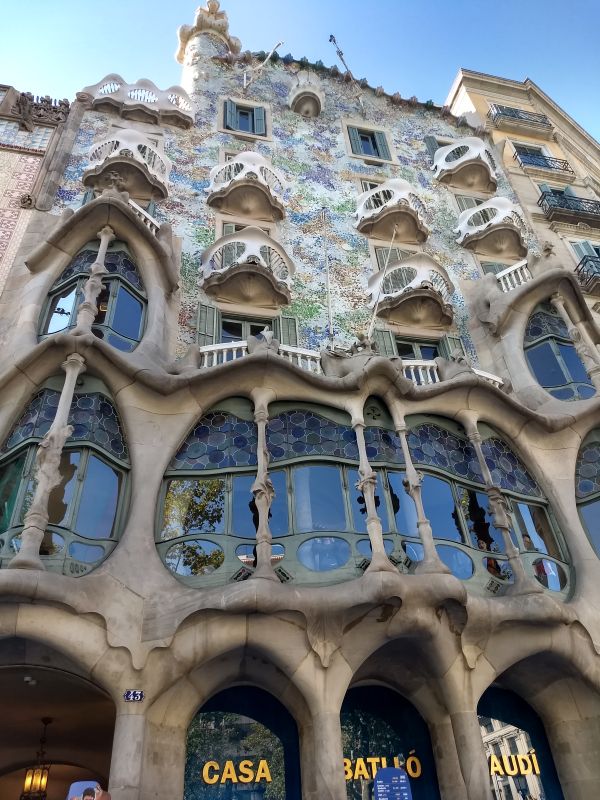
Read more about these two Gaudí buildings here
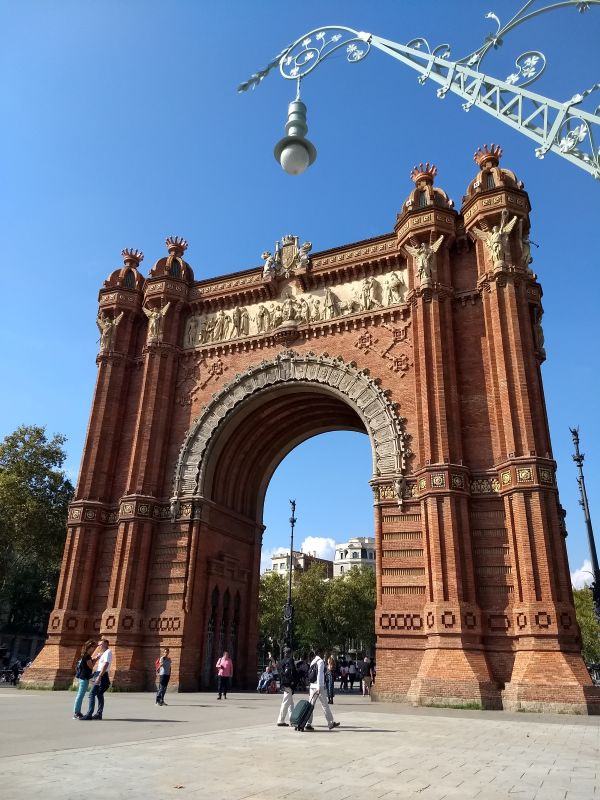
We also hit a market (Barcelona has several wonderful covered markets — the Mercat de Sant Antoni is a bit less hectic than the famous Boqueria), ate ice cream, strolled to the Arc de Triomf — a grand triumphal arch built for the 1888 World Exhibition, anchoring a lovely tree-lined promenade called the Passeig de Lluís Companys, and just walked around the city.
Food in Barcelona
The first time a plate of pa amb tomàquet appeared in front of me, I almost passed on it. Here’s something I don’t think I’ve mentioned on this blog before: I don’t like tomatoes. Like, actively disliked them. Raw tomatoes on anything were a hard no.
But pa amb tomàquet isn’t really about the tomato in the way you’d think. It’s thick, crusty bread — really good bread — rubbed with the cut side of a ripe tomato and drizzled with olive oil and a little salt. The tomato is almost more of a flavoring than an ingredient. It’s everywhere in Catalonia. It’s served with nearly everything. And I started eating it. And then I started liking it. I left Spain, for the first time in my adult life, open to tomatoes. (Progress report: I can now eat a cherry tomato. This is not nothing.)
We also drank plenty of cava — Spain’s sparkling wine, produced primarily in Catalonia — and ate our weight in patatas bravas. Tapas, cava, and jamón became the throughline of the whole trip.
One cultural adjustment: dinner in Spain happens late. Most restaurants don’t fill up until 9:30pm. We made it to one genuinely late Spanish dinner and it was a wonderful, lively, very full restaurant experience. Most nights, hunger won and we ate on the earlier side like the tourists we were. No shame.
Read out some of our Spanish eats: Eating In Spain: Tapas, Jamón, Cava & a Cooking Class That Changed Everything
The Night the Window Leaked
I’d be leaving out one of the more memorable moments of the Barcelona stay if I didn’t mention this. One night, a storm rolled in — not a drizzle, but the kind downpour that wakes you up. Our hotel window started leaking. Not a trickle. The floor started getting wet.
We called the front desk. They sent someone up to take a look, who essentially confirmed that yes, this happens, and sent up a stack of extra towels. That was the solution: towels on the floor of our hotel room to absorb the rain coming in through the window. We spent part of the night mopping up.
The hotel was on the outskirts of the city. The window leaked. Day one was quiet. Barcelona, to be honest, didn’t quite meet the expectations I’d built up for it — though the architecture days (Sagrada Família, Casa Batlló, Montjuïc) were genuinely spectacular.
MÁLAGA: 5 Days
Day 5 — Arrival & First Evening
We took the train from Barcelona to Málaga — a longer journey that required a connection, but scenic and comfortable. Arriving in Málaga felt like arriving somewhere warmer and slower, in the best possible way.
That evening, we visited Teatro Romano de Málaga, a Roman theater built during the reign of Emperor Augustus in the 1st century BC — making it the oldest monument in Málaga. It seated around 2,000 spectators and was used for plays, musical performances, political gatherings, and gladiatorial games before falling out of use in the 3rd century AD. What happened to it after that is almost as interesting as its original purpose: the Moors later dismantled parts of it to use the stone for building the Alcazaba fortress up the hill (you can actually spot Roman columns repurposed into the Moorish walls above). Then it was buried entirely, hidden under centuries of city, until construction workers accidentally rediscovered it in 1951. It sits right at the foot of the Alcazaba hill, free to visit, remarkably well-preserved, and accompanied by a small interpretation center.
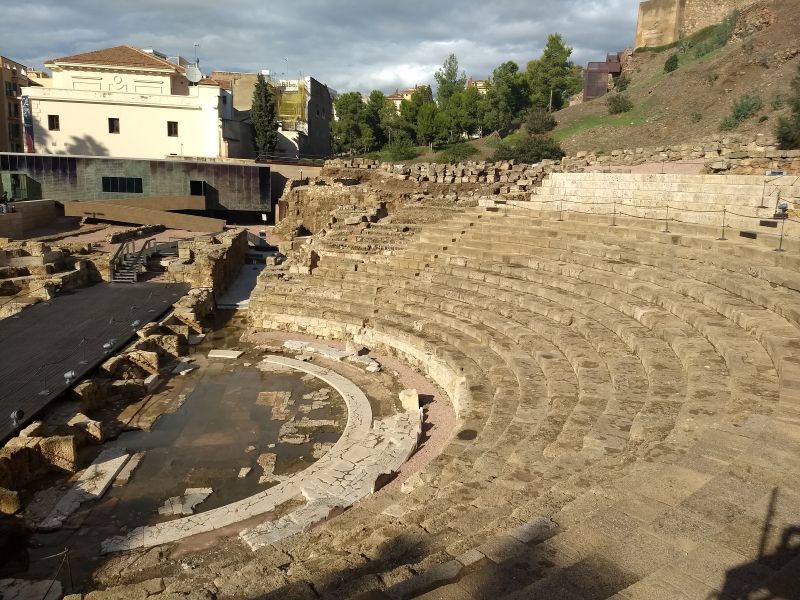
One of the details that fascinated me most wasn’t the theater itself but something right beside it: a small glass pyramid set into the street on Calle Alcazabilla, through which you can look down at Roman ruins below ground level — the remains of ancient garum production facilities (garum was a fermented fish sauce that was essentially the ketchup of the Roman Empire). The plexiglass was scratched and worn, so the view wasn’t exactly crystal clear — but honestly, that almost didn’t matter. Just knowing you were standing in a modern city, on a normal street, with 2,000-year-old ruins a few feet below your shoes? That’s the kind of thing that stops you in your tracks.
We also made our first visit to the Alcazaba of Málaga, the Moorish fortress-palace that dominates the hillside above the old town. Built in the 11th century, it’s a beautiful complex of horseshoe arches, flowering gardens, and ramparts with sweeping city views. Between the Roman theater below and the Moorish palace above, you’re standing in the middle of 2,000 years of history in about 300 meters of walking.
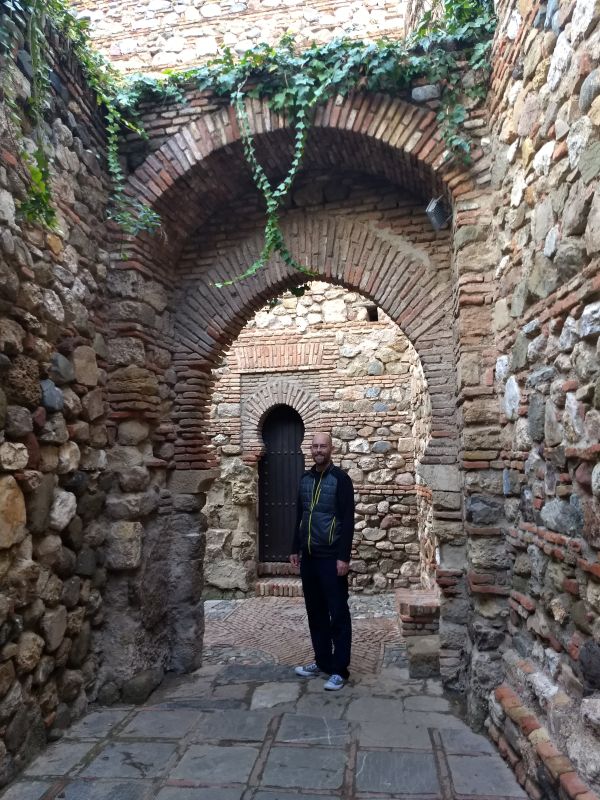
Read more about us Visiting the Teatro Romano and Alcazaba in Málaga: 2,000 Years in One Afternoon
Finding Our Airbnb: A Two-Hour Adventure
For Málaga, we’d booked an Airbnb right in the historic center — partly for the experience of staying in the old town, and partly because we needed to do laundry. Halfway through a 12-day trip with carry-on luggage only, you need to wash clothes.
What we didn’t fully account for: many of Málaga’s historic streets are pedestrian-only cobblestone lanes that taxis physically cannot drive down. Our driver dropped us at the edge of the old town, pointed in a general direction, and drove away.
We had no local SIM. No cell service. Printed address in hand, two rolling suitcases bouncing over cobblestones (a sound I will never forget), and a host who was emailing me while I was standing in a medieval street with no internet access. It took nearly two hours of wandering, asking locals for help, and genuine stress before we found the place.
Lessons:
- Ask your host specifically: “Can a taxi drop me at the door?” before you arrive.
- Get a local SIM card or an international data plan. For navigating old European cities, this is not optional.
- Screenshot your host’s contact info and address before you lose WiFi at the airport.
The Laundry Situation
The apartment had a combo washer-dryer unit — one of those compact European all-in-one machines roughly the size of an American sink. We ran several small loads over multiple days. The dryer function worked in theory. In practice, clothes came out damp. We strung things around the apartment to air dry. This was fine, until Ronda happened.
Day 6 — The Mediterranean Sea & Market
A slower day. We walked to the seafront and spent time along the Mediterranean Sea — it certainly wasn’t beach weather, but we had to go in it, at least to our ankles.
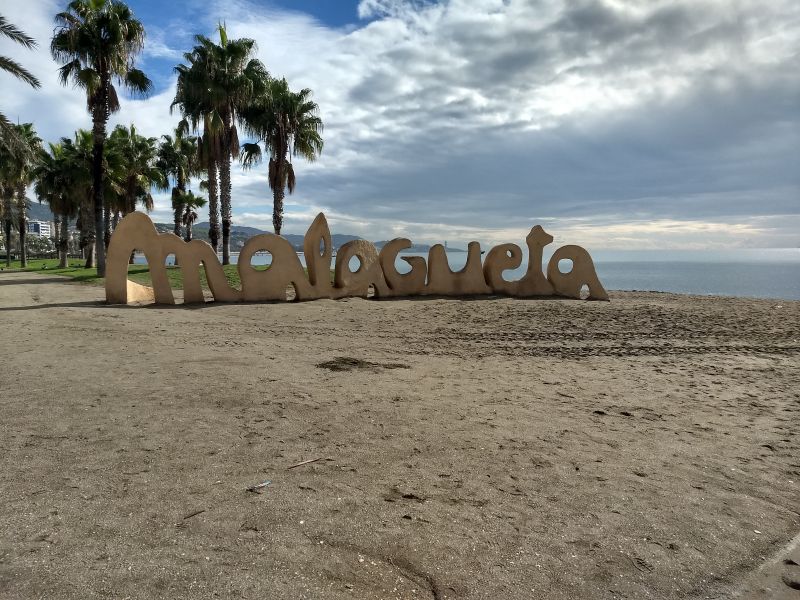
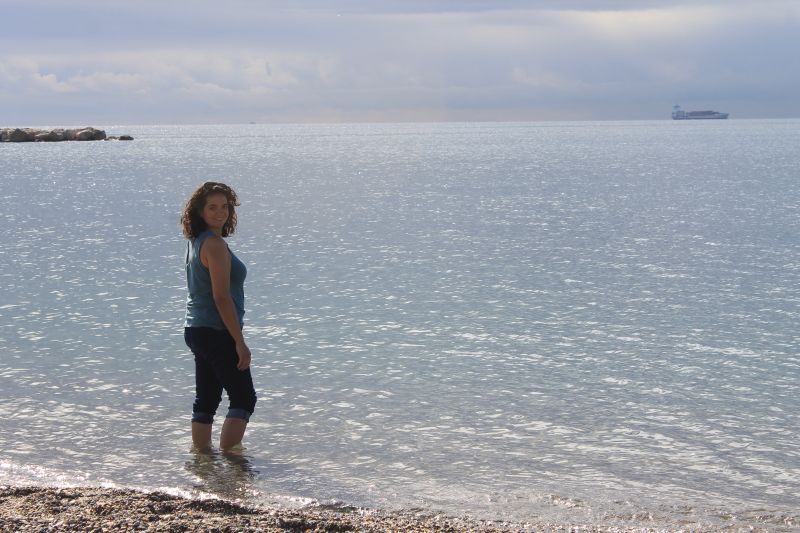
Later that day we explored a local market. Málaga’s markets are lively and local-feeling, with fresh produce, olives, cheese, jamón, flowers.
Day 7 — Day Trip to Gibraltar
Gibraltar is about 120km west of Málaga, and it is a genuinely strange and fascinating place — a British Overseas Territory on the southern tip of Spain, with red phone boxes, British pubs, and the famous Rock looming over everything.
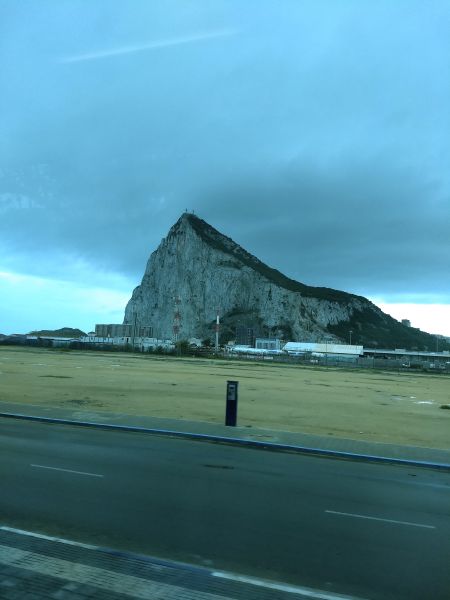
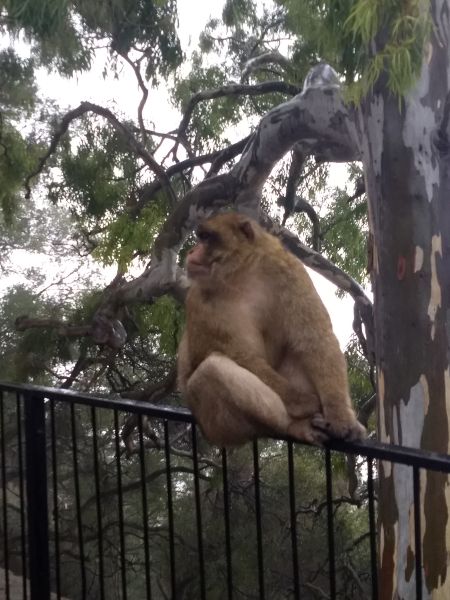
The Rock of Gibraltar itself is the main attraction — you can take a cable car to the top for sweeping views across to Morocco on a clear day (you can actually see Africa). The Upper Rock Nature Reserve is also home to the famous Barbary macaques, the only wild primates in Europe. They are bold and entertaining and will absolutely take food from your hand or your bag if given the opportunity.
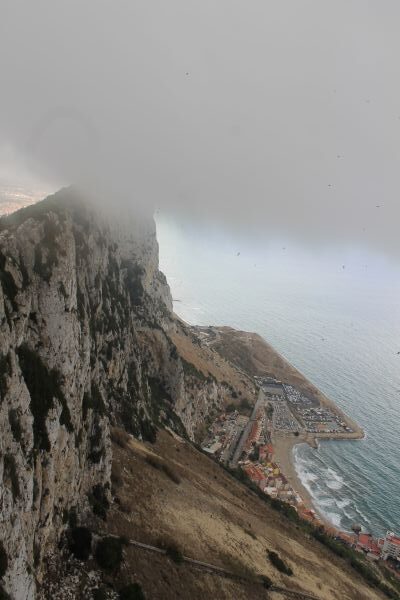
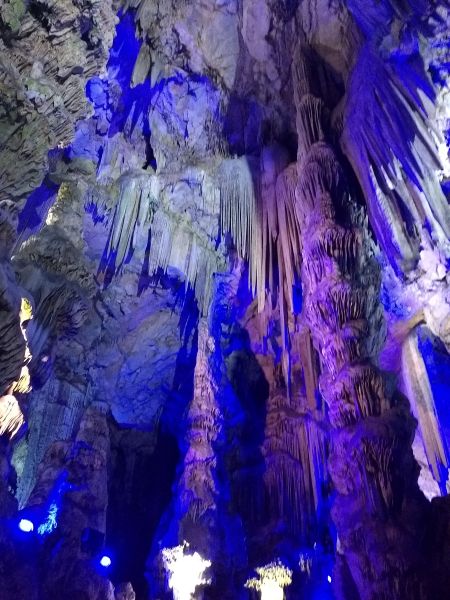
St. Michael’s Cave is another highlight not to miss, and honestly one of the more memorable things we saw on the whole trip. It’s a vast natural limestone cavern inside the Rock itself, formed over millions of years by rainwater slowly dissolving through the rock. The result is an enormous underground chamber filled with towering stalactites hanging from the ceiling and stalagmites rising from the floor — some of them massive, ancient, and otherworldly. The cave is dramatically lit with colored lights — purples and blues that play off the formations and make the whole place feel like something from another planet. It’s genuinely stunning, and a little surreal to be standing inside the Rock of Gibraltar looking up at formations that took thousands of years to grow. The main chamber is sometimes even used as a concert hall — the natural acoustics are extraordinary. Plan at least 20–30 minutes inside.
It was a long day, so when we got back to town we had a light dinner and some churros and hot chocolate. If you have not had Spanish churros dunked in thick, dark drinking chocolate, you have not lived. This is not hot cocoa. This is molten chocolate that you dip your churros into, and it is one of the great pleasures of travel.
Read more about our Fun Day Trip to the Rock of Gibraltar from Málaga.
Day 8 — Day Trip to Ronda
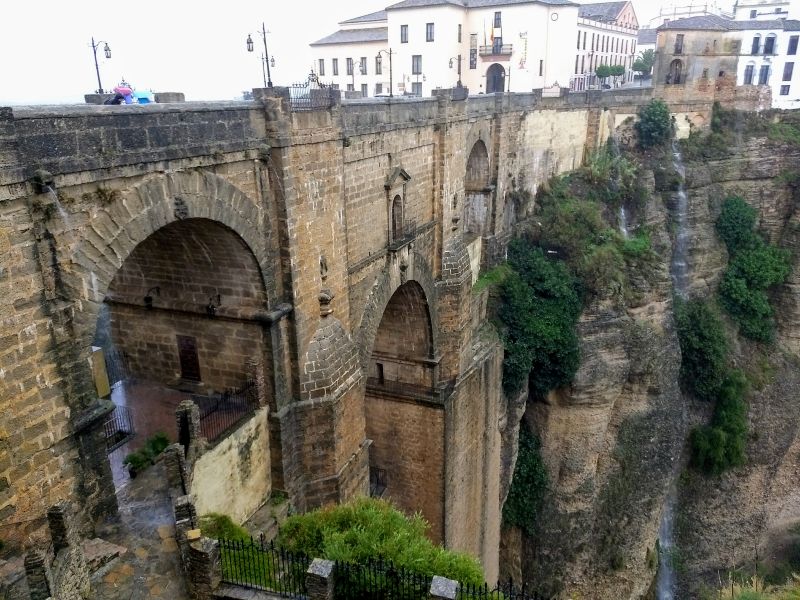
Ronda is about 100km inland from Málaga, perched dramatically on a sheer gorge — the El Tajo ravine — with the spectacular 18th-century Puente Nuevo bridge connecting the old and new parts of town. Unfortunately for us, when we went, it rained really really hard. We didn’t end up staying and exploring everywhere we wanted because we were just too wet and miserable. We came back to Málaga completely soaked through — clothes, shoes, everything. We put the shoes in the window to dry, but my boots took 3 days before I didn’t feel wetness inside. With a barely-functional dryer and two pairs of waterlogged shoes, the rest of the Málaga stay involved some creative outfit management. Read more about our soaked day trip here
A Note on the Alhambra — Our Biggest Miss
Before I get to Day 9, I need to tell you about the one that got away.
The Alhambra in Granada is arguably the most spectacular monument in Spain — a UNESCO World Heritage Site and one of the finest examples of Moorish architecture in the world. A palace complex built on a hilltop above Granada, its Nasrid Palaces are breathtaking beyond description. It was absolutely on our radar.
Here’s what we didn’t know: the Alhambra is one of the hardest tickets in Europe to get. Daily visitor numbers are strictly capped to protect the site, and tickets — especially for the crown jewel Nasrid Palaces — sell out weeks, sometimes months in advance. We were somewhere in Barcelona, still a week out from even arriving in Málaga, when we checked availability. Gone. Every day we would have been there: sold out.
It was a gutting moment. We were sitting in Spain, within striking distance of one of the most remarkable buildings on earth, and we couldn’t go. We started to think about other day trips we would take instead.
Day 9 — Day Trip to Córdoba
One of the most packed days of the trip. From Málaga, we took a day trip to Córdoba, a city about 160km north that ranks among the most historically significant in Europe.
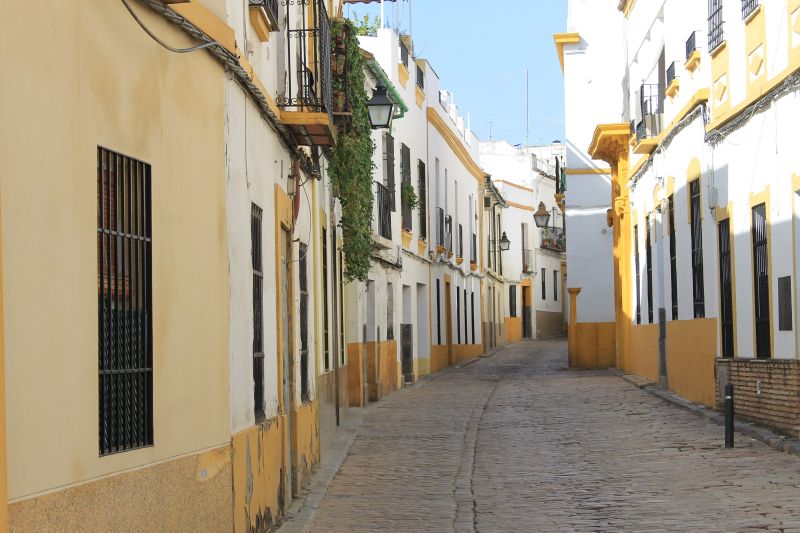
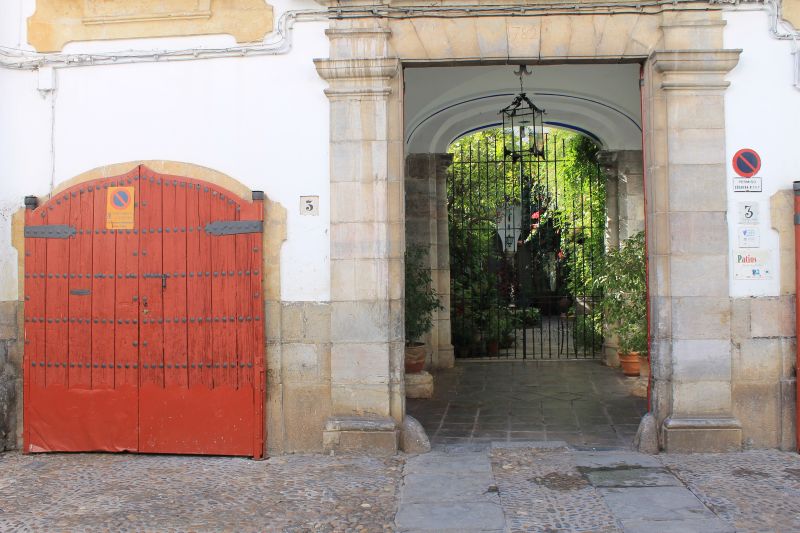
We did the red hop-on hop-off bus tour of Córdoba — with the red bus and the headphone audio commentary, you can cover the city at your own pace, hopping off at whatever interests you and catching the next bus when you’re ready. This is actually a great way to get oriented in an unfamiliar city, especially on a day trip when time is limited. We wandered the Calle Torrijos side streets from Plaza de la Corredera — the old quarter of Córdoba is full of whitewashed alleyways, flower-filled patios, and small plazas that make you want to slow down and stay.
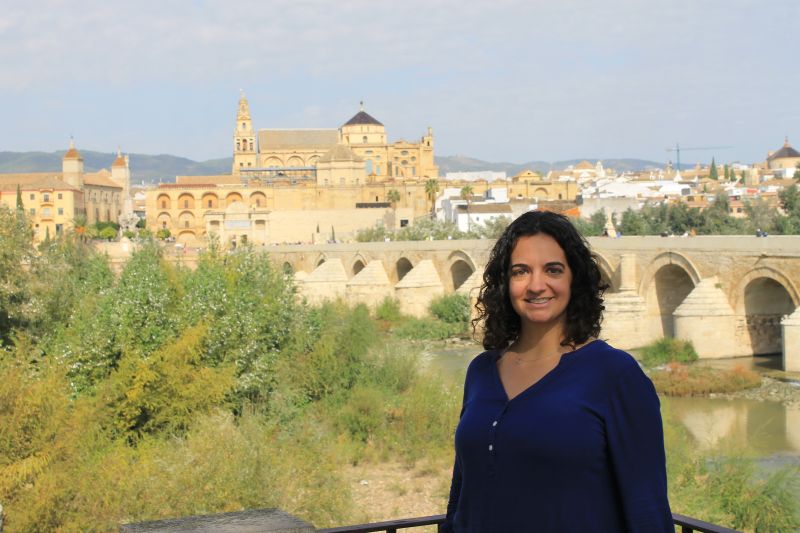
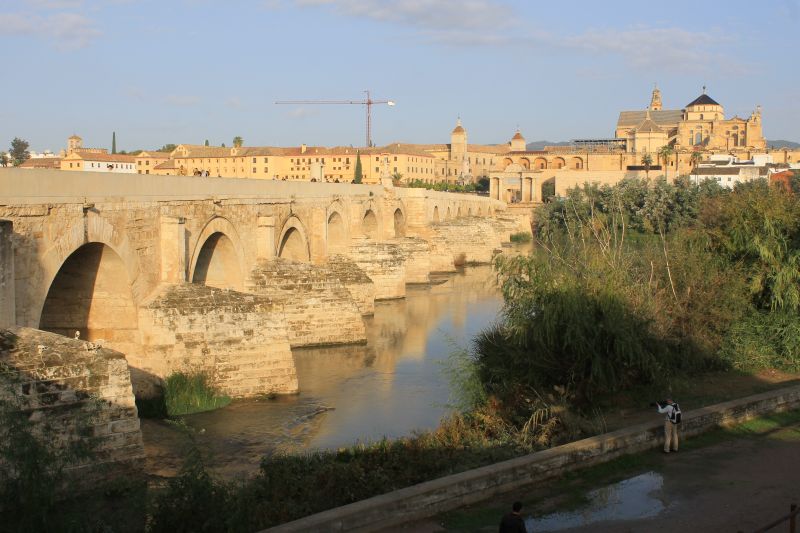
The Roman Bridge of Córdoba (Puente Romano) spans the Guadalquivir River and has stood — in various states of repair — since the 1st century BC. Walking across it with the Calahorra Tower on one end and the Mosque-Cathedral on the other is a surreal experience of historical layering.
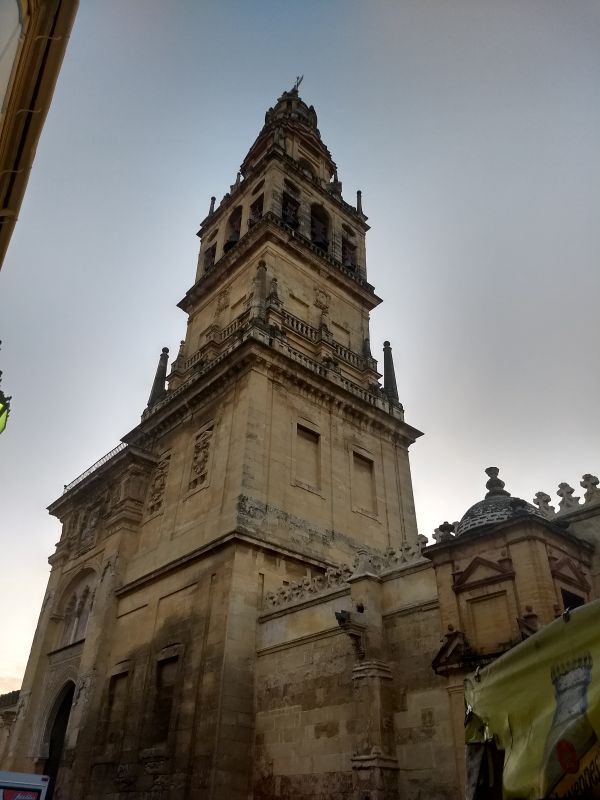
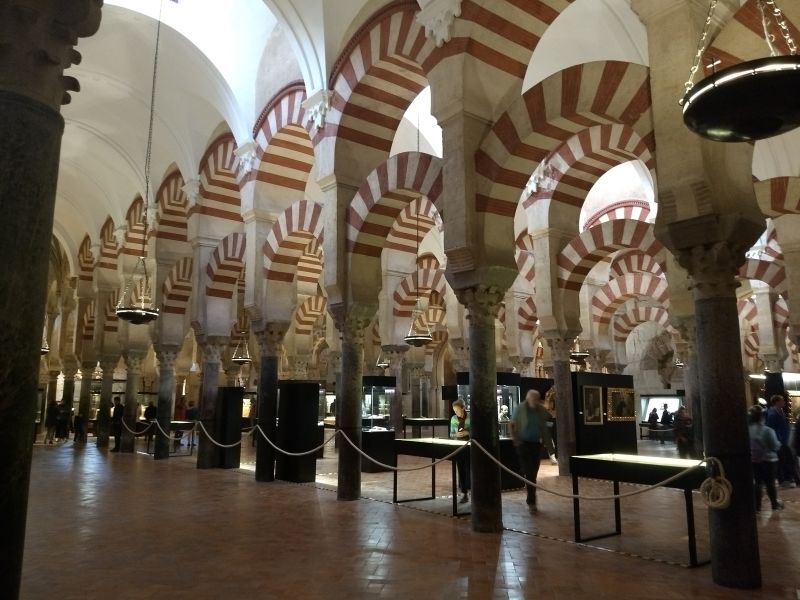
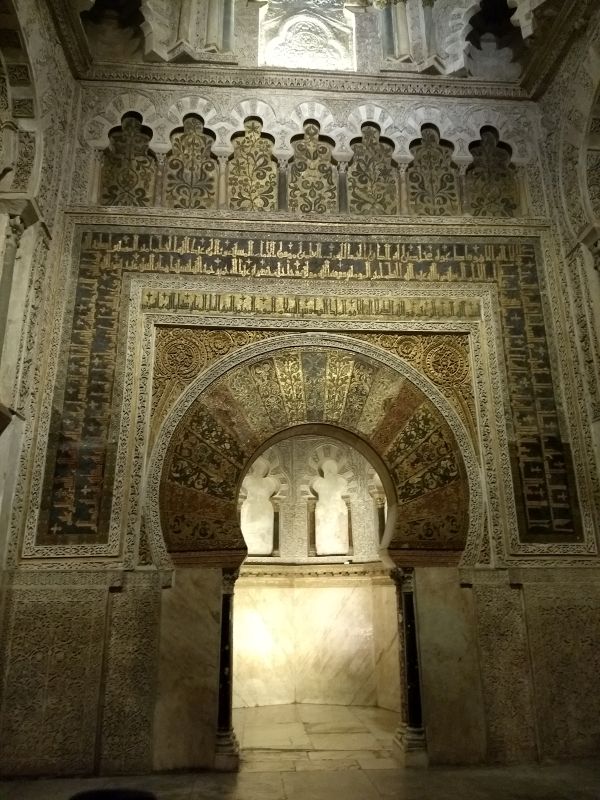
The Mosque-Cathedral of Córdoba (Mezquita-Catedral de Córdoba) is, without exaggeration, one of the most extraordinary buildings in the world. It began as a Visigothic church, was converted into a grand mosque under Moorish rule in the 8th century, and then had a Christian cathedral literally constructed inside it after the Reconquista. The result is a space that should be architecturally incoherent but is somehow magnificent — a forest of red-and-white striped arches stretching in every direction, with a Renaissance cathedral rising from the center. It needs to be seen.
MADRID: 3 Days
Day 10 — Arrival & First Impressions
The AVE high-speed train from Málaga to Madrid is one of the better travel experiences in Europe — comfortable, fast (about 2.5 hours), and scenic. Book in advance on Renfe for the best fares.
Madrid hit differently than Barcelona. It felt like a proper capital: grand boulevards, monumental architecture, a confidence and energy that was welcoming rather than overwhelming. We were back in a hotel, and this one behaved normally. No leaking windows.
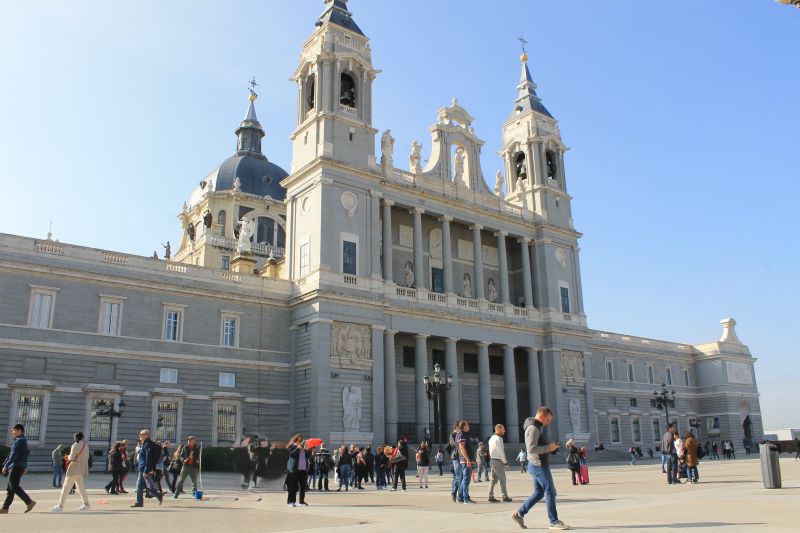
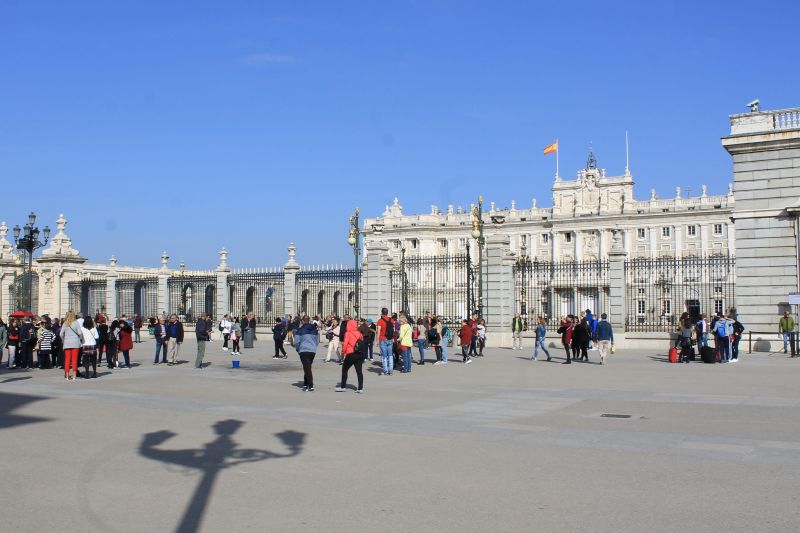
That first afternoon we walked to the Almudena Cathedral and past the Royal Palace of Madrid. The Almudena is Madrid’s main cathedral and one of the newest in Europe (it wasn’t consecrated until 1993, despite construction beginning in the 1880s). The Royal Palace — the largest royal palace in Western Europe by floor area — is right next door, and the two buildings together with the broad plaza between them make for a genuinely grand arrival.
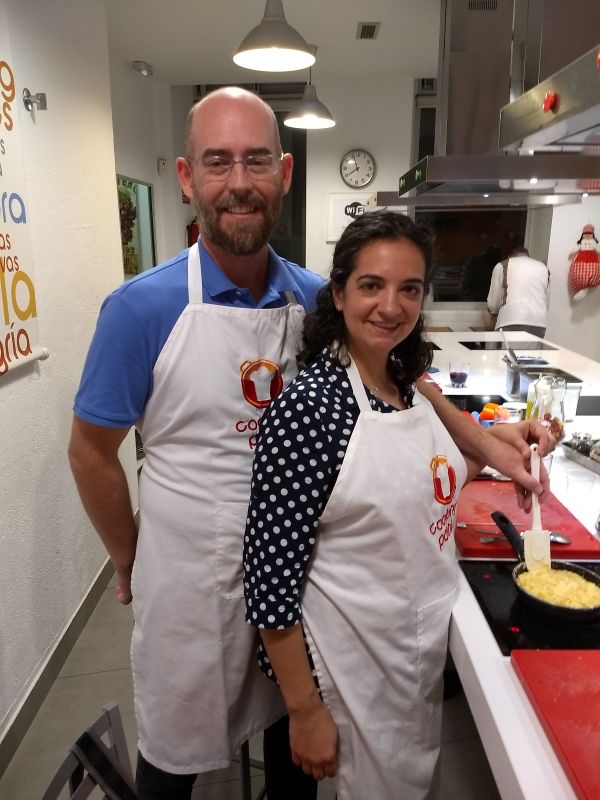
That evening we did a cooking class, which was a highlight of the Madrid stay. Learning to make Spanish dishes hands-on — whether it’s tortilla española, croquetas, or sangria — is a wonderful way to connect with the food culture and come home with recipes you’ll actually use. We know we’ll be making the sangria again. Read about some of our Spanish eats here.
Day 11 — Bike Tour of Madrid
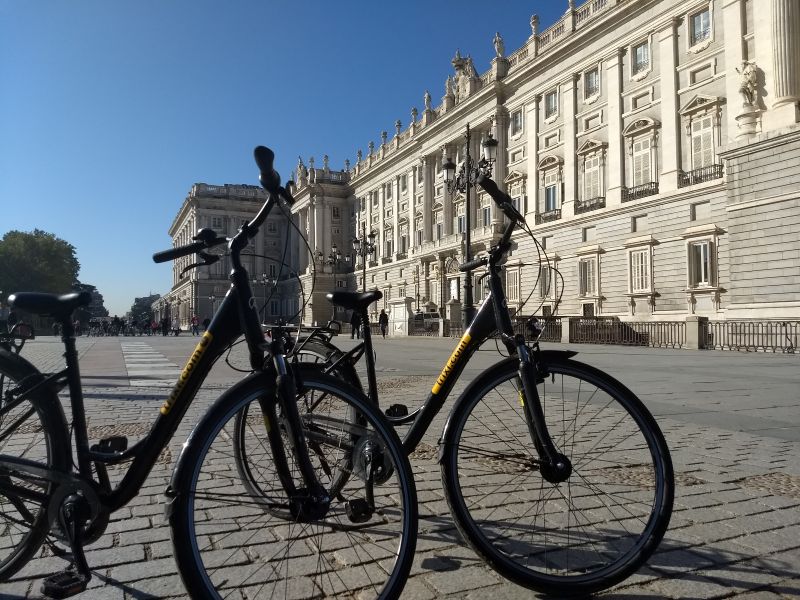
One of the best decisions of the whole trip. Madrid is actually a very bikeable city, and seeing it from two wheels — especially through the wide boulevards, past the big parks, along the Manzanares River greenway — gave us a completely different perspective than walking. Our guide for the three hour trip was excellent, the pace was easy, and we covered far more ground than we would have on foot. We started from the city center and biked about 6 miles total seeing several monuments, parks, gardens, the Royal Palace, the Plaza Mayor, the Puerta del Sol or the Almudena Cathedral. It was a great way to see a lot in a short period of time.
Day 12 — Retiro Park & a Spanish Show
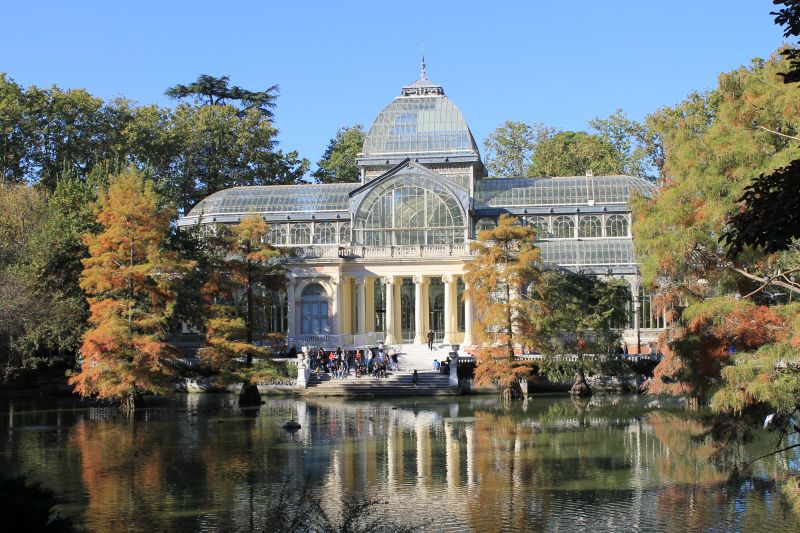
El Retiro Park is Madrid’s great urban green space — 350 acres of gardens, promenades, a boating lake, rose gardens, and the stunning Crystal Palace (Palacio de Cristal), a massive iron-and-glass greenhouse built in 1887. Locals use this park constantly: jogging, picnicking, reading, rowing boats, playing music. Spending a morning here feels like being a local for a few hours. We opted to walk around the park, check out the crystal palace, walk through the gardens, and row a boat in the lake.
That evening we saw a Spanish show — the kind of flamenco and traditional performance that’s staged for visitors but is genuinely entertaining and gives you a real sense of the music and movement that’s woven through Spanish culture. A good evening show in Madrid is worth booking.
The Prado — Free Evening Hours
One of the best tips we can pass on from Madrid: the Museo del Prado offers free admission during evening hours — Monday through Saturday from 6 to 8pm, and Sundays from 5 to 7pm. This policy has been in place for years, and it was in effect during our October 2018 visit.
The catch: everyone knows about it. We joined what was already a long queue outside. We waited. And waited. By the time we got inside, we had maybe 90 minutes before closing — but those 90 minutes were enough. The Prado’s collection is staggering: Velázquez, Goya (his haunting Black Paintings alone are worth the trip), El Greco, Bosch’s Garden of Earthly Delights. Even a compressed visit leaves an impression.
Was it worth the wait? Yes. Would I do it again? Also yes — but I’d arrive earlier to get a better spot in the queue.
Day 13 — Flight Home
Our last morning in Madrid. The flight home from Madrid is straightforward; the airport (Adolfo Suárez Madrid–Barajas) is large and well-connected.
We spent our last euros on airport jamón and cava. As one does.
Tips We’d Tell Our Past Selves
Language: English is widely spoken in tourist areas across all three cities. Many restaurant menus have English translations, and audio guides (including at the Prado and major sites) are available in multiple languages. That said, learning a handful of phrases goes a long way: por favor, gracias, lo siento, una mesa para dos, ¿dónde está el baño? — you won’t regret it.
Book in Advance: This is where Justin and I have fundamentally different travel philosophies. I’m a planner; I want the big things locked in before we leave home. Justin prefers to see how he feels when we get there. But some of the big sites do sell out, so if you really want to see something, book it. After this trip we decided on a mix…we pick 2-3 must do things, and leave a lot of flexible room for smaller activities or things that come up that we may not have known about.
Get a Local SIM or International Data Plan: We cannot stress this enough. Navigating old European cities without data access is a recipe for a two-hour cobblestone scavenger hunt. (See: Málaga, Day 18.)
Carry-On Only Is Doable — With Caveats: We packed for 12 days in carry-on luggage and it worked, but it required planning and a mid-trip laundry stop. Pack versatile pieces, quick-dry fabrics where possible.
The Late Dinner Thing: Dinner at 10pm is real and it’s glorious — if you can stay awake for it. We made it once. The restaurant was packed, lively, and the food was exceptional. Try it at least once.
Tapas, Cava & Jamón: These three things are the holy trinity of eating in Spain. The tapas culture encourages small plates and moving between bars (tapeo). Cava is Catalonia’s answer to Champagne and costs almost nothing by the glass. And jamón — real Jamón Ibérico de Bellota, thinly sliced — is one of the most purely delicious things you can eat. Prioritize all three.
Our City Rankings
I went to Spain fully expecting to fall head-over-heels for Barcelona. And while Barcelona delivered on the architecture and the buzz, it was Madrid that stole my heart — and Málaga that surprised me most with its relaxed, cobblestoned, by-the-water charm. If everyone is telling you Barcelona is the crown jewel of Spain, just know: the rest of the country deserves your attention too. And if I make it to Spain again in teh future, I’ll probably head further up north.
- 🥇 Madrid — Exceeded every expectation. Great food, world-class art, a bike-friendly city that rewards exploration, so much history, and a warmth we didn’t fully anticipate.
- 🥈 Málaga — Underrated gem. Relaxed, cobblestoned, coastal. Three incredible day trips within easy reach (Gibraltar, Ronda, Córdoba). The kind of city you wish you had more time in.
- 🥉 Barcelona — Still worth going. The architecture days were extraordinary. But the crowds, the hotel room flood, the outer-edge location, and perhaps the weight of my own expectations all conspired to put it third. Manage your expectations and book everything in advance.
Links from this trip in one spot:
- Day Trip From Barcelona: Montserrat and Oller del Mas Tour Guide
- Visiting the Teatro Romano and Alcazaba in Málaga: Two Thousand Years in One Afternoon
- Taming the Tapas: Cooking Classes, Late Nights, and the Ham That Changed My Mind
- Ruined by Rain: Our Soaked, Short-Lived Day Trip to Ronda
- Day Trip to the Rock of Gibraltar from Málaga
- Is it Gaudi or Gaudy? A 2018 Tour of Barcelona’s Wildest Masterpieces