If there is one thing you can absolutely count on when traveling through Spain, it is that you will not go hungry. Our unofficial food mission was simple: eat as many tapas as possible, drink cava at every opportunity, and consume a truly irresponsible amount of jamón. By the time we left, our bellies were very happy — and one of my lifelong picky-eater habit had been permanently rattled. Continue reading to find out what we were eating in Spain.
The Tapas Life
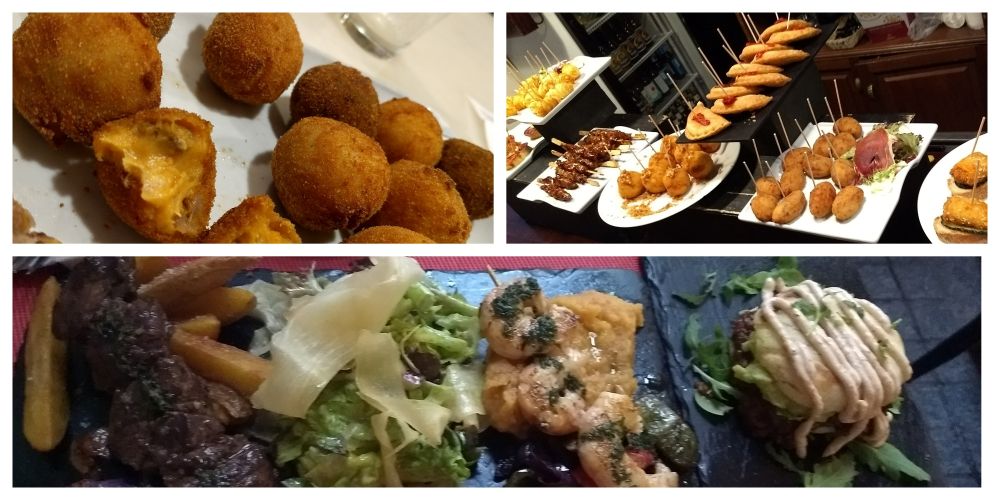
We loved hopping from one lively tapas bar to the next, especially in Malaga, watching bartenders pour drinks and slide small plates across zinc counters without even looking up. Tapas aren’t just a way of eating — they’re a whole social rhythm. You order a couple of plates, have a drink, move on to the next place. It’s called tapeo, and once you get into the groove of it, sitting down for a single enormous meal feels almost beside the point.
My personal favorites: croquetas — crispy fried cylinders with a molten, creamy jamón filling that I could have eaten by the dozen — and patatas bravas, which showed up everywhere and were never exactly the same twice. Some bars serve them with a smoky brava sauce, some with alioli, some with both.
We also went to a vermouth tasting — a very Spanish pre-meal tradition, especially in Barcelona and Madrid. Or rather, Justin tried vermouth. I managed about one sip before deciding it was firmly not for me. But watching the locals settle in at a marble bar with a glass of house vermouth and some olives at noon on a Tuesday was one of those beautiful glimpses into a completely different relationship with time and food.
The 10 PM Dinner Struggle
Spain runs on a completely different clock than we do. Lunch is the main event, usually somewhere between 2 and 4 PM. Dinner doesn’t even begin until 9 PM at the earliest, and restaurants don’t really fill up until 10 or 10:30. The whole country is just living its best life at an hour when we are normally horizontal on a couch.
We tried. We really did. But our stomachs kept staging a revolt somewhere around 7:30 PM, and hunger always won. Most nights we ate with the tourists and made peace with it.
But we did make it to one genuinely late Spanish dinner — and I’m so glad we did, because it reset my entire understanding of what a meal can be. The restaurant was loud. Not in an annoying way. In a way I’ve never quite experienced at home. Every table seemed to be a big group — families, friends, people who clearly did this every week. They were laughing, talking over each other, passing plates, pouring wine. Nobody was on their phone. Nobody was eating quickly to get somewhere else. It felt less like dinner and more like an occasion, like the whole point was the people sitting around the table and the food was just a very good reason to gather. I don’t know if it was just that particular restaurant, but I left genuinely a little wistful that we don’t eat like that at home.
One dinner note: we had paella one night, which I’d been looking forward to — I love rice, so it seemed like a guaranteed win. It was fine. Just fine. Maybe our expectations were too high, or maybe we just didn’t find the right place. If you’re chasing a transcendent paella experience in Spain, do your research first and don’t leave it to chance the way we did.
The Bread That Fixed My Tomato Problem
Here is something I have never admitted on this blog: I do not like tomatoes. I pick them out of everything. Always have.
And then Spain handed me pan con tomate — toasted bread rubbed with fresh tomato, drizzled with good olive oil, finished with a little salt — and something short-circuited in my brain. I don’t know if it’s the quality of the bread, the olive oil, the fact that the tomato is more of a seasoning than an ingredient, or some combination of all three. But I ate it every single time it appeared in front of me, which in Catalonia is basically at every meal.
I came home from this trip and stopped picking tomatoes out of things. I can now eat a cherry tomato straight. This is not nothing. Spain did that.
Jamón: The Good Stuff
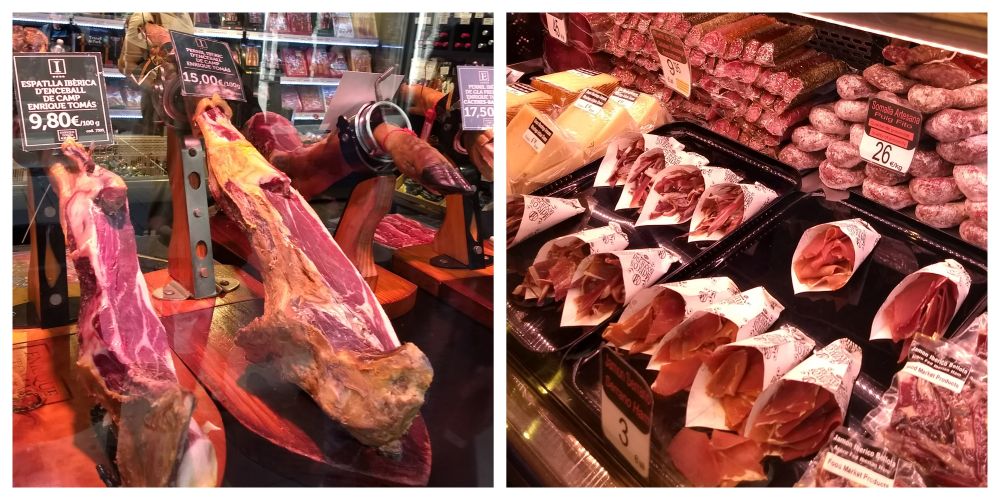
You cannot walk a block in Spain without seeing a leg of jamón. Entire storefronts are dedicated to it — whole legs mounted on wooden carving stands, rows of them hanging from the ceiling, a faint smell of cured meat drifting out onto the street and pulling you in.
There is a whole hierarchy, and it matters. Jamón Serrano is the everyday version — cured mountain ham, good and widely available. But Jamón Ibérico de Bellota — from black-footed Iberian pigs that roam oak forests and eat almost exclusively acorns before curing — is in a completely different category. Thinly sliced, almost translucent, with a nutty richness that doesn’t taste like any other ham on earth. It can be pricey depending on the grade, but it is not optional.
We ate a lot of it. No regrets.
The Markets
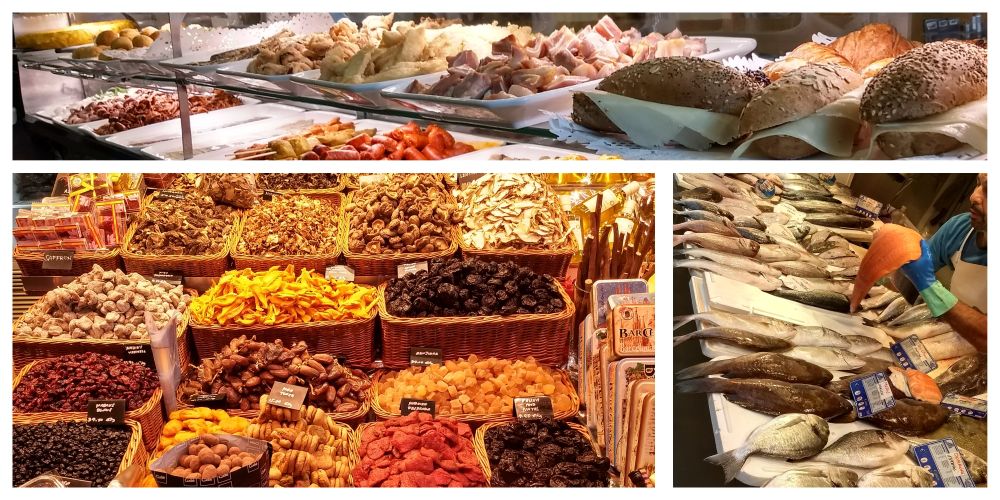
Here in the States, we have farmers markets — and yes, the produce is fresh, but it also tends to be a bit of an event, a bit pricey, a bit self-conscious about being a farmers market. The covered markets in Spain felt completely different. They’re just where people buy food. Stalls packed with bright produce, dried fruits, wild mushrooms, olives, cheese, fresh seafood laid out on ice that looked like it had been in the ocean that morning.
The outdoor markets were equally wonderful — honey in every variety, local cheeses, preserves, pastries, things you couldn’t quite identify but bought anyway. Wandering through a Spanish market is one of those low-key travel experiences that ends up being a highlight.
Churros & Hot Chocolate: Non-Negotiable
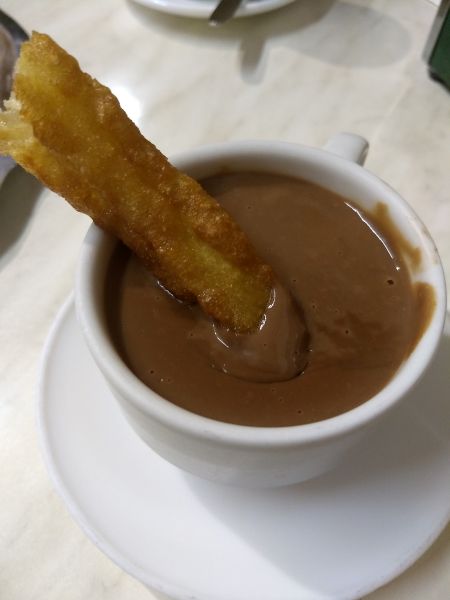
We had churros and hot chocolate after our day trip to Gibraltar, and I need to be specific about what Spanish hot chocolate actually is, because it is not what you’re picturing. It is not hot cocoa. It is not even a drink, really. It is thick, dark, almost molten chocolate that you dip your churros into. It has the consistency of a loose pudding. The churro is just a vehicle for getting it into your mouth as efficiently as possible.
If you go to Spain and skip this, I don’t know what to tell you.
The Cooking Class: Cooking Point, Madrid
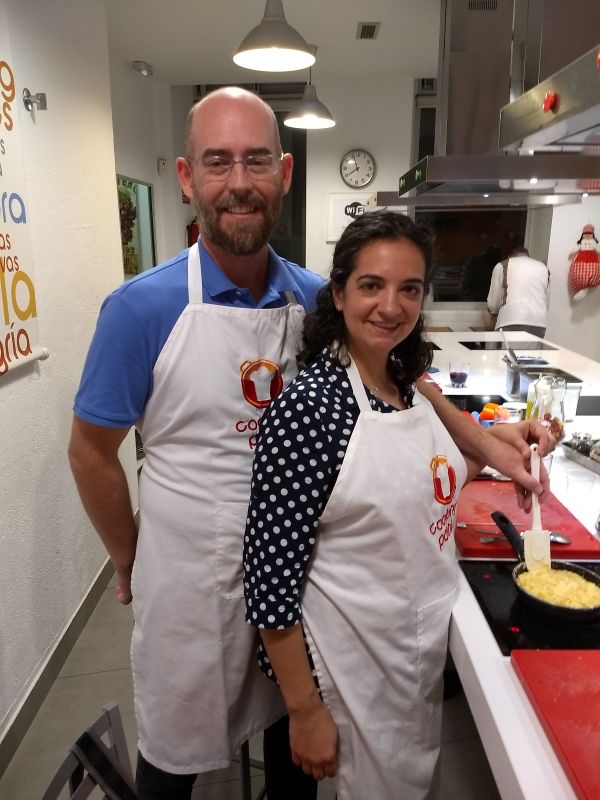
On our first evening in Madrid, we signed up for a cooking class at Cooking Point — a small, bright school right in the city center. There were about twelve of us students total, and one instructor in a chef’s whites who started the evening with a short history of Spanish cuisine before we ever touched a pan.
The first thing we made was sangria — and the instructor explained why it went first: it needed time to chill and marinate in the fridge while we worked on everything else. Each couple made their own small pitcher. I’m not going to pretend I wasn’t sneaking tastes of it while it sat in the fridge.
Then the real work began. This was a genuinely hands-on class — we chopped, prepped, cooked. We made a classic Spanish tortilla (the egg and potato kind, not the flour kind), garlic shrimp sizzling in olive oil and garlic in a clay cazuela, and meatballs in a rich tomato sauce. Justin took his tortilla very seriously, which felt right.
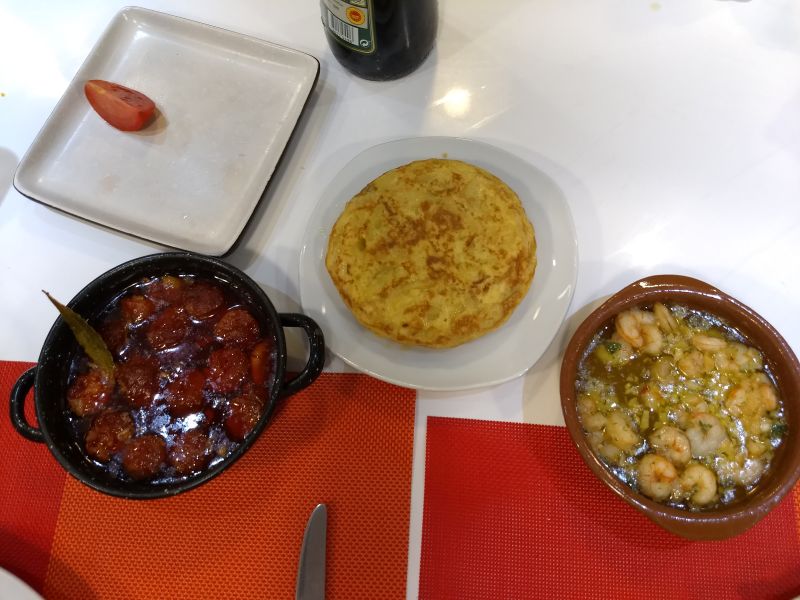
And then dessert: crema catalana, the Spanish cousin of crème brûlée. Justin got to use the torch to caramelize the sugar on top, which he enjoyed perhaps more than was strictly necessary.
When everything was ready, all twelve of us sat down together and ate what we’d made. The sangria came out of the fridge. The tortilla was sliced. The garlic shrimp were still sizzling. It was one of those evenings that felt easy and fun and — because we’d actually made the food ourselves — extra satisfying.
We’ve already made the sangria at home. It’s a staple now.
Check out the other posts related to this trip:
- 12 day Itinerary: Barcelona, Málaga & Madrid — Fun Days of Tapas, History & Cava
- Day Trip From Barcelona: Montserrat and Oller del Mas Tour Guide
- Visiting the Teatro Romano and Alcazaba in Málaga: Two Thousand Years in One Afternoon
- Ruined by Rain: Our Soaked, Short-Lived Day Trip to Ronda
- Day Trip to the Rock of Gibraltar from Málaga
- Is it Gaudi or Gaudy? A 2018 Tour of Barcelona’s Wildest Masterpieces