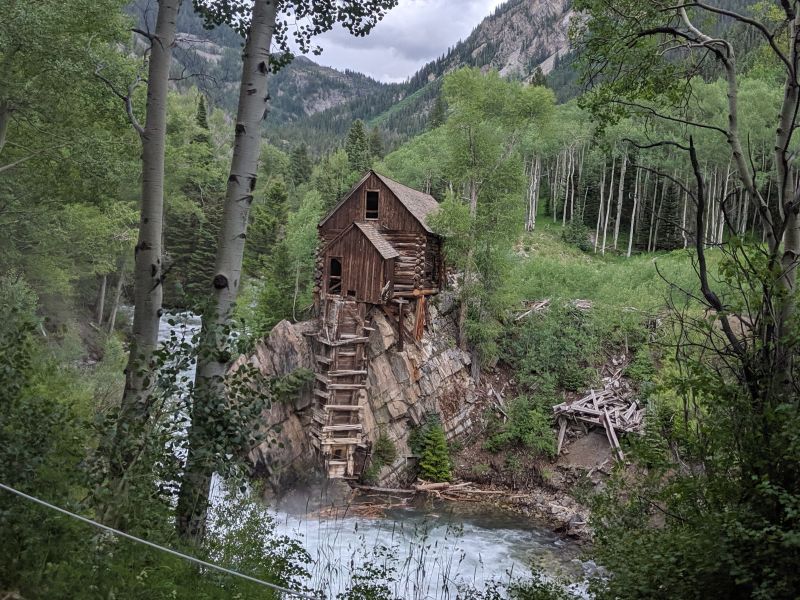
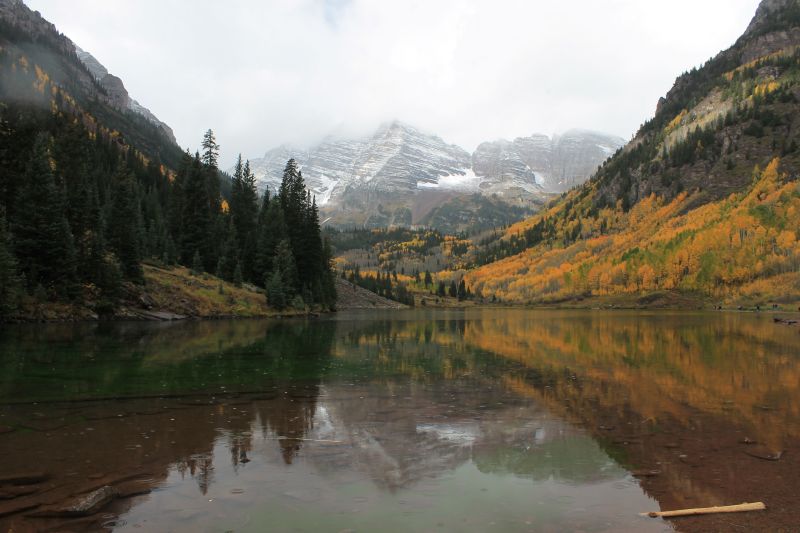
Sometimes, the best travel experiences are the ones you don’t over-plan. Toward the end of September 2014, I took a road trip up to the Aspen area for a long weekend. The trip had a wonderful social start—I caught up with a friend I used to know back in New York who was now living in Aspen/Snowmass, and we spent a fun evening catching up over dinner.
The next morning was a quiet Monday, and I decided to venture out to Colorado’s most iconic peaks on my own: the Maroon Bells.
Because it was a weekday and technically just past the peak weekend rush, I lucked out tremendously. I didn’t have to navigate public transportation or wait for a shuttle bus. Instead, I was able to drive my own car right up the winding mountain road and park directly in the main lot.*
First Impressions: A Breathtaking Welcome of Maroon Bells
When you step out into the crisp mountain air at the edge of the parking area, the view hits you instantly.
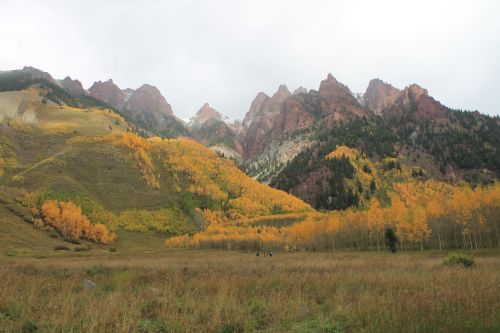
The sight of those towering, majestic peaks framing the valley is an absolute “WOW” moment. It is utterly breathtaking. Honestly, when I first planned the detour, I thought this was just going to be a quick scenic overlook stop—a place where I would get out of the car, snap a few photos of the famous mountains, and head back on my way.
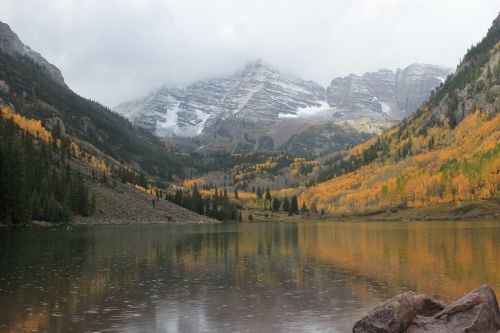
I was thrilled to find out that wasn’t the case at all. I was moving around to get pictures at different angles and kept seeing people go farther and not return — I was curious and followed a little to find out there they were going — a trail. It was just starting to hail, so I thought maybe if I walked the trail for a while, maybe when I got back the hail/snow would be done, and I could get another photo.
Trail Spotlight: Maroon Lake Scenic Trail
Depending on how much time you have (and what kind of footwear you’re wearing!), the valley offers two very different experiences right next to each other.
Option 1: Maroon Lake Scenic Trail (Easy Loop). 1 mile loop on easy terrain. This gentle trail loops around the immediate shoreline of Maroon Lake. Because it has virtually no elevation gain, it’s perfect for a relaxing stroll and for photographers trying to capture that legendary, glass-like mirror reflection of the peaks on the water.
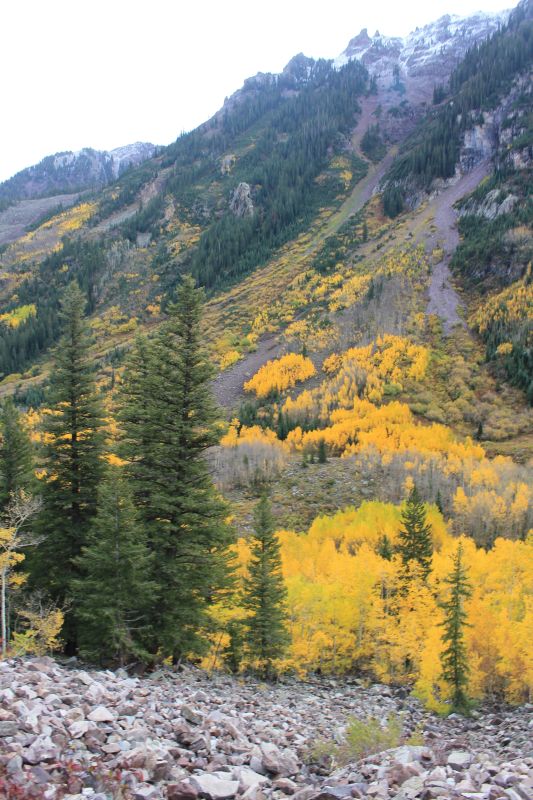
Option 2: Crater Lake Trail (Moderate Out-and-Back). about 3.6 miles out and back with about 500-600 feet in elevation gain. If you follow the lakeside path all the way to the far end of Maroon Lake, you’ll run right into the official wooden boundary sign for the Maroon Bells-Snowmass Wilderness. This is where the flat stroll ends and the real hiking begins! The Crater Lake Trail is a rugged out-and-back hike that pushes directly up into the glacial valley. You trade the smooth gravel for steep, rocky switchbacks and wide talus boulder fields. It takes some careful foot placement, but the reward is getting to look down at the massive blankets of golden aspens filling the valley floor, with Maroon Lake shrinking behind you.
I ended up on the Crater Lake Trail and was so glad I ventured farther than the area near the parking lot.
Embracing the Mood, the Mud, and the Foliage
When I first arrived that morning, I’ll admit I was a little skeptical about the timing of my visit. The sky was heavy, dark with clouds, and a light flurry of snow was actually falling through the mountain air.
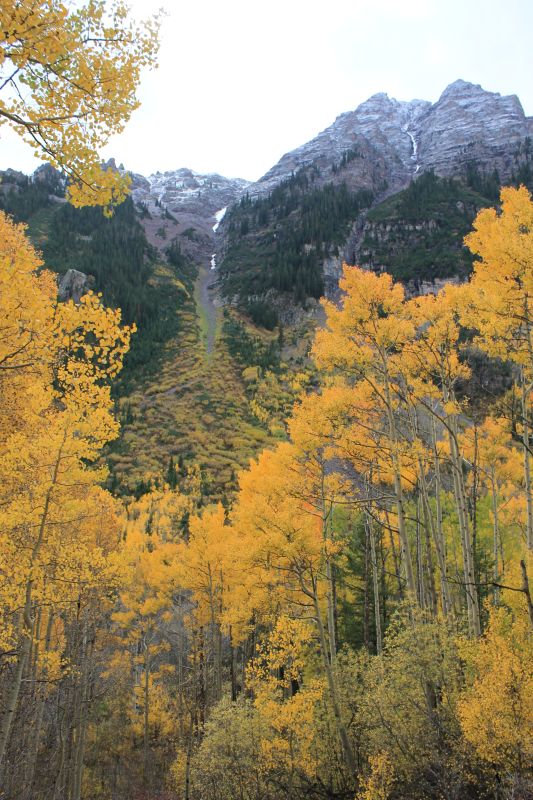
As I crossed the wilderness threshold and started climbing the rocky path, I realized the moody weather was actually a hidden blessing. The dark, cloudy sky and the dusting of fresh white snow created a dramatic contrast that made the landscape pop in a completely unique way.
The trail wound through incredible corridors of bright, golden-yellow autumn aspens that lit up the valley floor like paint strokes against the dark granite mountains.
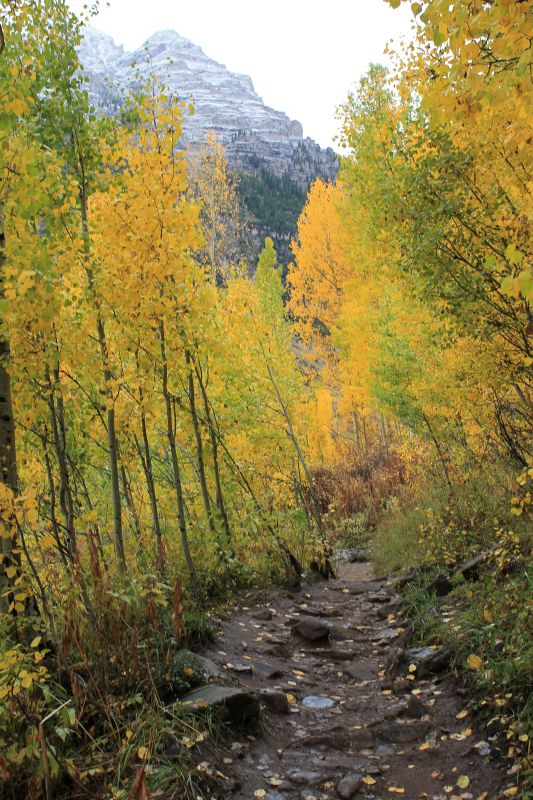
Crossing past the wilderness sign, the path transitioned from easy gravel to a steep, dirt terrain strewn with fallen leaves, rocks, and mud from the recent precipitation.
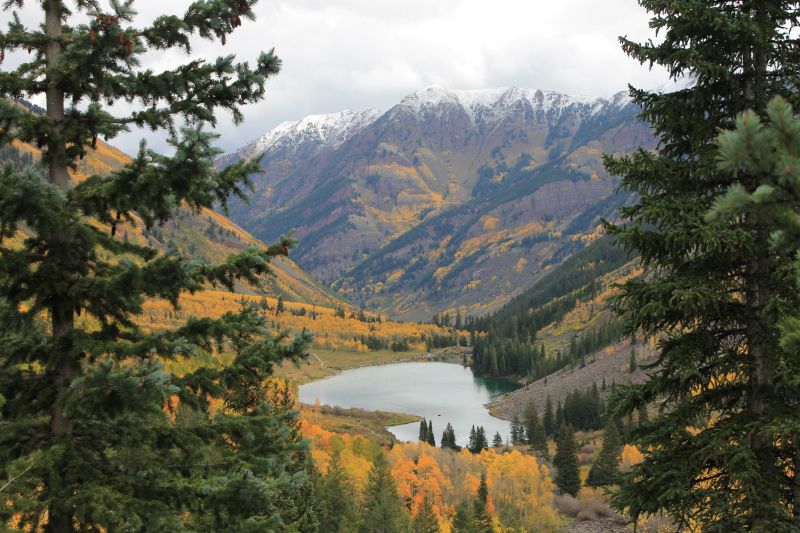
Gaining elevation along the trail provided some incredible vantage points looking back down the valley. Framed by evergreen pine trees, Maroon Lake took on a deep, glassy green hue that perfectly mirrored the vibrant blankets of yellow aspen groves climbing up the opposite hillsides.
Further along, the trail cuts right through a rugged, exposed boulder field. Walking over the loose, massive stones and looking up at the snow-dusted ridges made the entire landscape feel incredibly wild and vast.
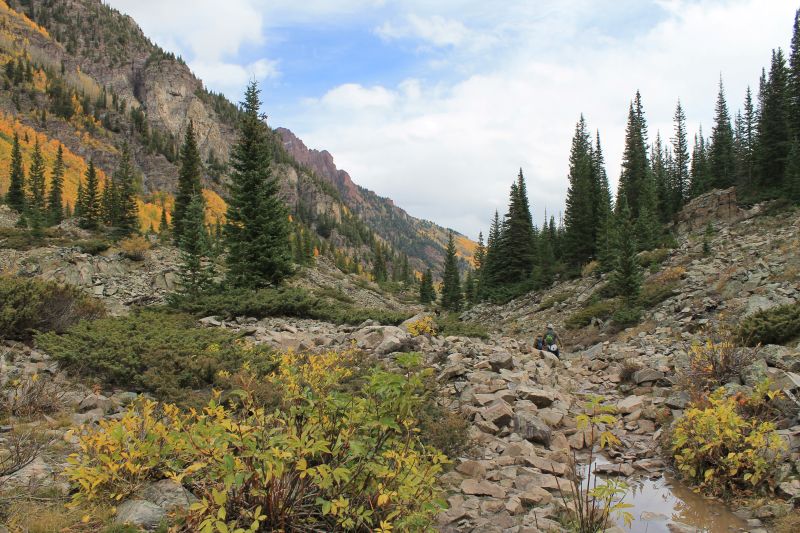
Eventually, the steepest rocky climbs began to level out into open alpine meadows. From here, the sheer, massive faces of the Bells felt close enough to touch, standing prominently against a low ceiling of soft mountain clouds.
I am so glad I made a trip out to the Maroon Bells, spending about 3 hours here.
Read about other Colorado adventures here.
*UPDATE: Looking back at how effortless it was to drive up on a whim on that chilly Monday in 2014, things have definitely evolved to protect this heavily visited wilderness.
If you are planning your own trip to see this bucket-list view today, keep in mind that the “just drive up and park” days are a bit different now:
- The Shuttle & Reservation System: To protect the fragile alpine environment, Aspen now requires advanced reservations for both parking and the scenic shuttle bus.
- Seasonal Restrictions: During the peak summer and autumn months, personal vehicles are restricted on Maroon Creek Road during the middle of the day, making the shuttle the primary way to access the lake. Be sure to check the official Visit Maroon Bells portal or the Aspen Chamber blog to secure your passes well before you head into the mountains!
Even with the new reservation steps, standing in that valley surrounded by golden aspens and looking up at those two maroon-colored giants is an experience that belongs on every Colorado itinerary.