Having spent only a short few months living in Colorado, it felt like every single person I met had the same piece of advice: have you done the Hanging Lake hike? Hearing the constant praise for this legendary spot, I finally decided to see it for myself on September 30, 2014. I woke up early, hopped onto I-70 West, and settled in for the roughly 2.5-hour drive into the breathtaking depths of Glenwood Canyon.
I knew from everything I’d read that parking here could be hard. I hoped that a midweek day would be less busy, and I didn’t actually pull into the parking area until 10:00 AM. I managed to snag a parking space right away. The weather was definitely iffy—cloudy, damp, and threatened by a light drizzle—but nothing was going to stop me from hitting the trail.
The Stats & The Stairway to the Top
The Hanging Lake hike was a little hard for me as I had not acclimated to the high altitude yet. Gaining 1,200 vertical feet in just a mile means you are essentially climbing a relentless, giant staircase made of rock. The journey kicks off with a brief, flat walk along a paved recreation path that hugs the canyon floor.
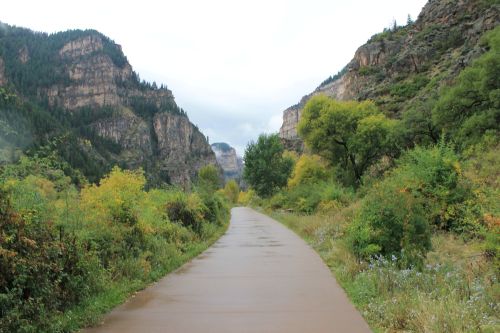
But as soon as you veer off into the canyon toward Deadhorse Creek, the real work begins. The path rapidly turns into a steep, rugged tangle of giant boulders and rough stone steps.
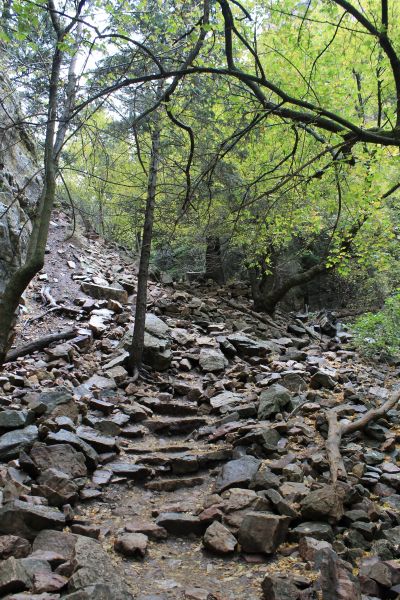
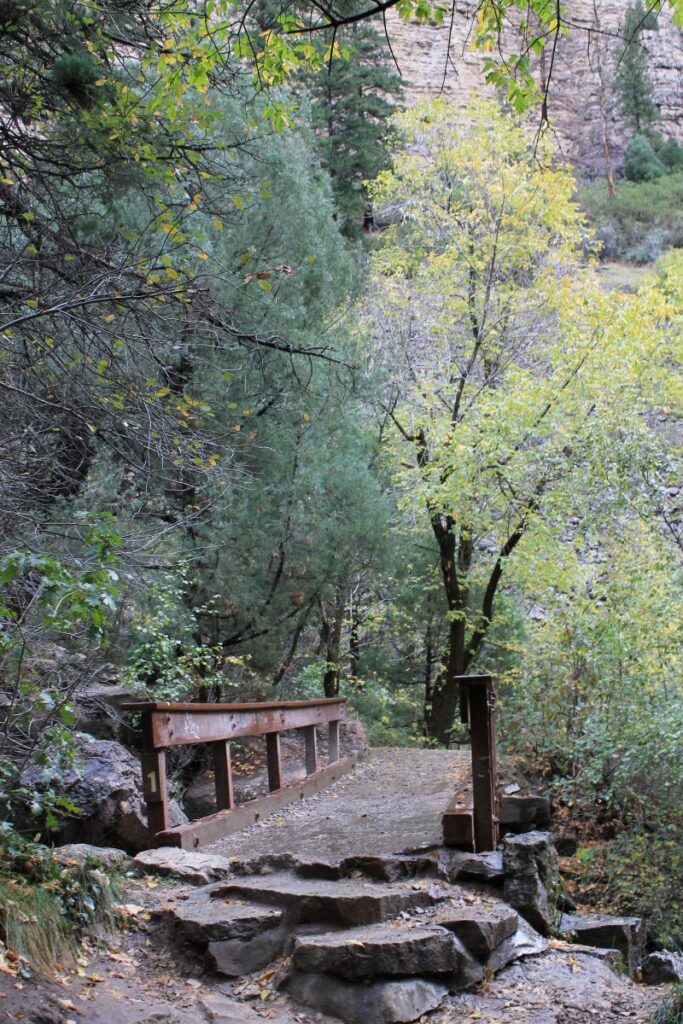
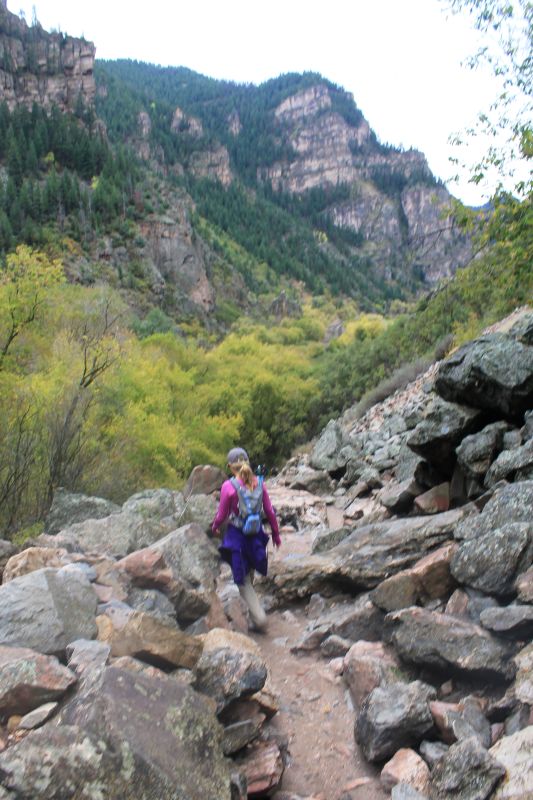
With the rain lightly falling, those steep rock faces became incredibly slick. Like anytime I am determined to finish a difficult trail, I didn’t let the incline rush me—I just put my head down, watched my footing, and went slow.
The physical effort was intense, but looking up at the sheer, towering canyon walls blanketed in early autumn colors made it easy to justify stopping for a quick breath.
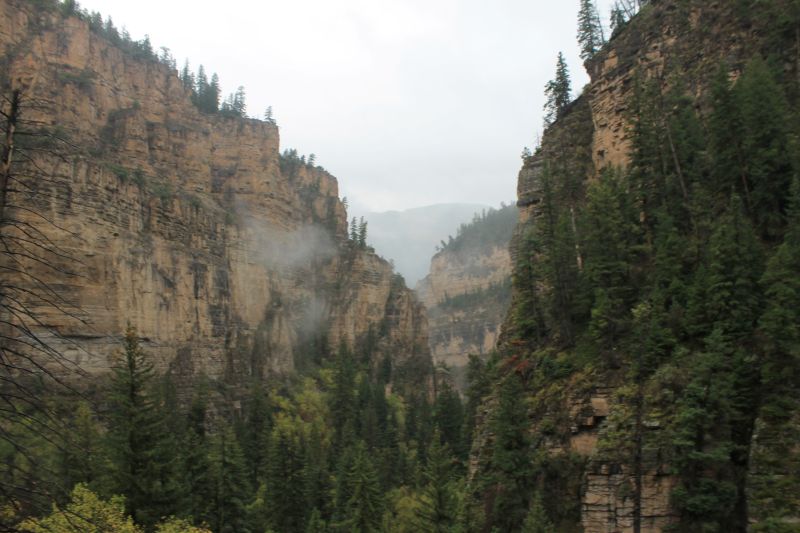
Reaching the Hanging Oasis
It felt incredibly rewarding when I finally conquered the final steep incline and stepped onto the wooden boardwalk at the top, just over an hour after leaving my car.
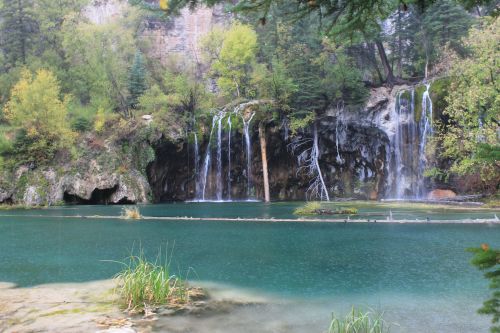
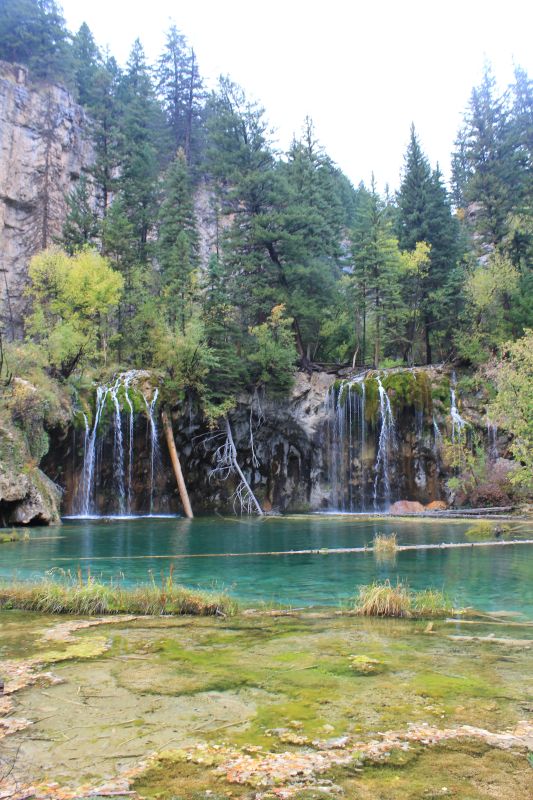
I stood there completely frozen. I had never in my life seen a body of water this color before—it was an intense, vibrant, almost surreal turquoise. The way the delicate waterfalls gracefully cascaded down the moss-draped rock walls directly into the crystal-clear pool looked like something out of a fairy tale.
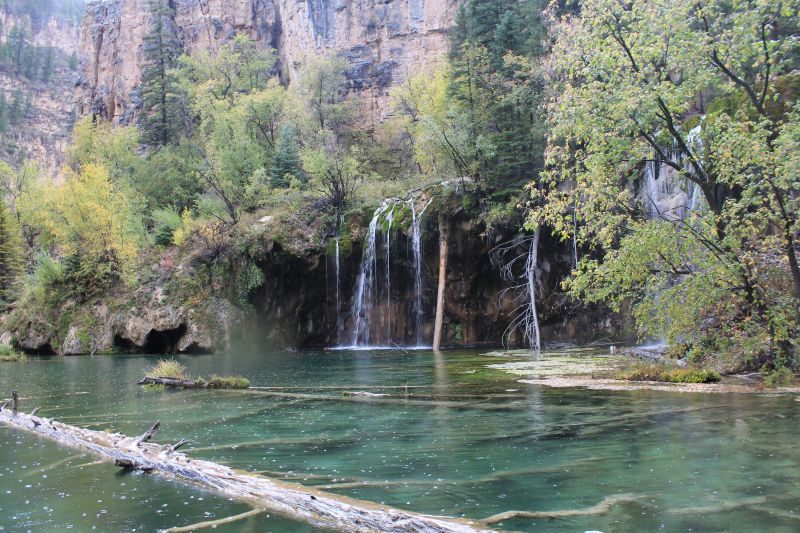
Even on a gray, overcast day, the colors popped vividly against the dark canyon stone. Standing on the edge of that boardwalk, the sheer beauty made the burning quads well worth it. I instantly understood exactly why this hike holds such a massive reputation across the state.
I walked around and took photos from different angles.
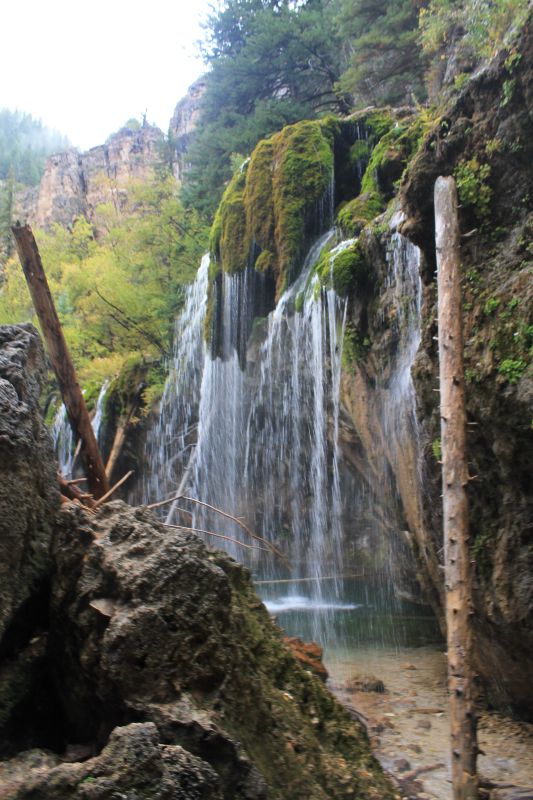
Making Connections on the Slick Descent
Heading back down, the wet rocks meant the descent required just as much concentration as the climb up. Taking my sweet, slow time to avoid slipping on the slick surfaces, I struck up a conversation with a father and daughter who were hiking nearby.
As it turned out, the daughter was right around my age and was also completely new to the area! We hit it off talking about navigating our new Colorado lives, and we ended up exchanging numbers by the end of the trail to keep in touch. Talk about an unexpected bonus to a solo mountain hike!
By the time I officially made it back down to the safety of my car, it was just before 1:00 PM. The mountain air had crisped up significantly, dropping down to a chilly 54°F. I blasted the heater and put on my seat warmer, incredibly grateful for the afternoon adventure.
UPDATE: The days of just driving up and hoping for a parking space like I did are officially over. To combat intense overcrowding and protect the ultra-fragile travertine ecosystem, the park now strictly requires a timed-entry permit year-round to hike. Your permit fee ($12 in peak season) guarantees you a parking slot at the trailhead rest area for a 3-hour window, making the whole experience much more organized than the old Wild West days of canyon parking!