Stumps of Stone: Pivoting to Florissant Fossil Beds National Monument
When your morning plans wrap up early, the open road always has a way of calling. Over Labor Day weekend in August 2014, I was visiting a friend and her family in the area. We spent a spectacular morning watching giant, colorful envelopes lift into the sky at the Colorado Springs Hot Air Balloon Festival, but by afternoon, my itinerary was completely empty.
Being relatively new to the area, I pulled out a map to see what was nearby. I noticed a patch of protected land about 45 minutes west of where I was: Florissant Fossil Beds National Monument. The weather was perfect, the sky was filled with beautiful, sweeping clouds, and it felt like a great afternoon to stay in the car, enjoy the open country, and explore somewhere completely new.
The Landscape & The Trails
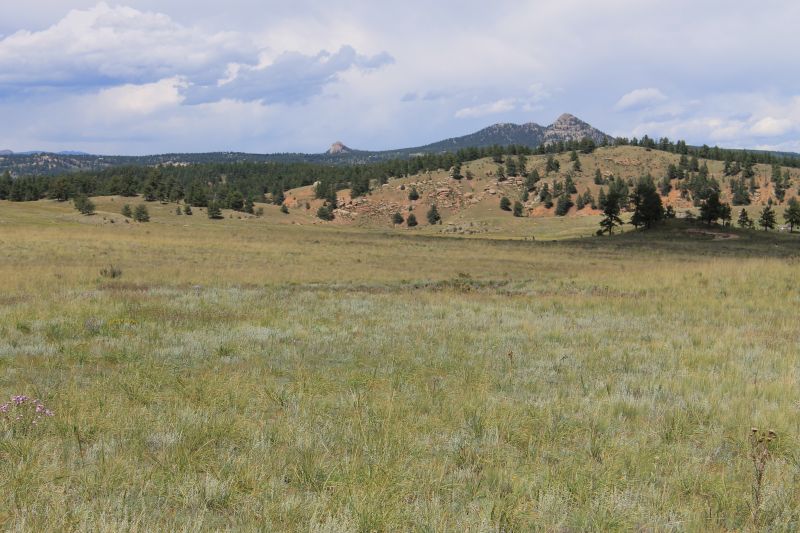
Arriving at the monument, the landscape immediately opens up into vast, rolling grassy meadows framed by distant ridges and evergreen forests.
The park features about 14 miles of trails in total, but since I only had a short afternoon window, I stuck to the main highlights directly behind the outdoor exhibit area and a few short walks.
1. The Outdoor Exhibits & The Trio
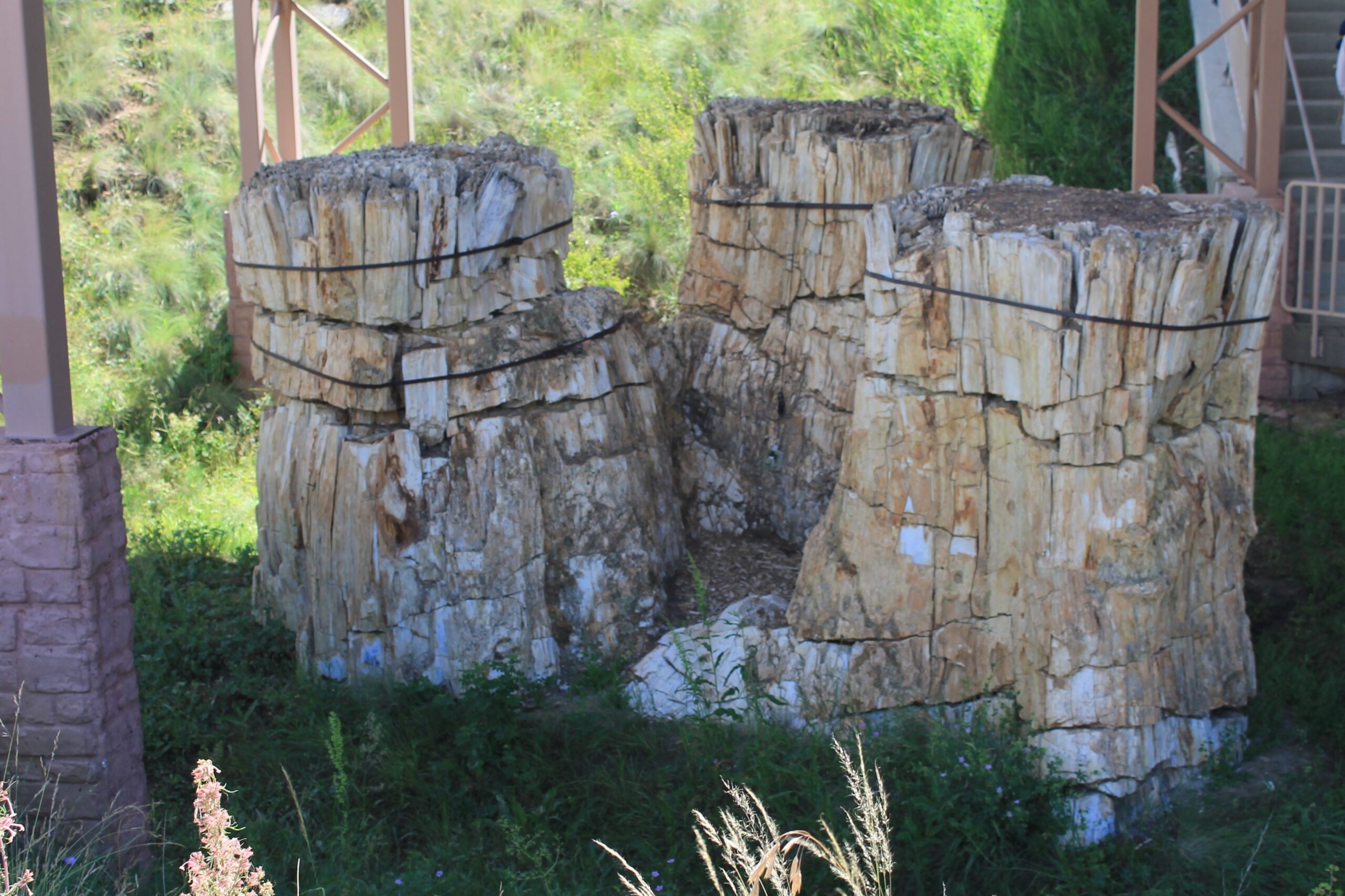
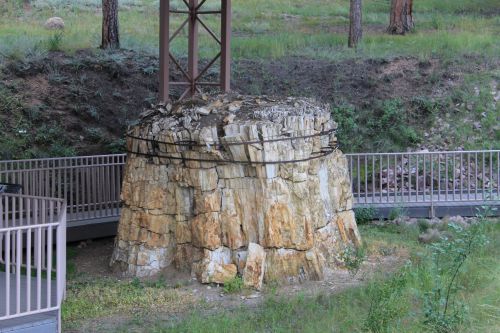
Located just a short walk (about 100 feet) behind the Visitor Center, the outdoor exhibit area features a handful of protected stumps. The most fascinating one here is actually a massive triple-trunk specimen. This unique formation is the world’s only known petrified trio of redwood trees—believed to be sprouts that originally grew directly from the base of a single parent tree, mimicking the exact behavior of modern coast redwoods!
2. The Petrified Forest Loop (1.1 Miles)
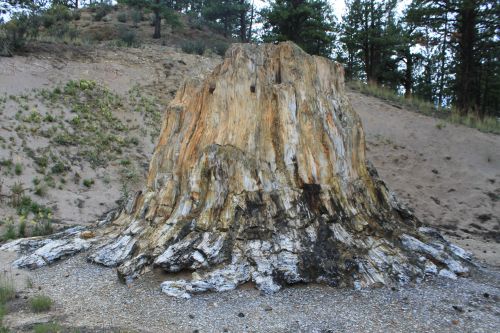
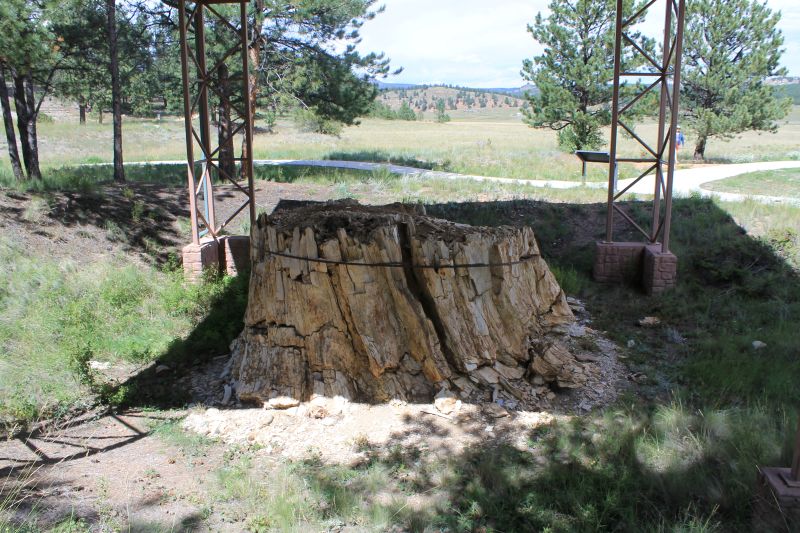
This self-guided loop trail is the park’s main attraction, leading you directly through the ancient sedimentary beds of what was once Lake Florissant. The path passes right by several of the park’s 30 officially documented petrified redwood stumps (though paleontologists believe there may be many more still completely hidden beneath the valley floor).
The most notable feature on this loop is the incredibly colorful “Big Stump.” It is a massive shattered base of an ancient redwood that measures a whopping 38 feet in circumference and features an embedded, century-old saw blade left behind by early excavators.
3. The Ponderosa Loop (0.4 Miles)
Right next to the main trail is this short, wheelchair-accessible loop. It breaks away from the ancient lake beds and enters a peaceful, modern forest canopy filled with towering ponderosa pines, aspens, Douglas firs, and spruce trees. It’s a quick, shaded walk that showcases the beautiful contrast between Colorado’s prehistoric flora and its current mountain forests.
A Few Lessons from a Rookie Road Tripper
Because this was a spontaneous detour, I learned a very classic traveler’s lesson the hard way: always pack snacks and water.
I arrived completely unprepared without a lunch, water bottle, or even a basic snack in my bag. The immediate area surrounding the monument was incredibly quiet and didn’t have much to offer by way of quick food stops. Walking around the high-altitude trails on an empty stomach definitely cut my stamina short. Aside from checking out the visitor center displays and walking those two main trail loops, there wasn’t a whole lot else to fill the day. All in all, I spent about 90 minutes on-site before hunger drove me back toward town.
The Science vs. The Spectacle
To be completely candid, this might have been the most boring national monument I have visited so far! But to be fair, that is probably just because the National Park Service has set the bar so impossibly high with other dramatic, sweeping landscapes out West. Standing in an open field looking at a handful of old, petrified tree stumps wrapped in metal bands just didn’t quite capture my imagination.
I know I should fully appreciate the incredible science behind the permineralization process—where dissolved volcanic minerals slowly seeped into the wood cells to build a perfect stone replica over 34 million years.
However, looking back at the data, I really should appreciate the incredible science behind the permineralization process. Over 34 million years ago, a massive volcanic eruption from the nearby Guffey volcanic center buried this forested valley in mudflows. Dissolved volcanic minerals slowly seeped into the wood cells to build a perfect stone replica.
The fact that giant redwoods—some over 14 feet wide—once flourished here proves that Colorado’s climate was once vastly warmer and wetter millions of years ago than the dry mountain climate we know today.
Aside from the massive trees, the park is actually one of the world’s richest fossil insect sites, containing over 1,500 preserved species. The preservation in the shale is so pristine that scientists can actually see individual insect eye lenses, delicate wing veins, and even original coloration.
Still, because there aren’t many and some stumps are ground-level stumps, it’s a bit harder to visualize the towering canopy that once stood here.
Even if it wasn’t the most thrilling stop, checking a new monument off the list, learning a bit of prehistoric botany, and spending a quiet afternoon driving past gorgeous granite ridges made the detour well worth the gas.
In 2021 We went to the Petrified Forrest National Park