Thinking about packing up your life and hitting the open road for a month? In the spring of 2021, with remote work giving us the freedom to redefine “home,” we did exactly that. We loaded up the car for a 30-day, multi-state Southwest road trip through Arizona, Utah, and Colorado.
Our mission was simple: test-drive three distinct, highly-vetted small towns—Bisbee, Flagstaff, and Kanab—to see what they were really like to live, work, and explore in as a home base.
What we discovered along the way was a masterclass in Southwest geology, a lot of incredible local craft beer, and some major realizations about the balance between small-town charm and road-trip realities. Whether you are looking for an epic road trip itinerary or scouting your next destination, here is everything we learned from a month on the highway.
Our Master 30-Day Southwest Road Trip Itinerary
Mapping the Journey: Mileage, Music, & Changing Terrains
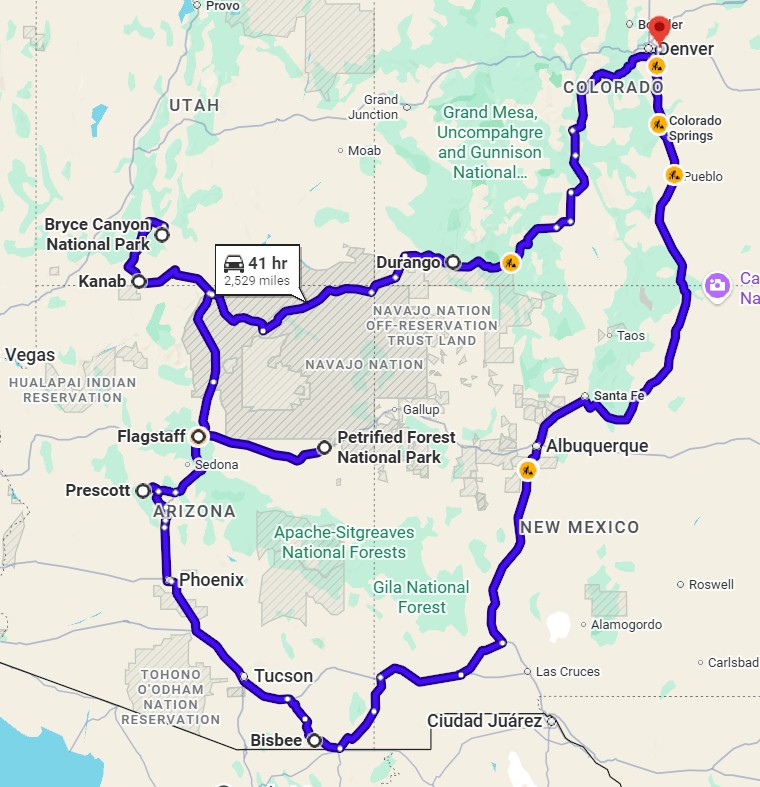
To the right is an approximate bird’s-eye view of our Southwest road trip loop. While we didn’t track our exact odometer readings, a conservative calculation puts this road trip at roughly 1,800 to 2,000 total windshield miles once you factor in the long interstate hauls, winding mountain passes, and daily national park detours.
Driving those kinds of distances teaches you a lot about the rhythm of the American highway. When you’re in a car for a month, a road trip stops being just a way to get from Point A to Point B—it becomes the destination itself. Here is how we survived and savored those thousands of miles:
The Symphony of the Changing Landscape
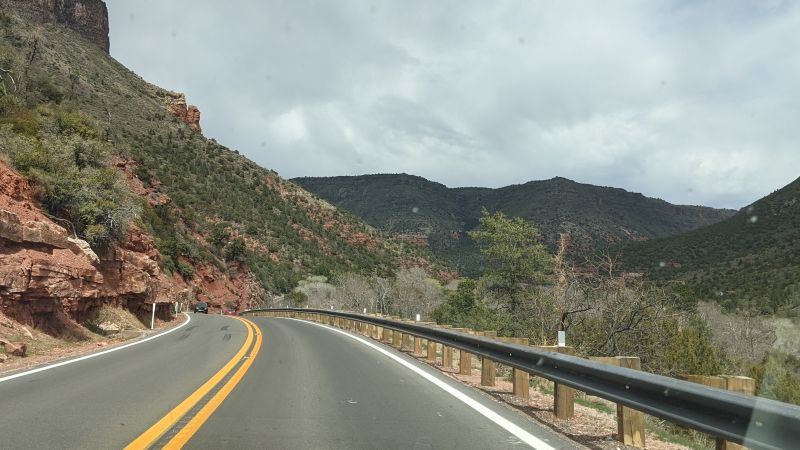
One of the most incredible things about driving the Southwest is watching the earth completely reinvent itself outside your window. We watched the landscape morph from the high-desert, chaparral-covered hills of southern Arizona, up into the towering ponderosa pine forests of Flagstaff’s 7,000-foot plateau.
Just a day’s drive later, those trees gave way to the stark, dramatic crimson waves of southern Utah’s red rock country, before finally transitioning into the jagged, snow-dusted peaks of western Colorado. When you fly, you miss the connective tissue of the planet. Driving lets you appreciate every single transition phase.
Staying Human: Rest Stops & Leg Stretching
You cannot conquer 2,000 miles without a solid physical strategy. Sitting in a driver’s seat for hours behaves like a slow tax on your lower back and joints. We quickly realized that waiting until you absolutely have to use the restroom to pull over is a recipe for fatigue.
Instead, we turned our stretching breaks into mini-adventures. We looked for scenic overlooks, historic markers, or small-town gas stations with local character rather than just standard interstate rest areas. Taking five minutes to walk a lap around the car, breathe in the changing air, and look at a view does wonders for keeping your focus sharp and your legs moving.
The Soundtrack of the Southwest
Every epic road trip needs a legendary queue of audio. Over 30 days, you quickly exhaust your favorite standard playlists, so variety became our lifeline. We balanced the long stretches with a mix of gritty Southwest Americana music, true crime podcasts, and audiobooks.
And yes, there is an undeniable magic to timing your music perfectly to your surroundings—like blasting the Eagles while rolling into Winslow, or playing cinematic, sweeping instrumentals as the massive red walls of Utah begin to rise over the horizon.
The Itinerary
| Day(s) | Basecamp | Primary Activities & Highlights |
| Days 1–2 | On the Road | Driving from Colorado, overnight near Albuquerque, border wall sights |
| Days 3–9 | Bisbee, AZ | Exploring Old Bisbee, Coronado Cave, Tombstone day trip, Copper Queen Mine Tour, Fort Huachuca golf, border wall walk |
| Day 10 | Chiricahua | Epic 8.5-mile “Wonderland of Rocks” hike, phone completely dies |
| Days 11-12 | Bisbee, AZ | Rest day, local breweries, catching up on life |
| Day 13 | Travel Day | Prescott breakfast, Sedona traffic jam, Petrified Forest, Winslow corner |
| Days 14–15 | Flagstaff, AZ | Range sessions under Humphreys Peak, walkable downtown brewery hopping, Tuzigoot ruins, Route 66 to Williams |
| Day 16 | Travel Day | Walnut Canyon steps, Navajo Bridge looking for California Condors, Horseshoe Bend crowds, getting stuck at Toadstool Hoodoos, crossing into Utah |
| Days 17–20 | Kanab, UT | Local golf, watching March Madness brackets, working remotely, sunset hiking the K-Hill Loop |
| Days 21–22 | Kanab, UT | Bracing for the Wave lottery (and missing out), Highway 89 triple-threat hikes (Belly of the Dragon, Moqui Caverns, Dinosaur Tracks) |
| Day 23 | Bryce Canyon | Queens Garden & Navajo Loop trail, the great parking space hunt, driving toward Escalante |
| Days 24–25 | Kanab, UT | Pandemic haircuts, remote work, laundry, resting hiking legs |
| Day 26 | Travel Day | Thrilling UTV ride, exploring Peekaboo Slot Canyon (recalibrating our “wow meter”), Bidding farewell to Utah, driving east across the Colorado border |
| Days 27–29 | Durango, CO | The unexpected trip extension, Mesa Verde cliff dwellings, exploring Mancos and Dolores breweries |
| Day 30 | Homebound | Pouty faces, heavy hearts, and the final drive home to Colorado |
Fueling a National Park Obsession
If you take a look at our route, it’s no secret that it was heavily dictated by one major love: America’s public lands. I am a massive supporter of our National Parks and Monuments, and yes—I am one of those travelers who packs their official Passport To Your National Parks book on every single trip, ready to hunt down the cancellation stamps.
Designing a 30-day itinerary gave us the ultimate canvas to stack our pages with ink. By pairing heavy hitters like Bryce Canyon and the Petrified Forest with incredibly rich, lesser-known gems like Tuzigoot and Walnut Canyon, this trip gave us the history and nature we craved.
The Lodging Strategy: Hotels vs. Airbnbs
When you are living out of a suitcase for a month, where you rest your head matters immensely. For this trip, we wanted to avoid the exhausting “sterile hotel loop” and actually get a genuine feel for what it’s like to live as locals in these communities. To pull that off without burning out, we struck a perfect tactical balance: two traditional hotels and two vacation rentals (like Airbnb or Vrbo).
We intentionally bookended the front and back ends of the trip with properties that included private laundry facilities. Trust us on this—while we’ve definitely done our fair share of coin-op laundry in hotel basements and local laundromats over the years, having a washer and dryer right inside your space while working remotely made a difference.
Balancing the properties gave us the best of both worlds: the seamless, chore-free convenience of a hotel when we were just passing through for a couple of days, and the cozy, home-cooked comfort of a condo kitchen when we needed to settle in.
Town Face-Off: The Basecamp Personalities
The biggest lesson from this trip was that not all small towns are created equal. How you spend your days depends entirely on how the town is laid out. We noticed a massive shift in lifestyle as we moved between our four main anchors:
1. Bisbee, Arizona: The Isolated Artisan
Bisbee is incredibly historic and charming, but it is physically isolated.
- The Vibe: Quirky, creative, and architecturally stunning.
- The Reality: It’s a “local destination.” You can walk the historic core, but because it’s tucked deep in the Mule Mountains, major resources (or a replacement smartphone!) require a 45-minute trek to Sierra Vista.
2. Flagstaff, Arizona: The Vibrant, Walkable Hub
Flagstaff was easily the most seamless “plug-and-play” town for a local lifestyle.
- The Vibe: Energetic college town meets high-altitude mountain culture.
- The Reality: Highly walkable. You can drop the car keys and hop between world-class craft breweries (like Dark Sky) on foot, all while having sweeping views of the San Francisco Peaks right from town.
3. Kanab, Utah: The Sleepy Desert Launchpad
Kanab sits in a breathtaking geographic location, but the town itself felt incredibly sleepy. Some of this was likely lingering COVID-era caution and seasonal hours, meaning storefronts were quiet and options in town were limited.
- The Vibe: An outdoor adventurer’s blank canvas.
- The Reality: You do not stay in Kanab for the nightlife or local shopping. It is a pure launchpad town—you sleep there, but you have to venture out down long highway stretches to see the slot canyons and national parks. Because of how quiet the town was, having a condo with a kitchen where we could cook our own meals was an absolute lifesaver.
4. Durango, Colorado: The Perfect Epilogue
We weren’t ready to go home, so we added Durango on a whim—and it quickly reminded us why we love Colorado.
- The Vibe: Active, historic, and effortlessly beautiful.
- The Reality: It strikes a perfect middle ground. It feels like a real, living community with plenty to do locally (and plenty of great breweries in surrounding spots like Mancos), while serving as the perfect gateway to deep history like Mesa Verde.
The Big Lessons Learned After 30 Days
If you are planning your own month-long Southwest Road Trip loop, keep these hard-won truths in mind:
- The “Wow Meter” is Real: Travel desensitization happens. If you see an mind-blowing slot canyon on day one, an objectively stunning canyon on day twenty-six might not hit the same way. Pace your itinerary so you aren’t comparing wonders against each other.
- Respect the Crowd Choke Points: Iconic spots like Sedona and Horseshoe Bend are world-famous for a reason, but the logistics can break you if you don’t plan ahead. Park first, ask questions later, and always go early.
- Don’t Blindly Follow the Pack: Whether it’s wandering off-trail into a rock wedge at the Toadstool Hoodoos or assuming a crowded trailhead means safe passage, stick to your maps and trust your gut.
- Build in “Zero Days”: You cannot hike for 30 days straight without burning out. Some of our favorite memories from this trip were the low-key Mondays spent ordering pizza, sitting on a driving range, and yelling at March Madness brackets.
- The Ultimate Litmus Test (Choose Your Copilot Wisely): Spending 30 uninterrupted days together in a car, sharing cramped workspaces, and navigating unexpected road friction is the ultimate relationship pressure cooker. Honestly, the biggest victory of this entire trip was that by day 30, we were still completely happy to be in each other’s company. Your travel partner can make or break an adventure. When you find someone who can handle a Sedona traffic jam, a dead phone in the backcountry, and a panicked leap off a Utah hoodoo right alongside you without losing their cool—hold onto them. A successful 30-day road trip isn’t just about the destinations; it’s about checking your mirrors at the end of 2,000 miles and realizing you’re still riding with your favorite person
Read the Full Deep Dives:
Ready to explore each leg of the journey? Check out the detailed, day-by-day journals for each region below: