Could Bisbee, Arizona be the ultimate basecamp for exploring southeastern Arizona? In the spring of 2021, we packed up for four weeks on the road — Bisbee, then Flagstaff, then Kanab — to find out. Plus Justin had been hearing buzz about Bisbee as an underrated, affordable place to live, and with remote work making geography optional, it felt like the perfect time to check it out in person. While Old Bisbee itself is famous for being an eccentric, historic mountain town, the real magic of this region lies in how much you can explore just beyond the town borders. From wild caves and historic western towns to the alien landscapes of Chiricahua National Monument, here is our honest, day-by-day account of a week based in one of Arizona’s most fascinating corners.
The Drive Down: Breakfast Burritos, Emergency Pit Stops & The Wall
A 12-hour drive from Colorado to southeastern Arizona sounds daunting, but when it’s the first leg of a three-week road trip, there’s an energy to it. We broke it up with an overnight stop just outside Albuquerque, and the next morning kicked off right — a proper New Mexico breakfast burrito from a roadside spot, the kind that makes you feel like everything is going to be okay.
We cruised south through New Mexico and into Arizona, eventually rolling into Douglas, AZ, where both of us desperately needed a restroom break. No judgments — it was a long drive. Once we were back on the road and could actually focus on our surroundings again, something caught our eye on the left side of the highway: a long, continuous line stretching across the landscape. We both clocked it at the same time. The border wall.
We were right there — right along the U.S.–Mexico border. I made a mental note: we’d need to get even closer for a real look before the week was up. But first, Bisbee awaited.
Arriving in Bisbee: Cute, Hilly & Full of Potential
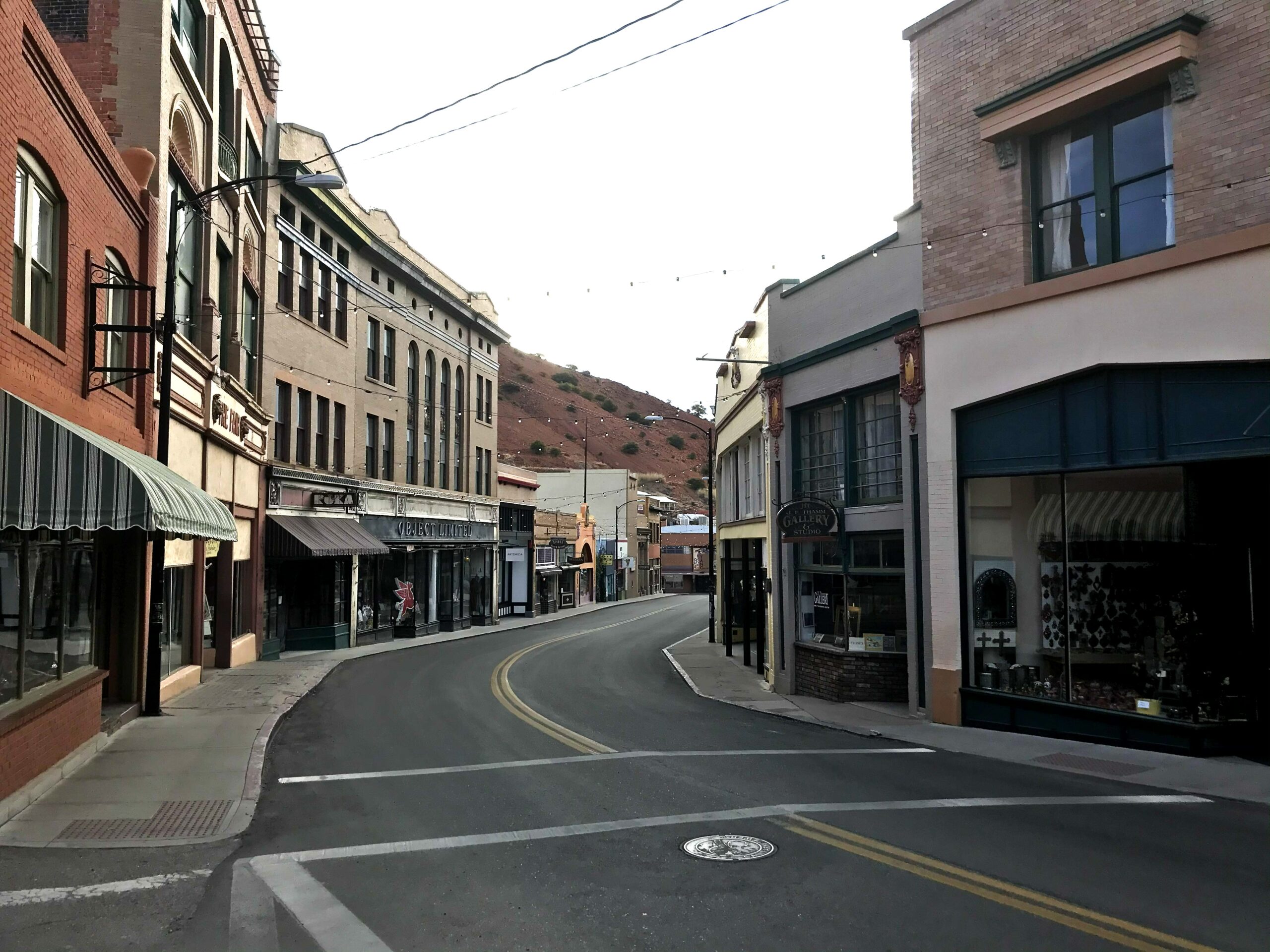
We pulled straight into the downtown area, and our first impression was immediately charmed by the topography alone. Bisbee’s main street climbs and dips through the Mule Mountains in a way that makes driving it genuinely fun — a narrow, winding corridor flanked by storefronts painted in faded pastels and weathered Victorian-era facades. It felt like a film set for a quirky Western indie movie.
Most shops were closed when we arrived (a combination of COVID-era hours and Bisbee’s generally relaxed pace), but the bones of the town were undeniably charming. You could see what it could be — and on a good weekend, probably what it already is.
Where We Stayed
Our Airbnb was a small two-bedroom cottage, and I’ll tell you what: the parking spot was everything. That might sound like a strange thing to celebrate, but in a town built into the side of a mountain, parking and street-level access are genuinely premium. Some guests at nearby properties had to navigate steep staircases with their luggage. We stepped right in from the curb. Worth every penny of consideration.
Day-by-Day Itinerary
Exploring Bisbee Proper
Our trip wasn’t just all fun, somedays we were working, and so we tried to explore Bisbee mostly on these days in the mornings or the afternoon/evenings. Actually, I was glad we were not there on the weekend because there was a lot of traffic on the small winding street – happy that Bisbee gets folks coming in, but sad that there wasn’t much for them to do.
Downtown Old Bisbee is genuinely delightful — galleries, quirky shops, and a handful of restaurants clustered along Brewery Gulch and Main Street. But venture even a few blocks in the wrong direction and the tone shifts. The non-downtown areas of Bisbee have a distinctly different feel — quieter, rougher around the edges, and economically strained in a way that’s hard to ignore. It was a reality check.
Here’s the honest truth about Bisbee’s affordability: yes, it’s a reasonably priced town to live in — but the prices people talk about are for the broader town, not necessarily the charming hillside cottages of Old Bisbee. Those carry a premium for their character. The more affordable parts of Bisbee feel like many struggling small towns across the American West. That’s not a criticism — it’s just context worth knowing if you’re considering it as a place to relocate.
We hit both of Bisbee’s breweries during these days. One memorable moment: we walked into one brewery through a wide-open door, only to be met with a look from the person inside that made it immediately clear they weren’t open yet. The door was just… open. A small-town miscommunication we laughed about later over a pint somewhere else.
Coronado Cave
Coronado National Memorial sits just south of Sierra Vista, about 40 miles from Bisbee, right along the Mexican border, and it’s free to visit. and tucked within it is a cave. The monument has one road running through it with about six trails, and tucked within it is a cave worth seeking out. No ranger-led tour, not many lights installed — you grab a permit at the visitor center and head in with your own flashlight.
Justin hadn’t been in a cave before, and I’ve only ever done the guided tour kind, so this felt like a welcome change of pace. We drove to the Cave Trail parking lot and set off — it’s only a half mile, but it’s all uphill. Once we reached the entrance, I strapped on my headlamp, pulled out a flashlight, and essentially descended into the cave on my butt, picking my way down the rocks (probably the best part!). At the bottom, the ground leveled out to smooth, sandy dirt, and the cave opened up into a series of chambers — cool and still, with the kind of absolute quiet you only find underground.
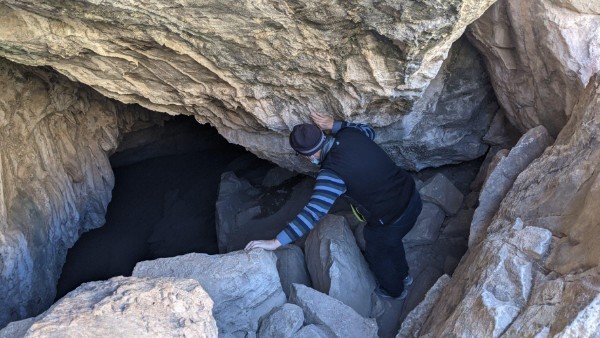
That peaceful spell didn’t last forever. Eventually a family arrived — kids yelling and running, their voices bouncing off every wall — and while I was happy they were having fun, the echo in there is relentless. We took it as our cue to head out. I tried to grab a few photos along the way, but between the darkness and my phone refusing to cooperate, I don’t really have any photos.
What happened afterward was less joyful. The next morning, my phone simply… stopped working. It wouldn’t charge. It wouldn’t turn on. Whether it was the humidity inside the cave, a sudden temperature shift, or just unfortunate timing — gone. Dead. Wouldn’t turn on.
Here’s where Bisbee’s small-town charm becomes a small-town limitation: there are no big-box stores in Bisbee. No Best Buy, no Target tech section, no immediate options. An Amazon order wouldn’t arrive in time since we were only in Bisbee a few more days. I had to wait it out — shooting with my regular camera for the rest of the week (hence the Chiricahua overexposure adventures) — until we passed through Phoenix on our way to Flagstaff, where I made a quick stop at Best Buy to grab a replacement. Five days without a smartphone in 2021 is a particular kind of inconvenience.
Lesson learned: Bisbee is remote. Factor that into your planning.
Chiricahua National Monument
Distance from Bisbee: About 60 miles northeast — roughly an hour’s drive
We made the trek out to Chiricahua National Monument, and it absolutely delivered.
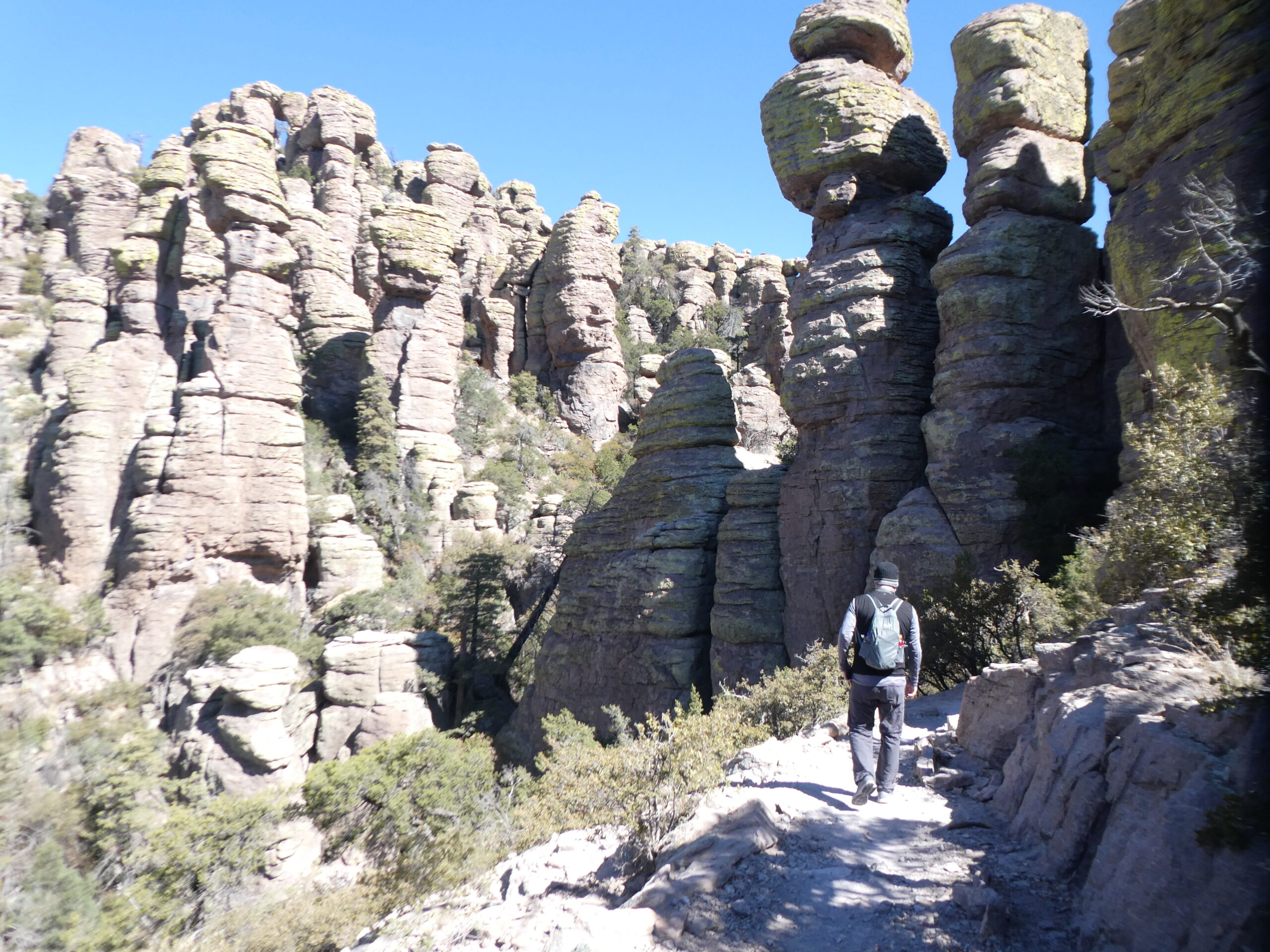
Known as the “Wonderland of Rocks,” Chiricahua is one of those places that genuinely defies expectation. The monument preserves towering rhyolite pinnacles, balanced rocks, and mountain landscapes shaped by volcanic forces in southeastern Arizona. What you’re looking at is the aftermath of an ancient volcanic eruption — the ash compacted over millions of years into the dramatic spires, hoodoos, and balanced boulders that make the park feel almost alien.
Chiricahua is a “sky island,” where the Rocky Mountains, Sierra Madre, Sonoran, and Chihuahuan deserts all meet, making for an unusually diverse ecosystem. The elevation shifts are noticeable on the trail — things cool down, the vegetation changes, and the landscape keeps surprising you.
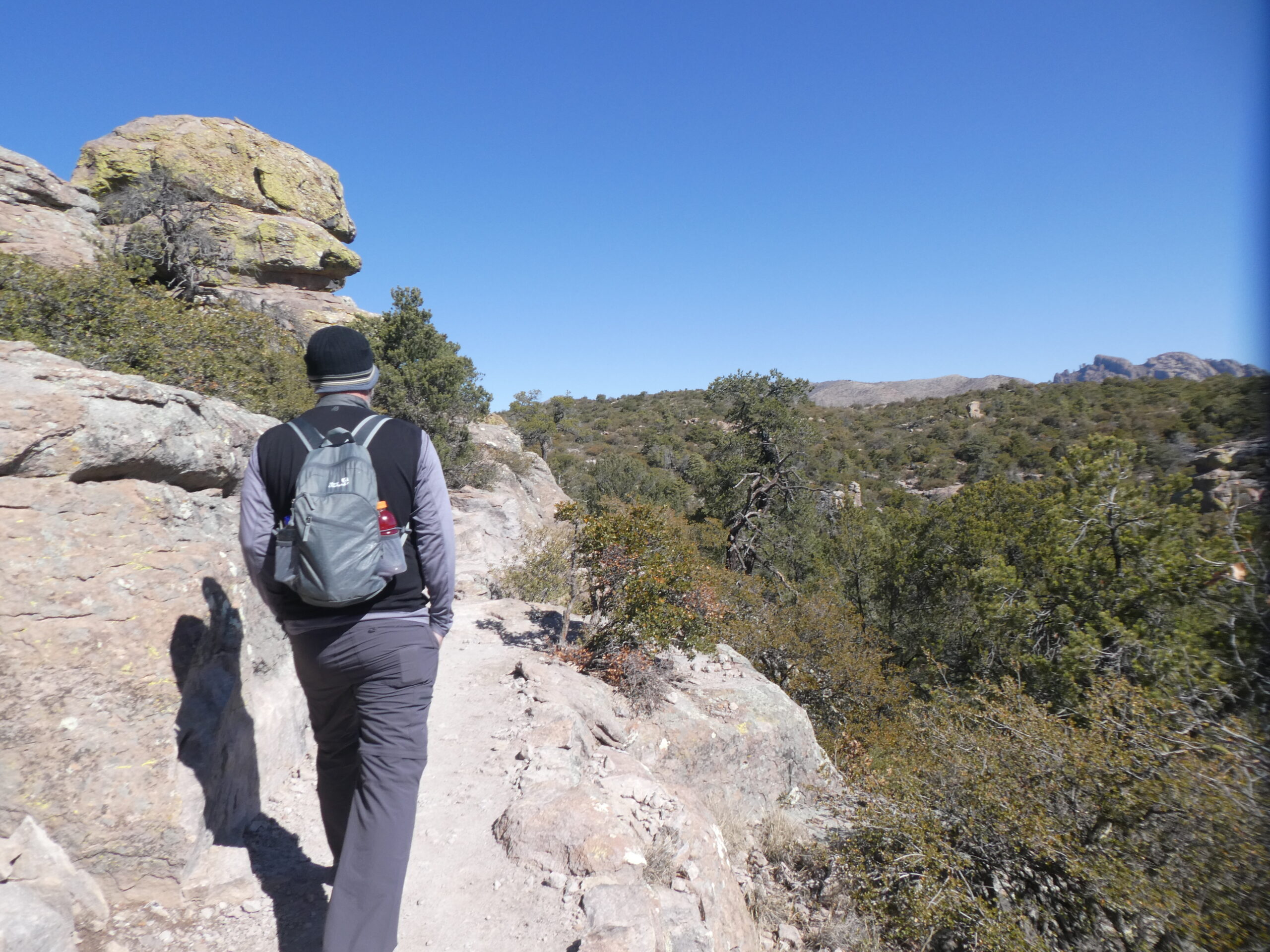
We drove the paved road to Echo Canyon parking lot, and headed out on our about 8.5 mile hike. We hiked the Grotto to Upper Rhyolite to Sarah Deming, viewed the Heart of Rocks, continued to Big Balance Rock to Mushroom Rock, to Ed Riggs back to the parking lot. It was nice in two areas they tell you which direction for the best views.
We hiked through a mix of spires, large rock formations, and a pleasant mix of trees — oak, juniper, and pine all in the same stretch. The area is the homeland of the Chiricahua Apache, and the stories of Cochise and Geronimo reverberate throughout these canyons. Wildlife includes deer, bears, and mountain lions, and the area is also beloved by birdwatchers. Visitors can also spot the elusive coatimundi — a raccoon-like creature that looks like it wandered in from a storybook.
The hike was exactly what I needed: physical enough to feel like an accomplishment, scenic enough to make you stop and stare every few hundred feet. I was shooting with my regular camera, but the overexposure settings kept fighting me, and eventually I put the camera away. Honestly? It was the right call. Sometimes you just have to be there.
At one point, I seriously thought about quitting my job and applying for a job here to be around this landscape regularly would be a treat.
Tips for visiting Chiricahua: Spring (March–May) is one of the most comfortable seasons for hiking, with daytime highs in the 60s–70s and cool evenings. Bring layers — the elevation can shift conditions quickly — and plenty of water.

Tombstone, AZ
Distance from Bisbee: About 28 miles north — roughly 30 minutes
We squeezed in a day trip to Tombstone, the legendary “Town Too Tough to Die,” and it was exactly as fun and theatrical as advertised.
We paid for tickets to the O.K. Corral gunfight reenactment — a surprisingly engaging show that dramatizes the 1881 shootout between the Earp brothers and the Clanton-McLaury gang. It leans into the camp, and that’s precisely what makes it enjoyable. The town was clearly busy and I was thankful we found a parking spot. Tourists filled the boardwalks and browsing the saloons, souvenir shops, and historic buildings.
We also stopped into the local brewery for a drink and wandered through the shops. Tombstone is unapologetically touristy, but in a way that’s charming rather than off-putting. It’s a short drive from Bisbee and absolutely worth an afternoon.
Copper Queen Mine Tour
Right in the heart of Old Bisbee, the Copper Queen Mine Tour is the can’t-miss attraction — and it earned that reputation.
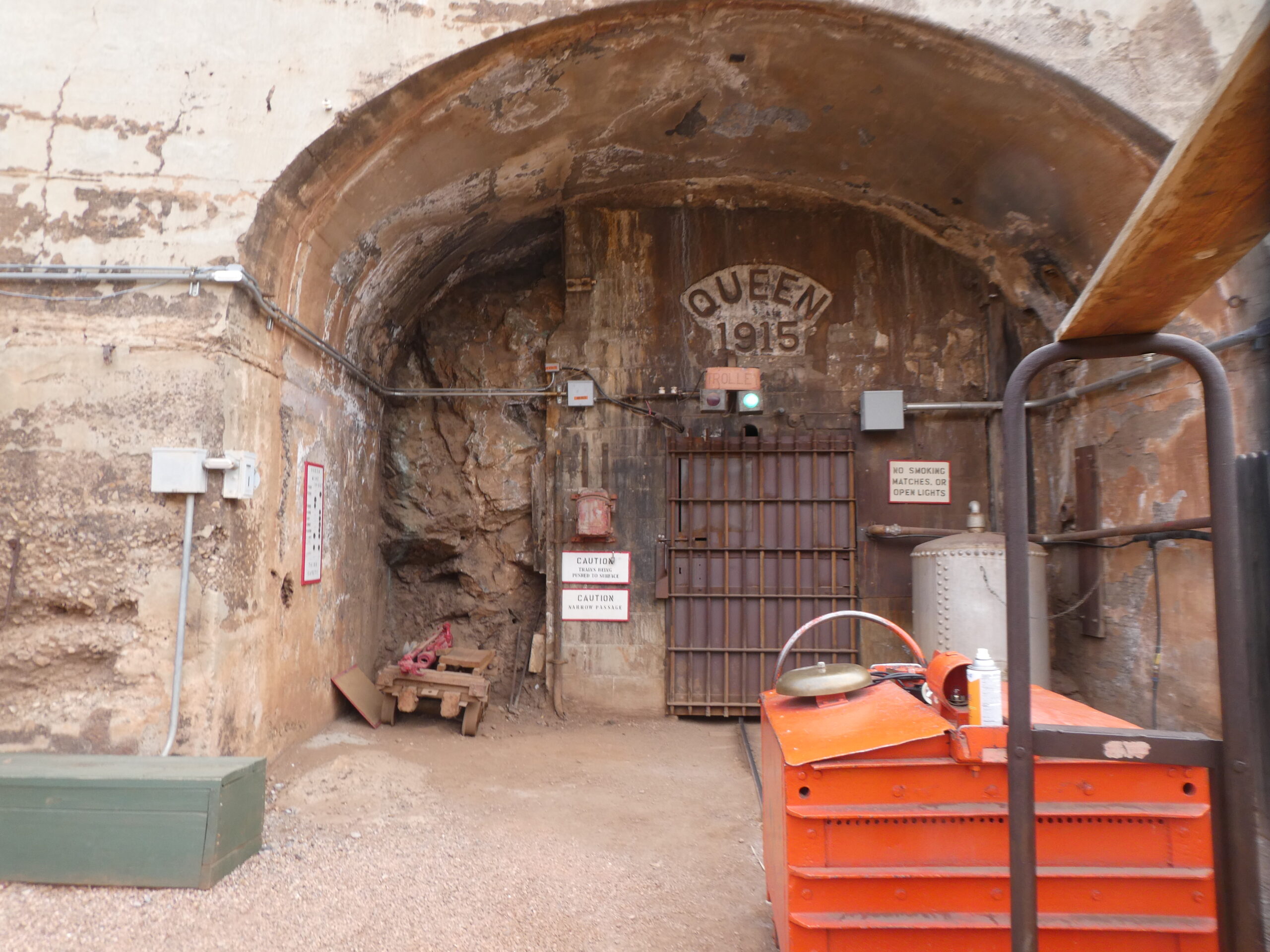
The Copper Queen Mine operated from 1877 to 1975 and was one of Bisbee’s most prosperous mines, featuring seven levels with 143 miles of passageways. In total, 8 billion pounds of copper were recovered from Bisbee’s mines, along with significant quantities of silver and gold.
The tour starts with everyone suiting up in hard hats before boarding a narrow-gauge mine train. The train takes visitors deep into the copper mines, where a retired miner guides them through the dimly lit tunnels, sharing stories about underground extraction processes and life below the surface. Along the way, visitors can observe original mining carts, pneumatic drills, and ore chutes once used in daily operations.
For Justin, this was his first mine tour ever. There’s something visceral about riding a little train into a dark mountain tunnel — the temperature drops, the sounds change, and you become acutely aware of what it meant to spend your days working underground. After the mines closed in 1975, Bisbee’s mayor partnered with the mining company to turn a portion of the tunnels into a public tour, and the Queen Mine Tour officially opened to visitors on February 1, 1976. It’s been drawing visitors from all 50 states and beyond ever since.
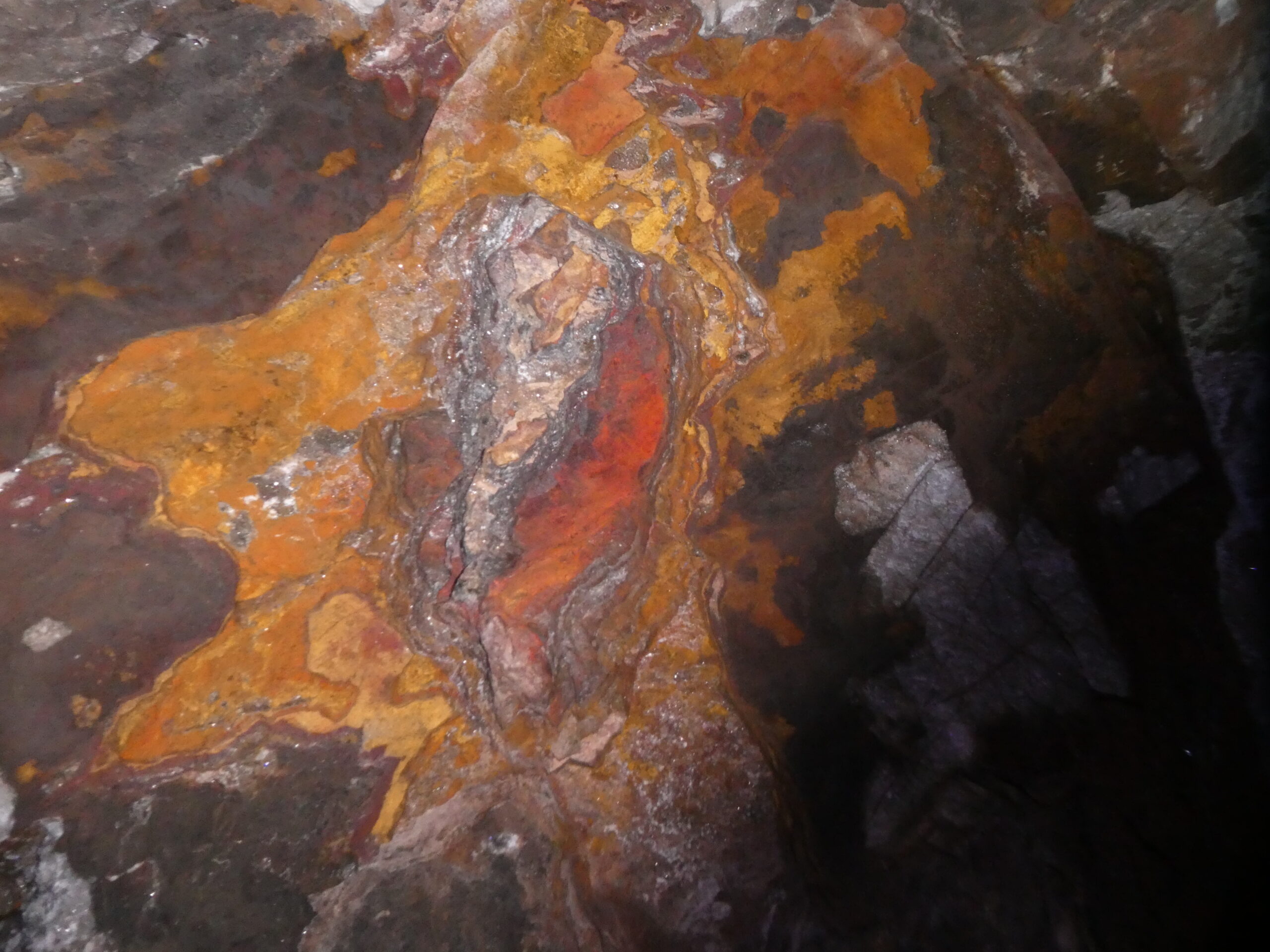
Above ground, Bisbee’s famous Lavender Pit — a massive open-pit mine — offers an overlook that puts the scale of the entire operation into perspective. The colors in the pit walls, layers of copper oxide and mineral staining, are unexpectedly beautiful.
Pro tip: Book your mine tour in advance, especially during peak travel seasons.
Golf at Fort Huachuca & Old Bisbee Brewing Company
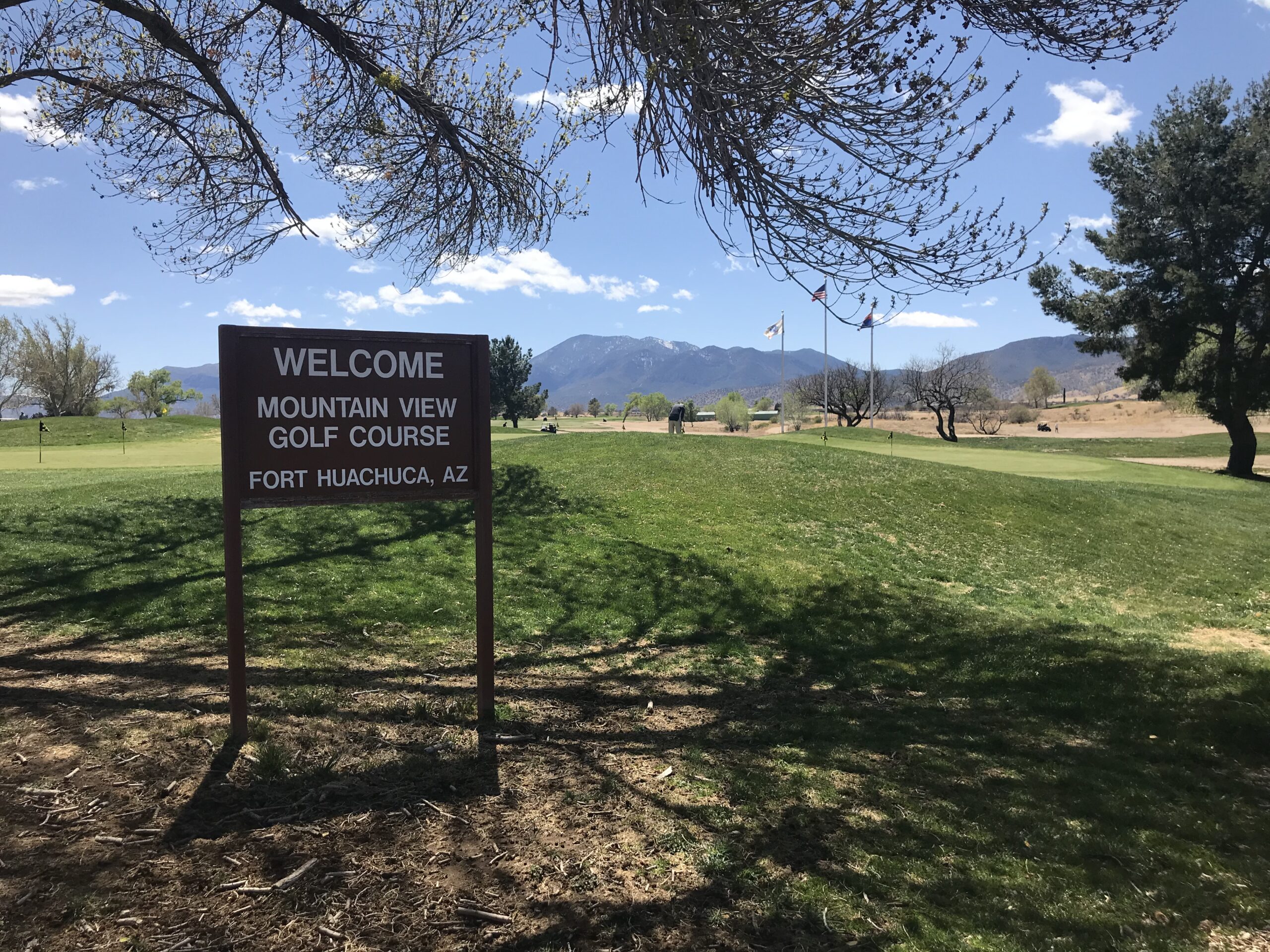
Justin played a round at Mountain View Golf Course on Fort Huachuca, the historic U.S. Army installation located about 45 minutes west of Bisbee near Sierra Vista. It’s a scenic, well-maintained course, and the military history of the fort — home to the legendary Buffalo Soldiers in the late 1800s — adds a layer of significance to the surroundings.
I tagged along for the drive and spent the time doing what I genuinely love on road trips: sitting somewhere quiet, reading a book, and catching up with family on the phone (when I had one, that is). Sometimes the best travel days are the low-key ones.
That evening, we wrapped up back in Bisbee at Old Bisbee Brewing Company, one of the town’s beloved local spots. A cold beer, some food, and a relaxed evening — a fitting cap to our last full days in town.
Getting Close to the Border Wall — Near Naco, AZ
True to my mental note from day one, we made the short drive to Naco, Arizona — a tiny border town just a few miles south of Bisbee — to get a close-up look at the border wall.
And up close, it’s striking. The section near Naco is tall — significantly taller than you might expect — and built with an open, grated construction rather than a solid panel design. You can see through it to Mexico on the other side. It’s a strange, layered experience: the mundane reality of a physical structure you’ve seen debated endlessly in the abstract, now just sitting there in the Sonoran Desert sun, remarkably close to a quiet American neighborhood. Whatever your politics, standing next to it is something.
The Verdict: Would We Move to Bisbee?
After 10 days, the answer was a thoughtful probably not — at least not to Bisbee specifically.
The downtown is genuinely magical in its way — walkable, eccentric, full of history. The surrounding area has incredible outdoor attractions (Chiricahua alone is worth a trip from anywhere in the Southwest). But the town is small and getting smaller in some ways, with economic challenges visible just past the tourist-facing storefronts. If you want big-box convenience, reliable cell service, or a larger social scene, Bisbee will test you.
That said, if you’re someone who values character over convenience, who can work from anywhere and doesn’t need much, and who finds beauty in a place that’s still figuring itself out? Bisbee might be exactly your speed.
For us, it was a wonderful week. Just not quite a home.
Practical Info for Your Visit
- Best time to visit: Spring (March–May) or fall — avoid summer heat
- Getting there: Fly into Tucson (about 90 miles), then drive southeast on AZ-90/92
- Cell service: Limited in parts of Bisbee and very limited in the surrounding monument areas — download maps offline
- Big box stores: Sierra Vista (about 45 min away) is your nearest option for anything you forget
- Parking: If booking an Airbnb, street-level access with parking is worth paying extra for
At-a-Glance: The Bisbee Day-Trip Guide
| Destination | Distance from Bisbee | Best For |
| Tombstone, AZ | ~28 miles (30 mins) | Wild West history, campy gunfight reenactments, and saloons. |
| Coronado Cave | ~40 miles (40 mins) | A wild, unlit cave experience (bring your own flashlight!). |
| Chiricahua National Monument | ~60 miles (1 hour) | The “Wonderland of Rocks”—incredible 8.5-mile loop hike. |
| Naco Border Crossing | ~10 miles (10 mins) | A stark, eye-opening look at the physical U.S.-Mexico border wall. |
This trip was taken in spring 2021 as part of a four-week remote-work road trip through the Southwest. Next stops: Flagstaff and Kanab, Utah.