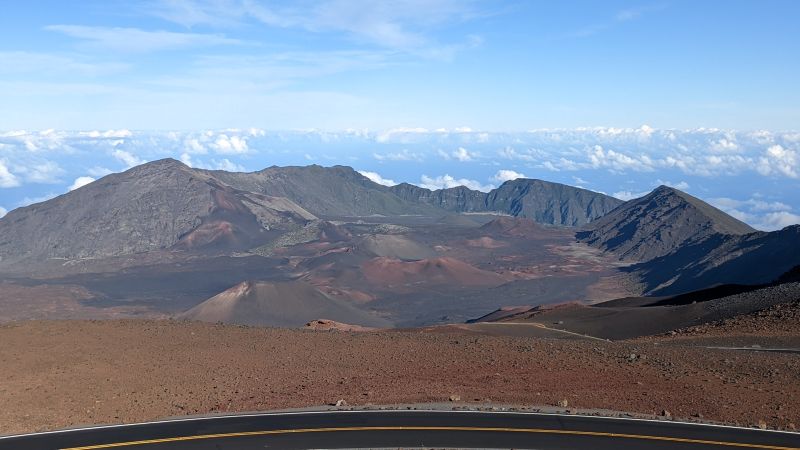
When you think of Hawaii, you probably picture pristine beaches, swaying palm trees, and turquoise waters. While Maui certainly delivers on all those fronts, one of the island’s most extraordinary experiences takes you far from the coastline and into an otherworldly landscape that feels more like Mars than the tropics. Our November visit to Haleakalā National Park was nothing short of magical—a journey from sea level to 10,000 feet above the clouds, where we witnessed one of nature’s most spectacular shows.
In this post:
The Drive: A Journey Through Climate Zones
The adventure begins the moment you start driving up the mountain. The road from the town of Kahului (sea level) to the summit of Haleakalā (10,023 feet) is often cited as the highest elevation gain in the shortest distance for a paved road in the world. You cover over 10,000 feet of vertical gain in just 38 miles, which typically takes about 1.5 to 2 hours to drive.
As we climbed higher, the landscape transformed dramatically. The lush greenery gradually gave way to ranch lands with rolling hills, then to more sparse vegetation as the air grew thinner and cooler. The route to Haleakalā’s summit is a winding journey that takes you through 4-7 climate zones. You start in the Humid Subtropical (lush, coastal lowlands), drive up Mediterranean (cooler slopes with rolling pastures), through Temperate/Sub-alpine (shrublands), to finally the Alpine Desert (summit- a barren “moonscape” of volcanic cinder)
The air temperature drops about 3 degrees for every 1,000 feet of elevation gain. The road itself is an engineering marvel—switchback after switchback, each turn revealing a new vista more breathtaking than the last. It’s a drive that demands your full attention, but also rewards you with views that make you want to pull over at every turn.
What struck us most was how quickly the temperature dropped. We’d started our day in shorts and t-shirts, comfortable in the 80-degree warmth at sea level. By the time we reached the summit, we were grateful for every layer we’d brought. The temperature difference was dramatic—we’re talking a drop of 30-40 degrees Fahrenheit from base to peak. If you’re planning this trip, don’t make the mistake we almost made: bring warm clothes, even if it seems absurd when you’re packing them at your beach hotel.
The Crater: A Landscape Beyond Imagination
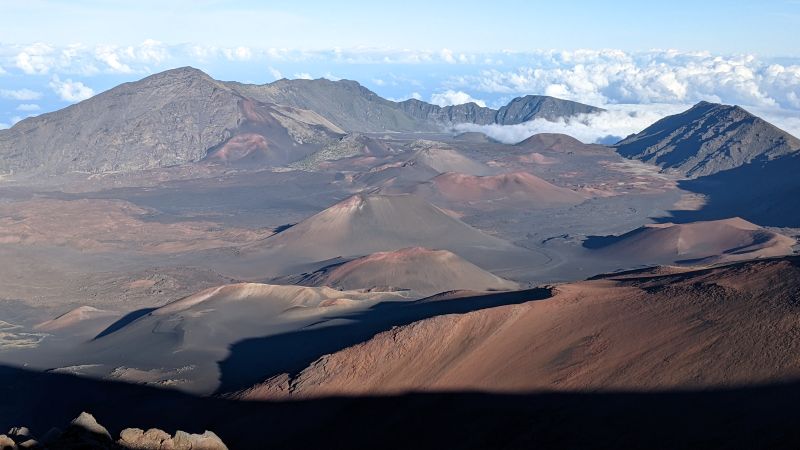
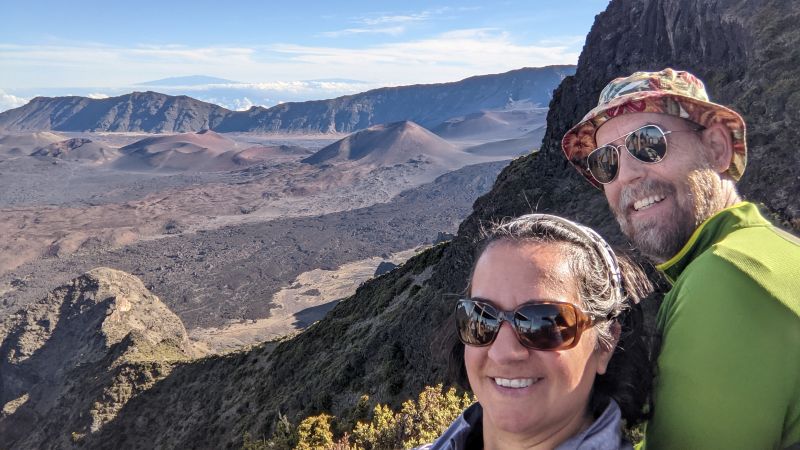
The summit area of Haleakalā—which means “House of the Sun” in Hawaiian—is dominated by a massive volcanic crater that stretches for miles. But calling it simply a “crater” doesn’t do it justice. It’s a vast, otherworldly basin filled with cinder cones in shades of red, orange, brown, and black, creating an alien landscape that photographs can barely capture.
Standing at the rim and looking into this enormous depression is humbling. The crater is roughly seven miles across, two miles wide, and over 2,600 feet deep. Inside, you can see multiple cinder cones rising from the crater floor, each one a testament to the volcanic forces that shaped this landscape. The colors are particularly striking in the afternoon light—rusty reds contrasting with deep shadows, all set against the backdrop of sparse volcanic rock.
Above the Clouds: A Surreal Experience
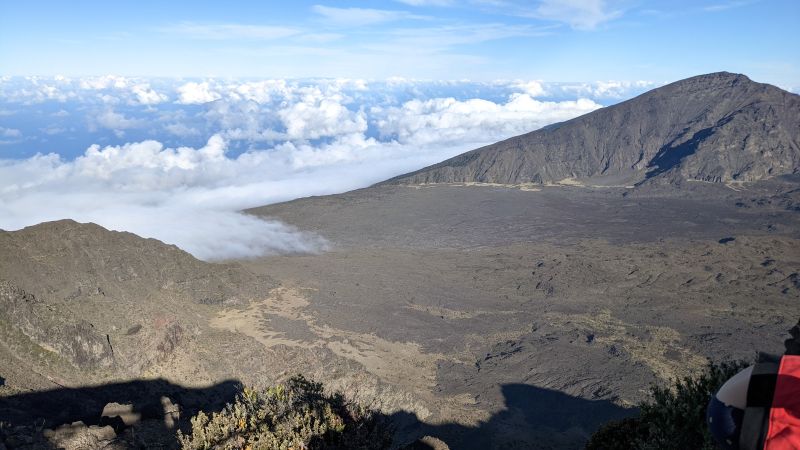
One of the most mesmerizing aspects of our visit was watching the clouds. At over 10,000 feet elevation, you’re literally above most of the cloud layer. As we explored the summit area, clouds would encroach and recede in an ever-changing dance, sometimes creating the surreal sensation that the mountain top was floating in an endless sea of white.
The clouds would roll in like waves, obscuring the views one moment and then parting to reveal the crater in all its glory the next. At times, we could see clear down to the ocean on one side while clouds completely engulfed the other. It was constantly changing, never the same view twice, and absolutely mesmerizing to watch.
Hiking at High Altitude
We spent the afternoon exploring the summit area, doing several of the shorter trails and focusing really on the overlook. We knew we were not going for a longer hike into the crater floor (due to time and elevation difference) but sitting at the overlook, it was tempting to think it would have been an amazing experience…maybe in the future.
Instead, we opted for the more accessible viewpoint trails, which still offered incredible perspectives of the crater and surrounding landscape. Even these shorter walks left us slightly breathless—the thin air at 10,000 feet makes any physical activity more challenging. Take your time, bring water, and don’t be surprised if you need to catch your breath more often than usual.
Chasing Sunset and Stars
One of the best decisions we made was to stay past sunset. While sunrise at Haleakalā is famously popular (requiring reservations), sunset offers its own spectacular show with far fewer crowds. In November, sunset came around 5:40 PM local time, and we positioned ourselves at one of the overlooks to watch the day end above the clouds.
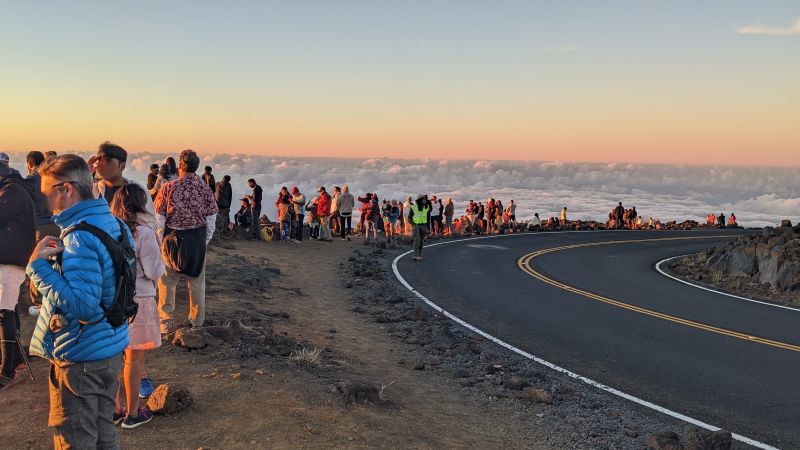
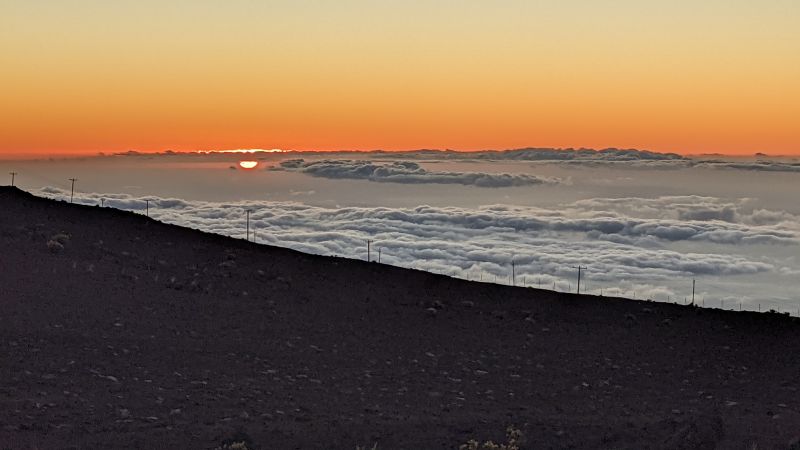
The sunset did not disappoint. As the sun descended toward the horizon, it painted the clouds below in shades of pink, orange, and gold. The cinder cones within the crater glowed in the warm light, and the shadows grew longer and more dramatic. It was the kind of sunset that makes you put down your camera and just watch, knowing that no photograph could capture the full majesty of the moment.
But the show wasn’t over. As darkness fell and the last tourists departed, the real magic began. Haleakalā is one of the best places in the world for stargazing, and with its high elevation, dry air, and minimal light pollution, it’s easy to see why. The Milky Way stretched across the sky like a river of light, and stars we couldn’t even see from the beach towns below blazed brilliantly overhead.
Fun Facts
- It is home to the world’s quietest place. Acoustic experts have identified the Haleakalā crater as one of the quietest places on Earth. Because of the porous volcanic rock and the lack of wind or wildlife in the desert-like basin, the ambient sound level is near the threshold of human hearing. It is so quiet that hikers often report hearing the “ringing” in their own ears or the sound of their own heartbeat.
- The park is the only place on Earth where you can find the Haleakalā Silversword. This plant can live up to 90 years but only blooms once in its lifetime.
- The summit houses Science City, a collection of world-class telescopes.
- Haleakalā is a massive shield volcano that begins on the ocean floor. Only about 5% of the mountain is actually visible above the water.
Final Thoughts of Haleakala National Park
Visiting Haleakalā National Park is an essential Maui experience that offers something completely different from the typical beach vacation. It’s a chance to witness the raw geological forces that created these islands, to stand above the clouds, and to contemplate the vastness of both earth and sky.
If you’re planning a visit, here are a few key tips: bring warm layers regardless of the season, allow plenty of time for the drive up , arrive with at least a half tank of gas (there are no services on the mountain), and consider staying for sunset and stargazing if you can handle the late drive back down.
The park charges an entrance fee and its well worth every penny. Whether you visit at sunrise, sunset, or midday, Haleakalā will leave you with memories and images that will last a lifetime. It’s a place that reminds you of nature’s power and beauty, a place where you quite literally rise above it all.