
The whisper started months before: an annular solar eclipse was gracing North America in October 2023, and the path of annularity – that magical zone where the “ring of fire” would be visible – was calling. For us the allure of this celestial event was irresistible, especially being so close — and we didn’t voyage to Wyoming during the Great American Eclipse in 2017. So, we packed our bags, hopped in the car, and embarked on a short road trip south to Pagosa Springs CO which was about 90 minutes from our destination in Aztec NM for the next day.
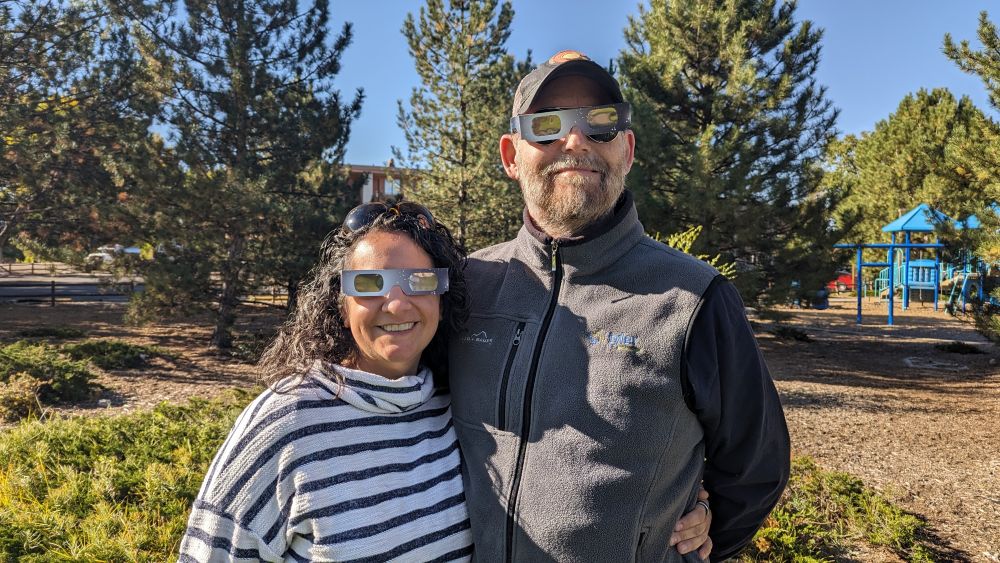
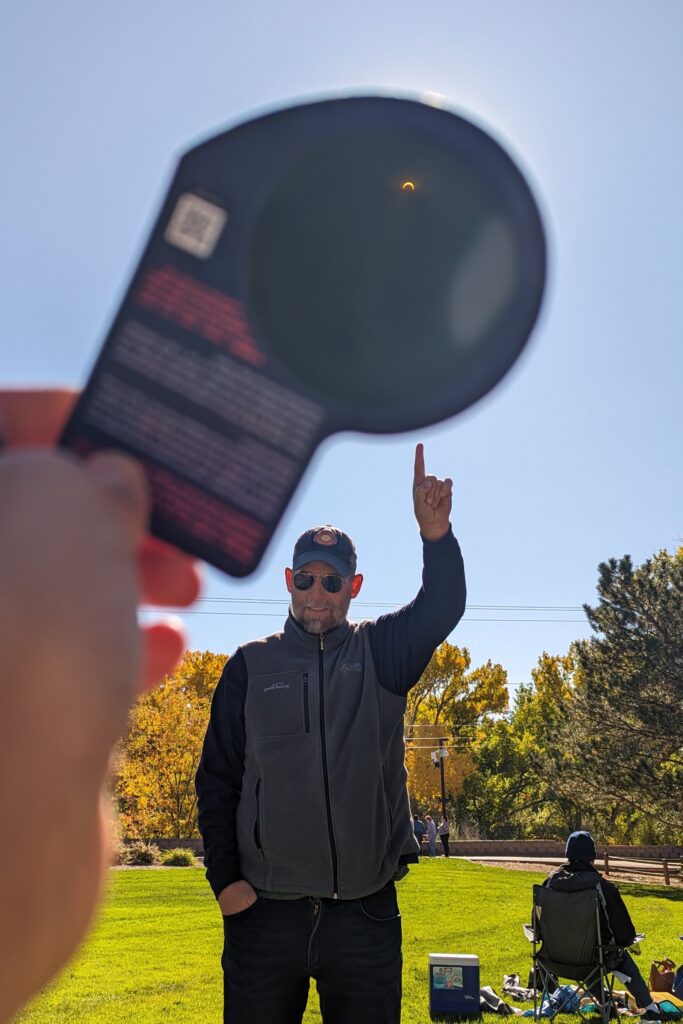
The morning of the eclipse was filled with a nervous excitement. We set out for a 90 minute drive to Aztec NM where we found a park, set up our chairs and our viewing gear – solar glasses, a camera with a solar filter – and waited alongside a growing crowd of enthusiasts, all gazing expectantly at the unblemished blue sky. As the appointed time drew near, a hush fell over the gathering.
Then, it began.
Through our protective eyewear, we watched as the Moon took its first subtle bite out of the Sun’s disc. The familiar roundness started to morph, slowly but surely. The temperature began to dip ever so slightly, and an eerie, diffused light started to bathe the landscape. It was a tangible shift, a subtle yet profound alteration of our everyday reality.
As more and more of the Sun was obscured, the anticipation intensified. We knew the main event was approaching – the moment when the Moon wouldn’t fully cover the Sun, leaving that brilliant, fiery ring. And then, it happened.
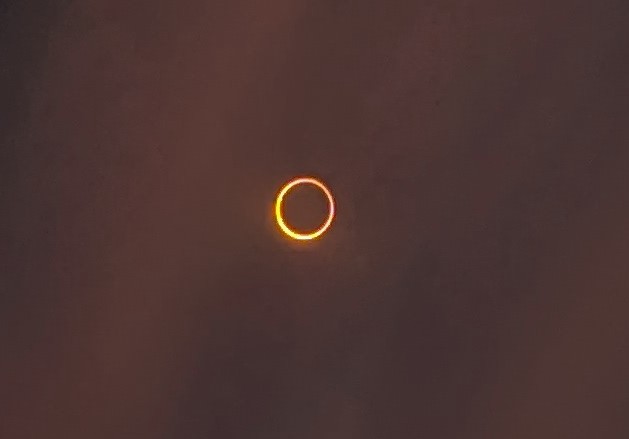
Gazing through our solar glasses, the sight was simply breathtaking. The Moon sat perfectly centered against the Sun, its silhouette outlined by a blazing annulus of light. The “ring of fire” was real, a celestial crown suspended in the sky. It was unlike anything we had ever witnessed. The light took on an otherworldly quality, almost sepia-toned, and the shadows on the ground sharpened dramatically.
The feeling was surreal, a powerful connection to the mechanics of our solar system playing out right before our eyes. There was a collective gasp of awe from the crowd, a shared moment of wonder at the universe’s grandeur. We carefully took photos through our solar filter, trying to capture at least a fraction of the spectacle we were witnessing.
The period of annularity was about 3 minutes and 43 seconds. Enough time to marvel at the site yet too short that I could have watched it longer. We soaked in the incredible sight, the perfect ring of light against the darkened center. It was a testament to the precise alignment of the Sun, Moon, and Earth.
As the Moon continued its journey, the ring of fire gradually broke, and the familiar crescent of the partially eclipsed Sun reappeared. Slowly, the normal daylight returned, the temperature nudged back up, and the world around us seemed to exhale.
It was incredible. So much so that when I heard about the Spring 2024 eclipse, I knew we’d be booking a flight to Texas to watch it.