
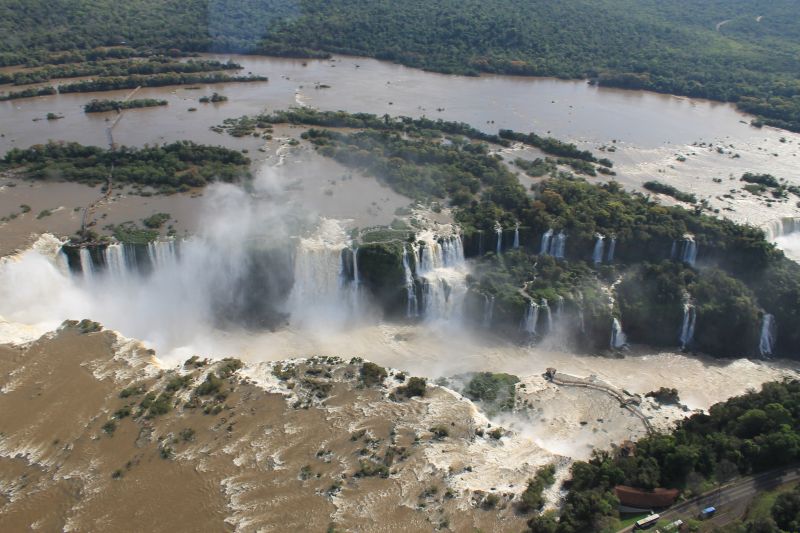
I was in Brazil for a work trip in October 2013, and two coworkers and I decided we’d take a few extra days to explore more of the area, specifically she wanted to see Iguazu Falls. Unfortunately, one couldn’t end up coming, but my other coworker and I carried on to enjoy a country we had never been to before. Traveling with someone you don’t really know that well could be a little uncomfortable at times, but when you’re seeing amazing things, it is absolutely worth it. This was just an incredible experience. My first time on a helicopter, which was thrilling and exciting with breathtaking views. The waterfall was—and is—tremendous.
What you will read about:
The Journey to One of Nature’s Greatest Wonders
This beautiful place is called Iguazu Falls, Iguazú Falls, Iguassu Falls, or Iguaçu Falls—the name varies depending on whether you’re speaking Portuguese or Spanish. It was about a two-hour plane ride from Rio and well worth the extra few personal days.
What many people don’t realize is that Iguazu Falls isn’t just one waterfall—it’s a massive system of approximately 275 individual falls spanning nearly two miles along the border of Brazil and Argentina. The name “Iguazu” comes from the Guarani words “y” (water) and “guasu” (big), which translates simply to “big water.” If anything, that’s an understatement. Eleanor Roosevelt reportedly exclaimed upon seeing the falls, “Poor Niagara!” The falls are nearly twice as tall as Niagara and far wider, making them one of the largest waterfall systems in the world.
The falls were formed over 200,000 years ago through a volcanic eruption that left a large crack in the earth. The Iguazu River flows through this geological wonder, and depending on the season and rainfall, the volume of water cascading over the falls can range from 546 to 1,746 cubic meters per second. We visited during a relatively dry period in October, but the falls were still absolutely spectacular.
Taking Flight: A Bird’s Eye View
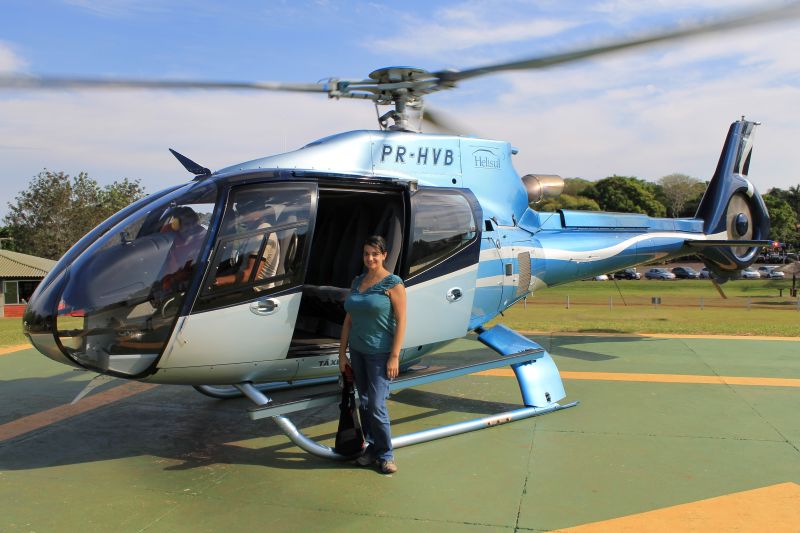
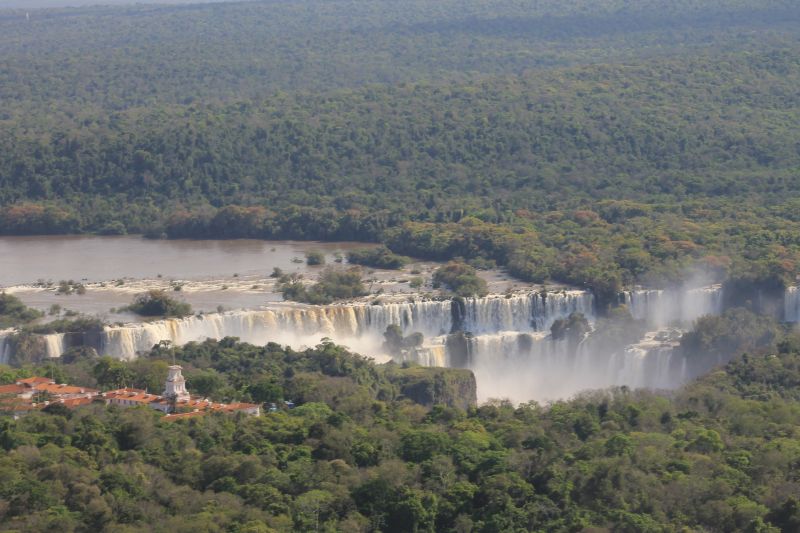
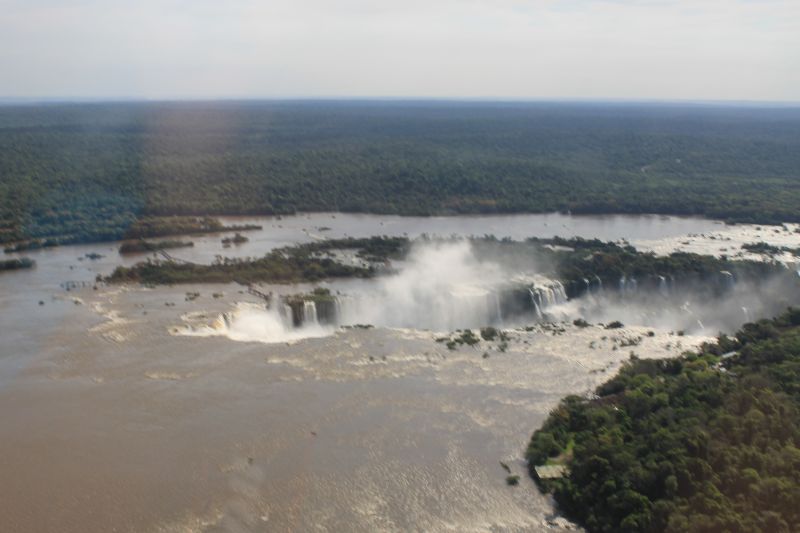
After we landed, we decided to take a helicopter tour. It was $113.01 for about 10 minutes, but worth every penny. From above, we saw the river, the falls, and the national park spread out below us like a living map. The Iguazu River snakes through the lush green rainforest before suddenly plummeting over the edge in what looks like hundreds of white ribbons cascading into the misty abyss below. The most impressive section, known as the “Devil’s Throat” (Garganta del Diablo), forms a U-shaped chasm where 14 falls combine to create the most powerful section of the entire system. It was a great thing to see before actually experiencing them at ground level—it made the experience even more majestic and helped us understand the sheer scale of what we were about to explore.
The Brazilian Perspective
We stayed at the Hotel das Cataratas, which is the only hotel within the national park on the Brazil side. This historic hotel, built in 1958, gives guests the unique privilege of entering the park before it opens to the public and staying after it closes—imagine having one of the world’s great natural wonders almost to yourself at sunrise or sunset.
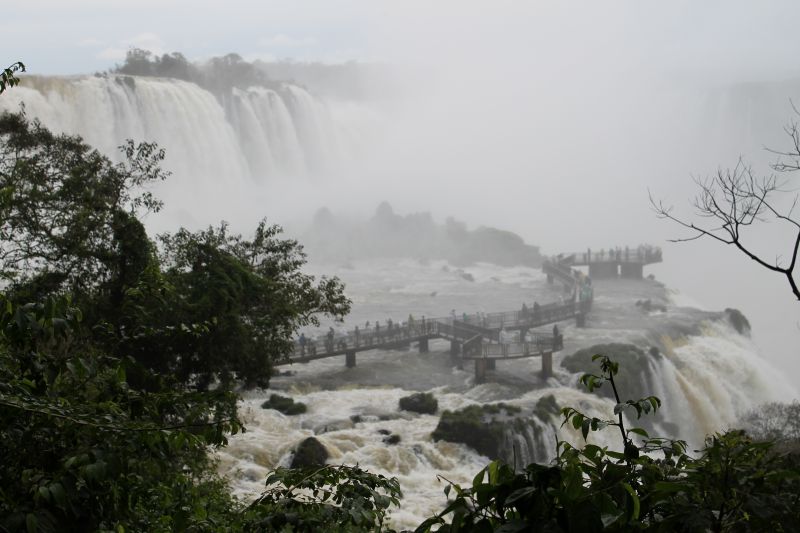
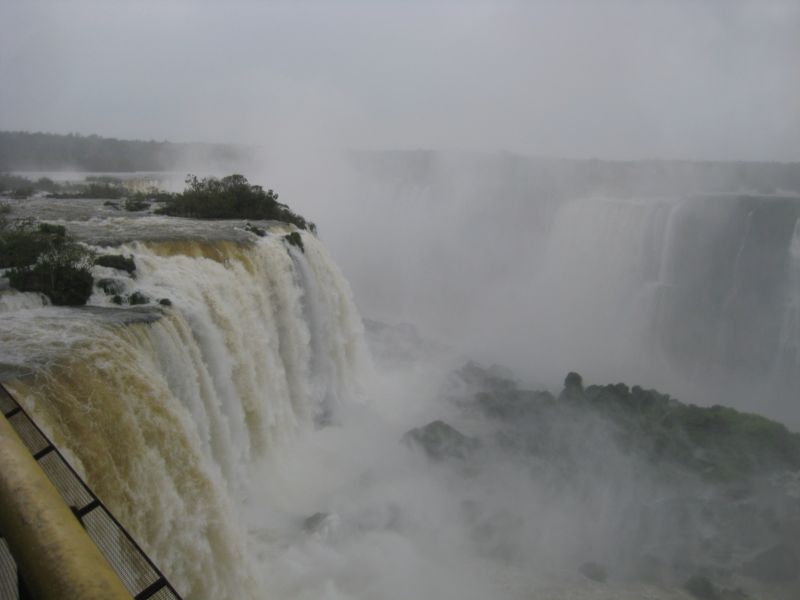
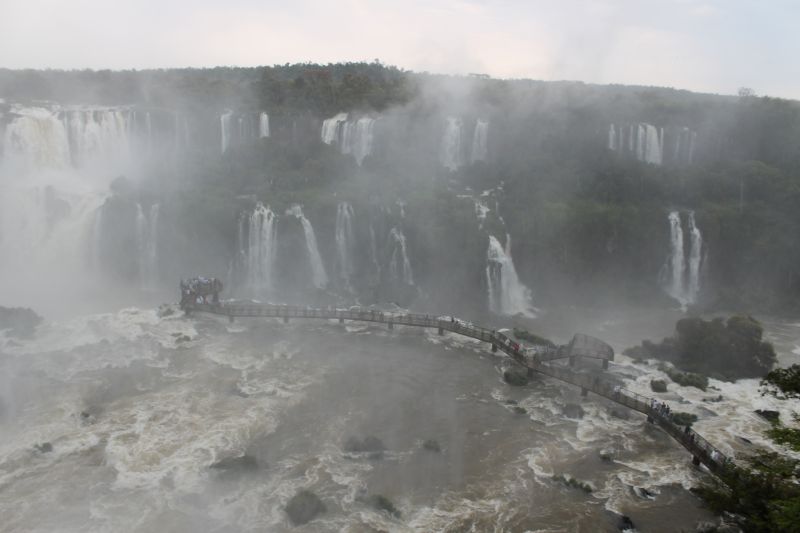
The Brazil side has a walkway that provides amazing panoramic views and leads to the edge of the falls, where you get soaked by the mist. The Brazilian side is often considered the best for getting the “postcard view” because you can see the full extent of the Argentina side from across the gorge. The pathway is less extensive than Argentina’s but offers those sweeping vistas that take your breath away.
Crossing Borders for More Wonder
But who gets enough of waterfalls? One side wasn’t enough, so we decided to get a visa (reciprocity fee) from Argentina because we heard it was even more amazing from there. We hired an English-speaking driver for the day who brought us to the park in Argentina and then to dinner for a wonderful steak—because when in Argentina, you must have the beef.
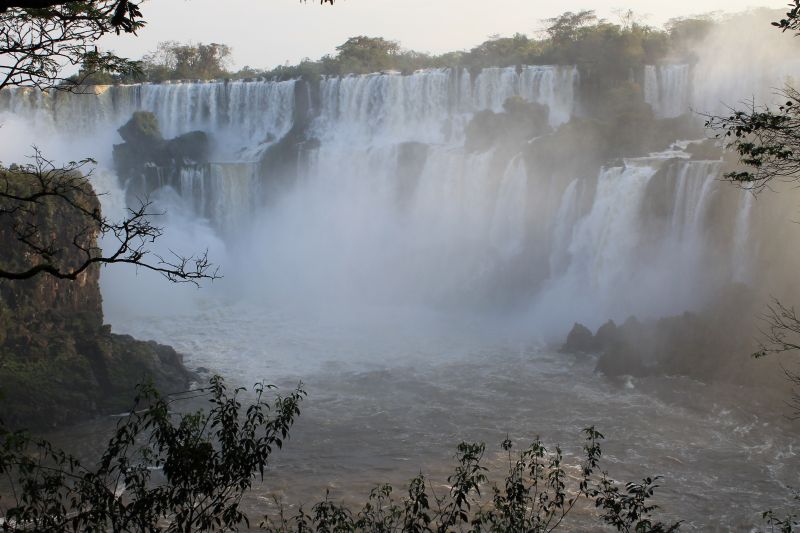
Iguazu National Park on the Argentina side was created in 1934 and became a UNESCO World Heritage Site in 1984 (the Brazilian side earned the same designation two years later). The Argentina side offers a more intimate experience with the falls, allowing you to walk right up to the edge of many cascades and feel the raw power of the water.
The Argentine Adventure
There are three walkways on the Argentina side—the Upper Circuit, Lower Circuit, and the trail to Devil’s Throat—and you take a train to get to them unless you want to walk the path. The train system, called the “Ecological Jungle Train,” was specifically designed to minimize environmental impact on the surrounding rainforest. Because we were there during a non-peak rainy time, we just walked around to take more in.
When we arrived at the park, it was raining hard, but by the time we got to the furthest walkway, it cleared up. The walkway goes over the river and brings you to the edge of Devil’s Throat, where you get soaked from the mist and feel the thunderous roar of the water so intensely it vibrates through your entire body. Standing there, you’re surrounded on three sides by falling water—it’s both humbling and exhilarating.
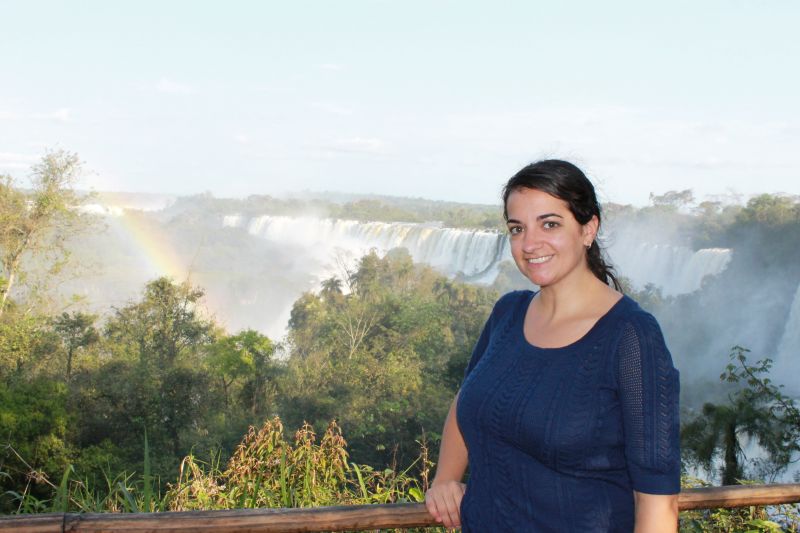
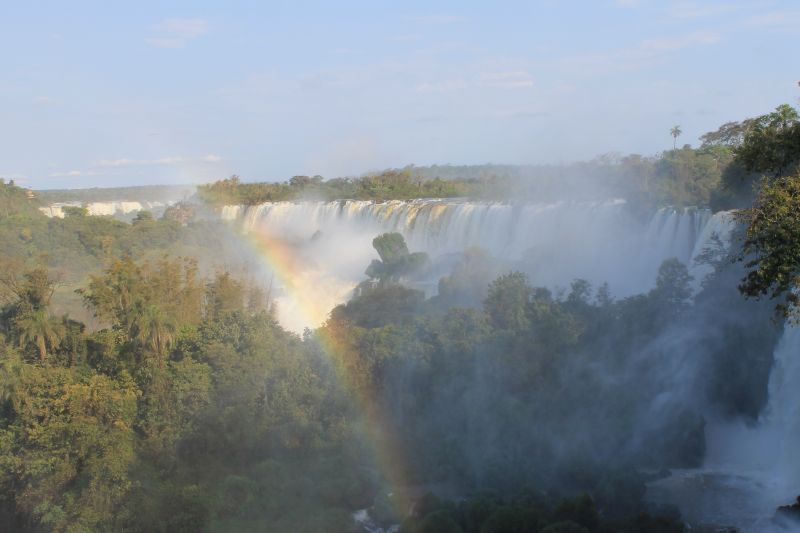
Along the pathways, when you look at the falls, seeing a rainbow was becoming common, and it really adds a nice aspect to pictures. The constant mist creates perfect conditions for rainbows, and on sunny days, you can often see double or even triple rainbows arcing across the gorge. The falls are also home to dusky swifts, birds that have adapted to fly through the cascading water to reach their nests on the cliffs behind the falls.
Final Thoughts
The trip to Iguazu Falls was amazing. If you are ever down in that area, I say go—and stay at the hotel within the park (Argentina has one hotel within their park too called the Gran Meliá Iguazú). It is worth the splurge. The combination of natural beauty, the thrill of experiencing something truly monumental, and the adventure of exploring both countries made this one of the most memorable trips of my life. Even if you’re traveling with someone you barely know, the shared experience of witnessing one of the world’s natural wonders creates a bond and memories that last forever.
When in Brazil, I also went to Christ the Redeemer. You can read about that here.