

Nestled in eastern Oklahoma, the Spiro Mounds Archaeological Center offers a fascinating glimpse into a prehistoric American Indian culture that thrived in this region centuries ago. Our recent visit was a journey back in time, a chance to explore the remnants of a significant Mississippian Period site and learn about the Spiro people who built these impressive earthworks.
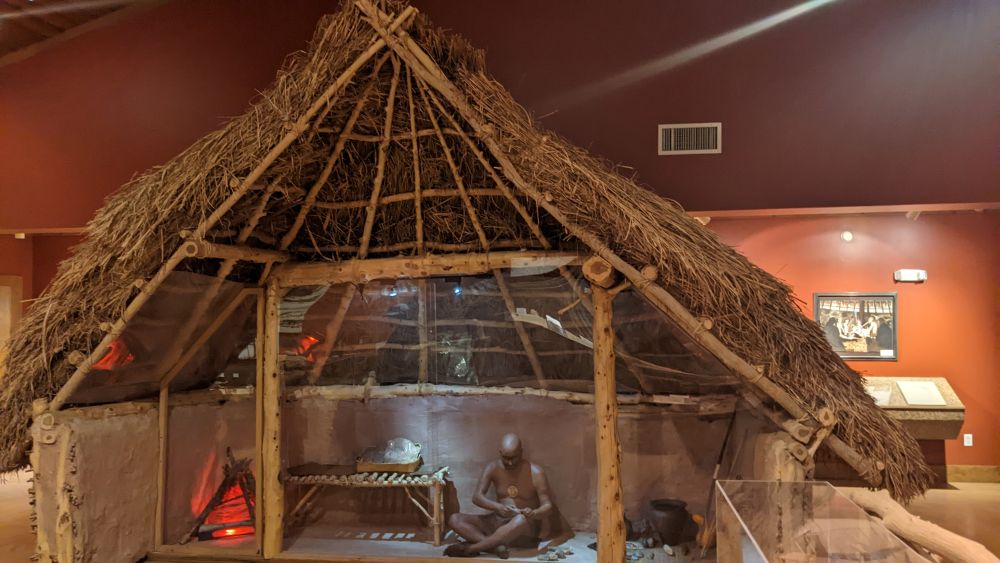
The on-site museum at Spiro Mounds is a treasure trove of information. Thoughtfully curated exhibits showcase the remarkable discoveries unearthed from the mounds, including intricate shell engravings, finely crafted copper ornaments, and beautifully preserved textiles. It was captivating to see the skill and artistry of these ancient people, whose culture flourished between roughly 800 and 1450 AD. One particularly interesting section of the museum featured detailed information about the varieties of corn cultivated by the Spiro people, highlighting their agricultural knowledge and the importance of this staple crop to their society. The museum also featured a compelling reconstruction of what a dwelling might have looked like, helping to visualize the daily lives of the community.
After immersing ourselves in the museum’s insights, we ventured out to walk the loop trail that circles the mounds themselves. Standing at the base of these earthen structures, it took a degree of imagination to fully grasp their original scale and purpose. While time and the elements have softened their forms, the sheer size of the mounds still spoke to the organized effort and societal structure of the Spiro people.
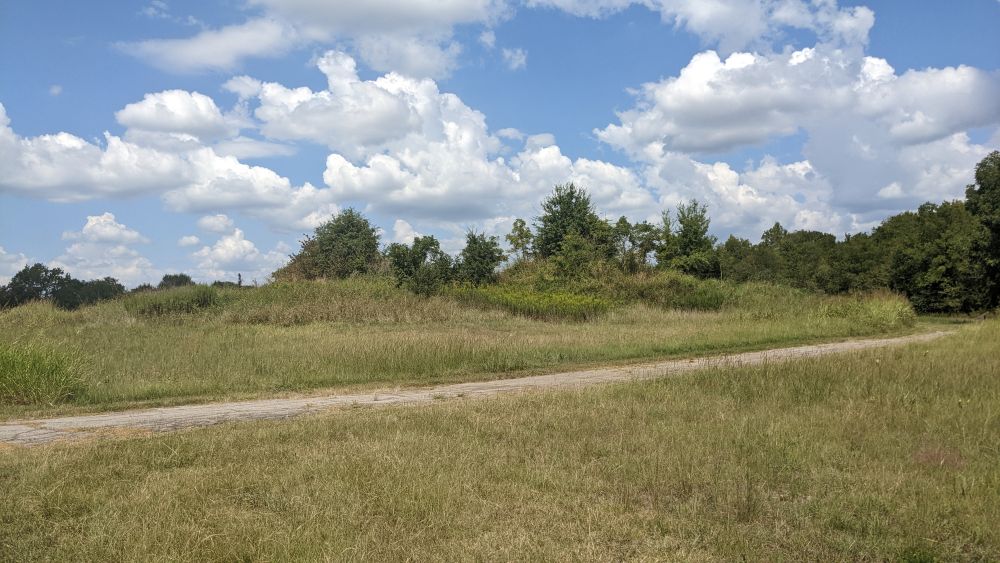
As we walked the loop it was somewhat challenging to fully envision the dwellings and other structures that would have once stood around these central mounds, but the walk certainly prompted us to look at the surrounding landscape with new eyes. We tried to picture the bustling community, the rituals that might have taken place on the mound tops, and the daily lives of the people who called this place home.
The open landscape surrounding the mounds offered a sense of the strategic location chosen by the Spiro people, likely near waterways and fertile land. It made you consider their connection to the environment and how they utilized the natural resources around them.
Visiting the Spiro Mounds was a thought-provoking experience. It’s a place where the past isn’t just written in books; it’s etched into the very landscape. While the passage of time has altered the physical appearance of the site, the museum’s rich collection and the walk around the silent mounds offer a powerful opportunity to connect with a significant chapter in North American history and to appreciate the ingenuity and complexity of the Spiro culture. It’s a place that encourages reflection and a deeper understanding of the ancient civilizations that once thrived on this land.