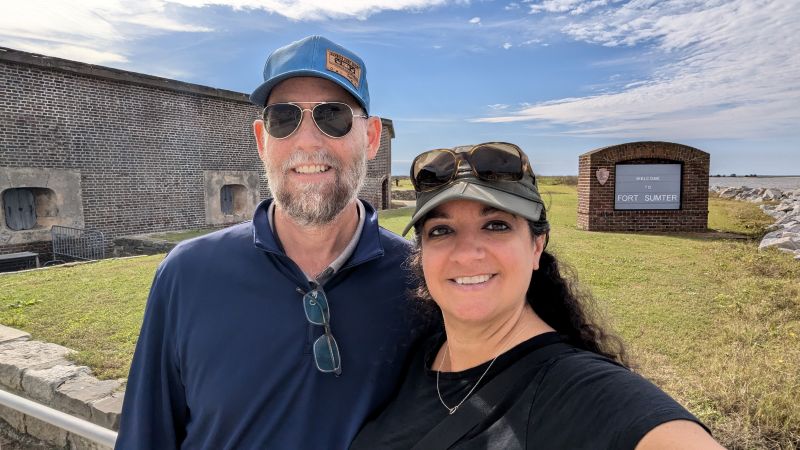
There is something incredibly powerful about standing exactly where history shifted forever. In November 2024, during our trip to South Carolina, we did just that by visiting Fort Sumter National Monument, the historic sea fort where the very first shots of the American Civil War were fired.
Whether you are a massive history buff or just looking for a beautiful day out on the water in Charleston, this national monument is a must-add to your itinerary.
Here is what our experience was like and how you can plan your own trip!
In this post:
Getting There: The Fort Sumter Boat Tour
Because Fort Sumter is located on an island in the middle of Charleston Harbor, you can’t just drive right up to it. Of course, you have to take a boat there!
We booked our ferry tickets through the official concessioner, Fort Sumter Tours, which is the only commercial boat service that actually permits you to disembark at the fort. We got our tickets right from the building where the ferry is, we just walked up, although getting them online is an option.
The cruise out across the harbor is only about 30 minutes, and is half the fun, offering beautiful waterfront views of Charleston and the surrounding waters. The weather was absolutely beautiful the day we went, making the cruise across the harbor a relaxing highlight of its own. Keep your eyes peeled while on deck, as you might spot some local dolphins swimming alongside the boat — we so so many of them on our return trip.
Exploring the Fort & Civil War History
As you approach the island, the low brick walls of the fort slowly rise from the water, immediately setting a historic tone for the afternoon.
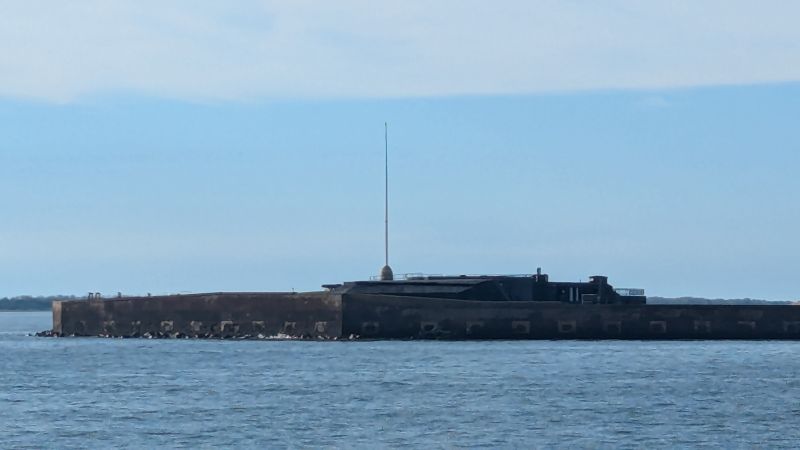
As you step off the ferry and onto the island, you are standing on the grounds where the Confederacy opened fire on the Union garrison on April 12, 1861.
When you arrive, a National Park Service ranger or guide gives an excellent overview presentation, providing the crucial highlights of the fort’s timeline, its construction, and the dramatic events of the siege.
Justin is a big history buff, so he was completely in his element soaking up all the strategic details. But even if you aren’t deeply well-versed in military history, the guides do an incredible job of making the stories gripping and easy to follow.
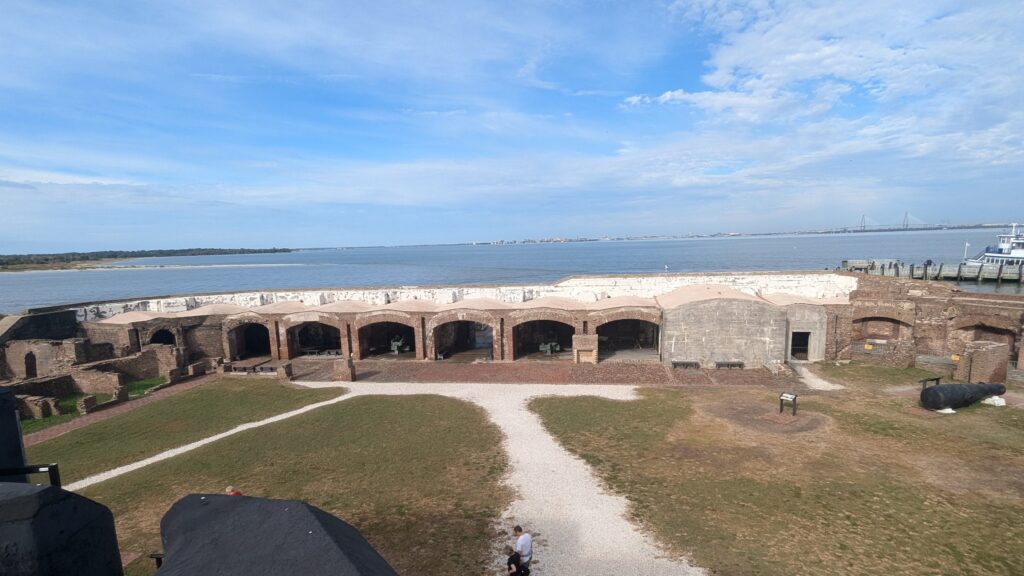
After the introductory talk, you are free to explore the ruins, walk through the museum exhibits, and get an up-close look at the massive historic cannons remaining on site. You have about an hour here total.
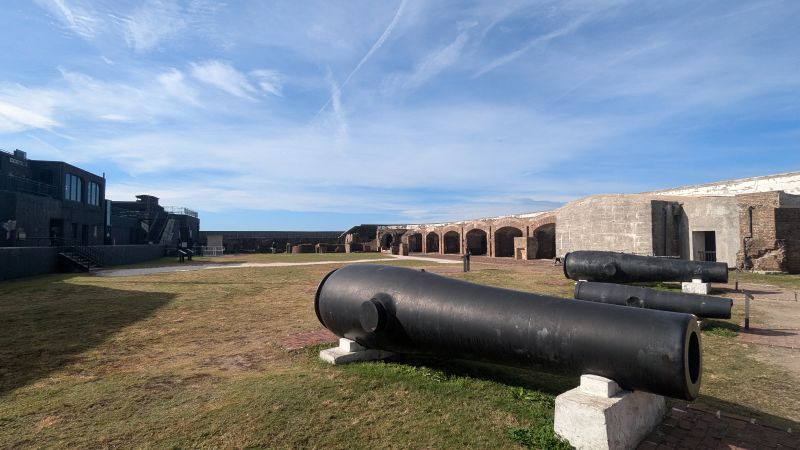
Cannons and Historical Artifacts
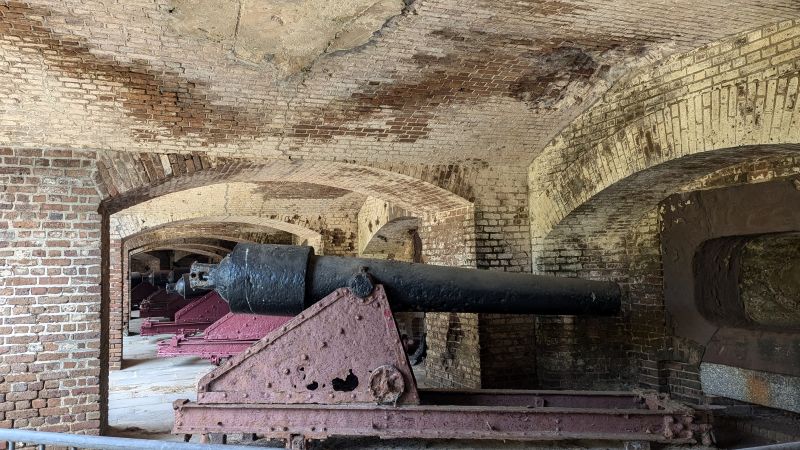
One of the most impressive aspects of exploring the grounds is getting up close to the massive historic cannons on display. The fort houses an incredible collection of artillery pieces positioned throughout the ruins, serving as a stark reminder of the intense bombardments this island weathered.
As you wander through the ruins, you can clearly see the contrast between the original 19th-century brickwork and the later concrete reinforcements added during later conflicts, such as the Spanish-American War.
How It Compares to Other Historic Forts we’ve visited
We have been lucky enough to visit quite a few historic forts over the years, and it’s always fun to compare their design, layout, and purpose.
Compared to the towering, multi-layered stone structures of places like Fort Ticonderoga or the sweeping military architecture of West Point, Fort Sumter feels compact and highly specialized as a coastal harbor defense. While it lacks the sheer geographical scale of ancient engineering marvels like Hadrian’s Wall and its surrounding Roman forts, its density of 19th-century American history is unmatched. You can truly see how the fort was battered down and altered by intense artillery fire during the war.
Is It Worth It?
The entire experience—including the ferry rides and the time spent exploring the island—takes just about 2 hours and 15 minutes. Honestly, it is just the right amount of time. You never feel rushed, yet you have plenty of time to listen to the ranger, wander through the museum exhibits, browse the gift shop, and grab your official National Park passport stamp before boarding the ferry back to the mainland.
If you are planning a trip to Charleston and want to dive deep into the roots of American history, make sure to add Fort Sumter National Monument to your itinerary.
Tips for Your Visit
- Pacing: The total tour time (including the ferry ride) felt like just the right amount of time. You get about an hour to explore the fort itself, which is plenty of time to hear the presentation, browse the museum, take photos, and stamped your national park passport.
- Book Ahead: Because ferry capacity is limited, definitely secure your tickets in advance via the National Park Service Fort Sumter page or directly through the tour company, especially during busy season.
- Layers: Even on a beautiful, warm day, the breeze out on the open water during the boat ride can get a little chilly, so consider bringing a light jacket.