When you have a few days to explore London completely on your own, the world opens up well beyond the central tourist hubs. You don’t have to stay glued to the West End or the underground tube stations; instead, you can easily slip away for a quick, breezy half-day escape down the river. On the third morning of my whirlwind three-day trip, I did exactly that—chasing an invisible marker where global time begins at the Greenwich Meridian Line at the Royal Observatory.
Table of Contents
The Morning Route: A Double-Decker Commute to Greenwich
To kick off the morning, I bypassed the underground and caught a local double-decker bus heading southeast toward Greenwich. It proved to be a fantastic way to watch the transition from London’s dense, bustling city center into a more open, historic maritime suburb.
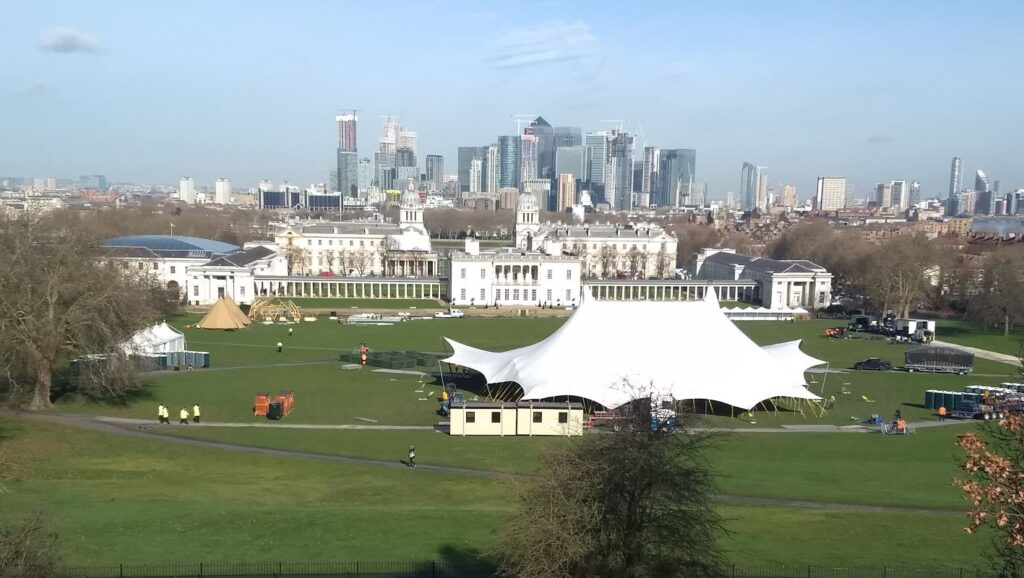
When I stepped off the bus, the morning air was wonderfully crisp. To reach the observatory, you have to undertake a bit of a steep climb up the hill through Greenwich Park. While my legs felt the burn, the immediate reward at the summit was a total surprise: a sweeping, panoramic view of the London skyline framing the River Thames below.
Standing in Two Hemispheres: The Ultimate Global Roadside Attraction
My ultimate destination was the Royal Observatory, perched high on the hill. This is the historic home of British astronomy and, most importantly, the location of the world-famous 0° Longitude line: the Greenwich Meridian Line. It serves as the literal starting point for all global time zones, also known as Greenwich Mean Time (GMT) or Coordinated Universal Time (UTC).
In a lot of ways, this spot functions as the ultimate global roadside attraction. The main draw doesn’t take long at all—you essentially show up, wait your turn, snap a quirky bucket-list photo, and celebrate the weird physics of geography.
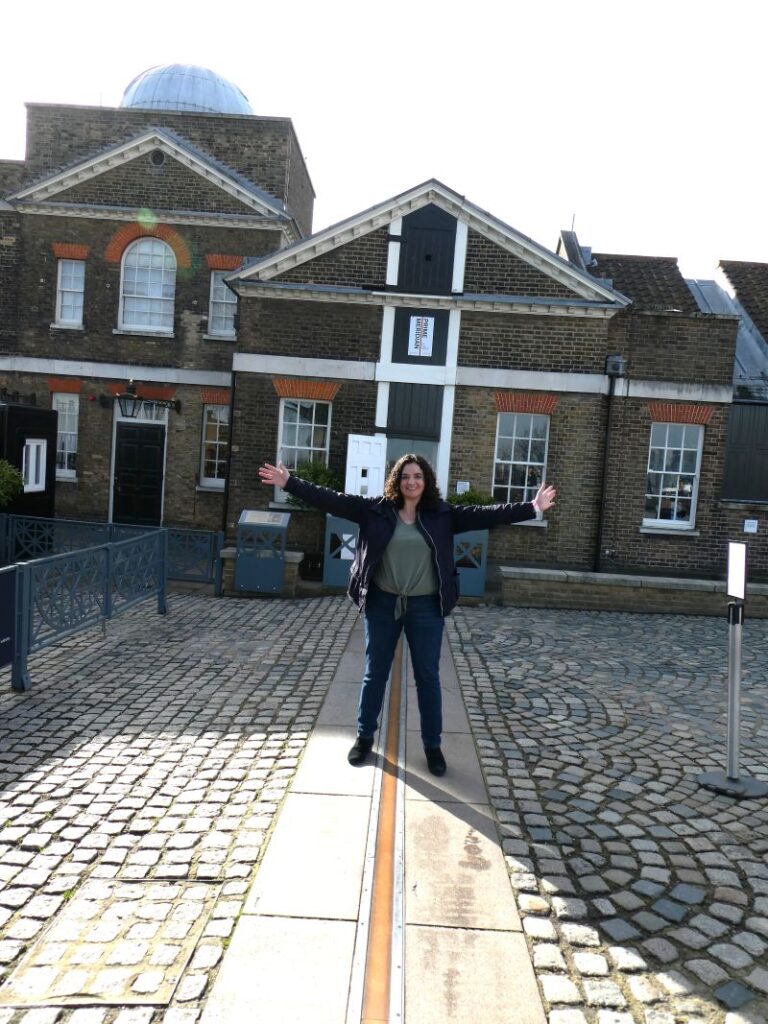
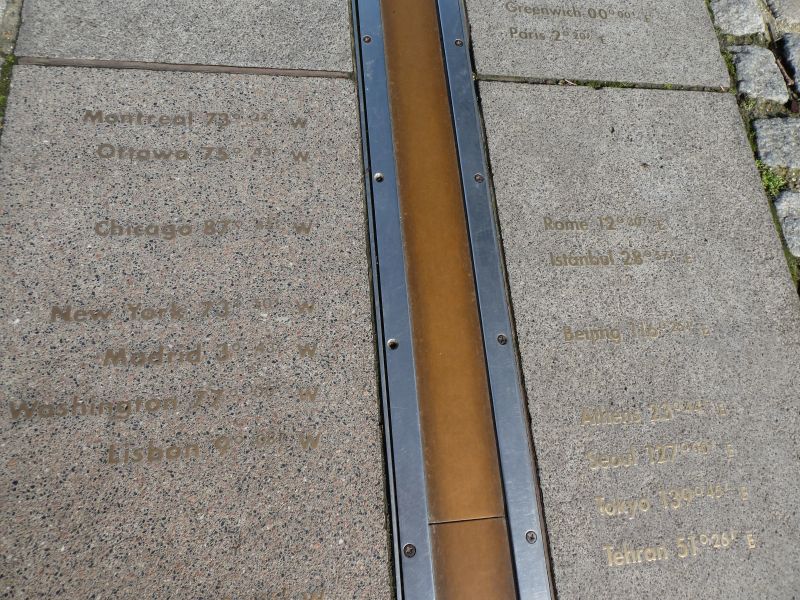
Knowing how busy this spot can get, I arrived with a clear strategy. The moment I paid for my ticket, I made a quick, intentional beeline straight to the courtyard where the physical metal meridian line cuts across the cobblestones. My tactical timing paid off perfectly; I found myself exactly second in line, while a massive crowd of tourists formed a long queue just moments behind me.
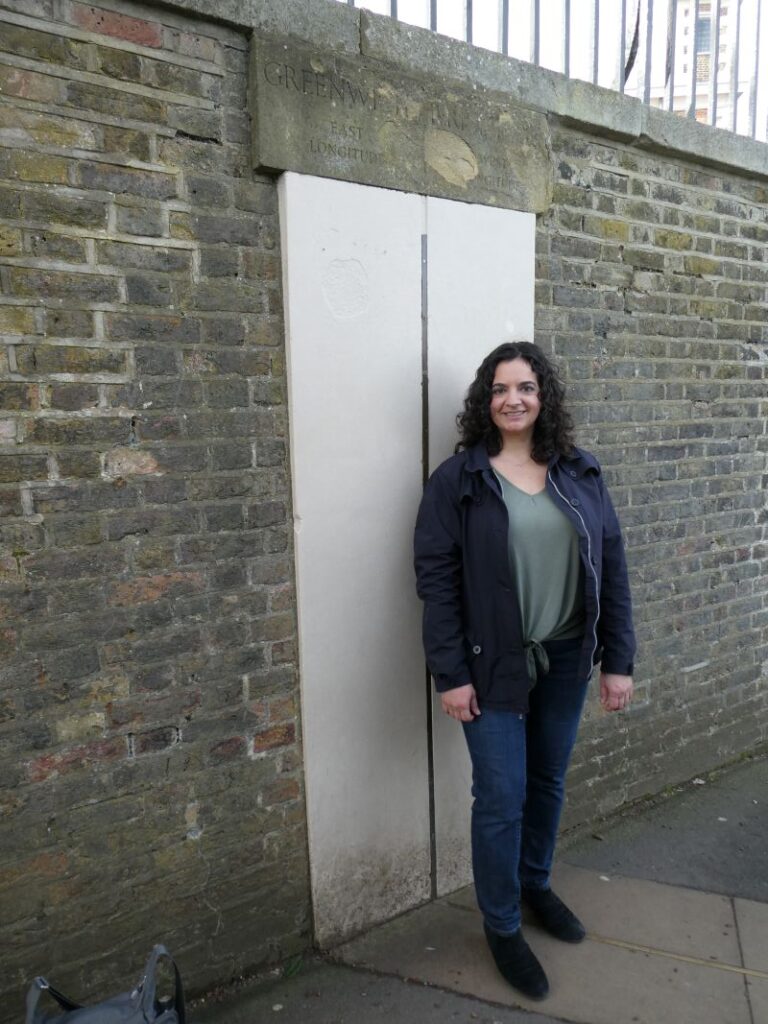
Because I beat the rush, I managed to snap some photos straddling the line, quite literally standing in the Eastern and Western Hemispheres at the exact same time. This is hard to do solo – and you have to rely on kind strangers to be wililng to take your photo but also taking a decent photo…or have a time set for your own camera. I tried both. Having checked that off my list, I stuck around for a while to help a few fellow solo travelers take their own photos. I ended up lingering in the courtyard much longer than I originally anticipated, just soaking in the historic atmosphere, waiting for the Tower of London to open, and enjoying those gorgeous views of the city.
Inside the Observatory: The Great Equatorial Telescope
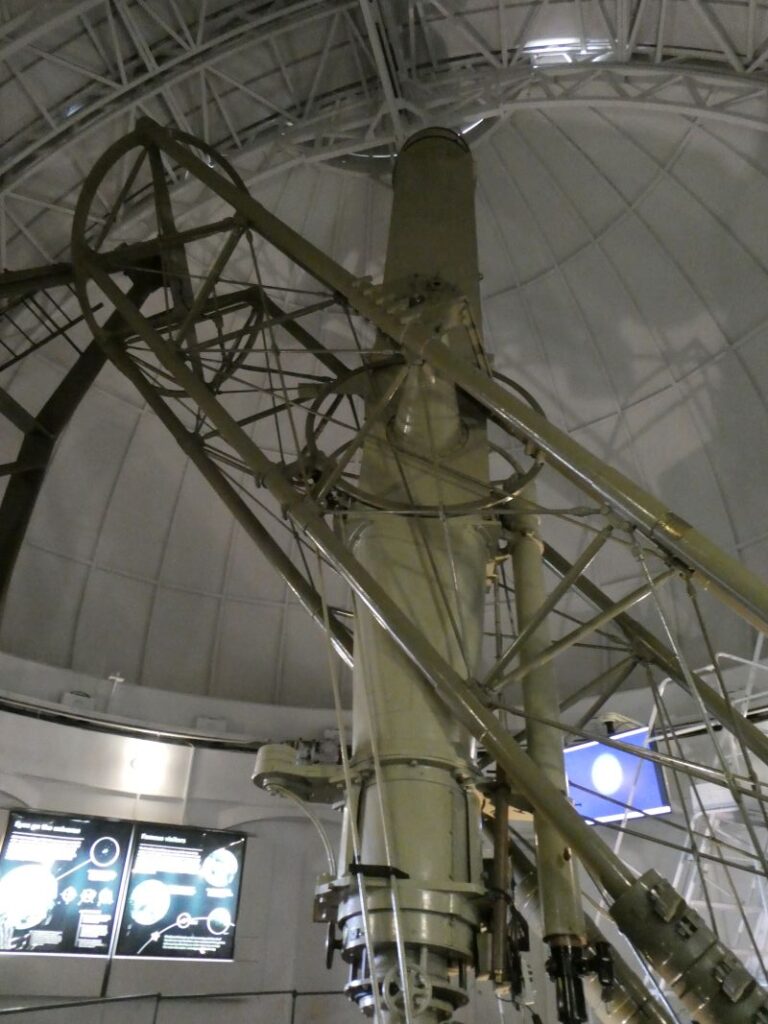
Once you finally step inside the historic observatory buildings, your eyes are immediately drawn upward. You can actually climb into the massive, distinctive “onion dome” roof that sits prominently on the hill. Resting inside is an absolute marvel of Victorian engineering: The Great Equatorial Telescope.
Standing beneath it is a surreal experience. The telescope tube is an incredible 28 feet long and houses a 28-inch wide lens, making it the largest refracting telescope in the entire United Kingdom. It is so massive that it barely fits inside its own structural dome, giving the whole room a delightfully vertiginous, Alice in Wonderland kind of scale.
The telescope was installed back in 1893 by the Grubb Telescope Company of Dublin to ensure Britain stayed at the cutting edge of astrophysics. While it was initially built for the early days of space photography, it quickly found its true calling in mapping double stars (pairs of stars orbiting close together in deep space). While it was eventually retired from active daily data collection in the 1970s due to London’s growing light pollution, the coolest part is that it still completely works! Today, the observatory uses a modern computer-guided system attached to the historic lens for special public stargazing events.
Floating the Thames: The River Boat Ride Back
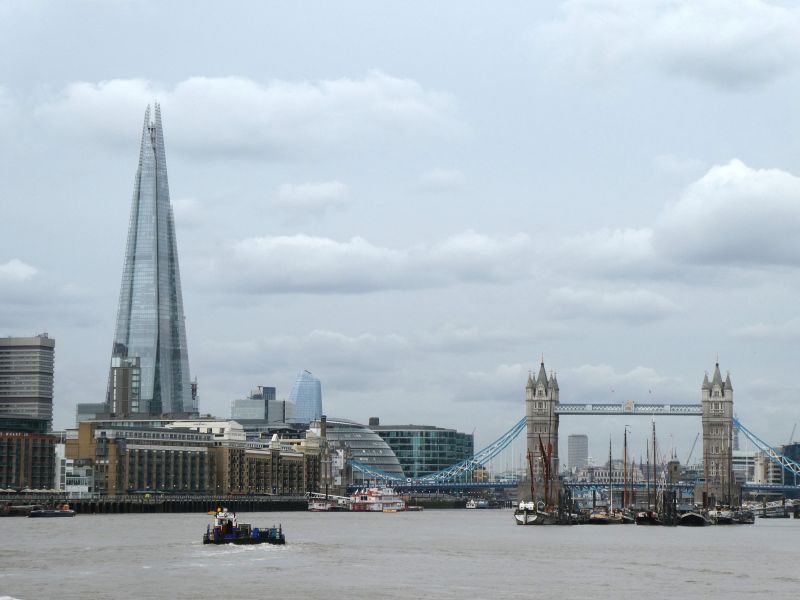
With the meridian line successfully conquered, I headed down to the pier and took the Thames Clipper boat ride back to Central London to keep my jam-packed day moving toward the Tower of London, Tower Bridge, the Shard, and the British Museum. Sitting on the ferry was a wonderful, peaceful contrast to the busy streets—watching London’s iconic architecture glide past from the middle of the quiet river was the perfect way to reset.
The Quirky History: Why Greenwich?
Before 1884, almost every country kept its own prime meridian line, which made international shipping maps and train timetables an absolute logistical nightmare. That year, US President Chester A. Arthur called an International Meridian Conference in Washington, D.C., to choose a single line to serve as 0° longitude for the entire world.
Greenwich won the vote primarily because the United States had already chosen it as the basis for their own domestic railway time system, and at the time, 72% of the world’s commerce already relied on sea charts that used Greenwich as their anchor!
Collecting My Next Imaginary Lines
So why did I decide to spend a morning chasing a marker in the stone? I guess I just love imaginary lines, unique geographic coordinates, and roadside markers. There is something endlessly fascinating about standing at a point on the globe where a human-made boundary dictates how our entire society functions.
Straddling the Prime Meridian reminded me so much of the thrill of crouching down at the Four Corners Monument to be in Utah, Arizona, Colorado, and New Mexico all at once (a spot I’ve visited three times now!), passing the North 45th Parallel Line, or the surreal feeling of crossing into the Arctic Circle (updated 2025). Standing in two hemispheres at Greenwich just ignited my geography-nerd bucket list. Now, I just need to stand on the Equator in Ecuador, trace the Tropic of Capricorn in the desert, and jump between today and yesterday at the International Date Line in Fiji!
Read more about visits from this trip:
- 3 Days Wandering London Solo: Iconic Landmarks & Quirky Gems
- Beyond Central London: a full day trip to Oxford & Stonehenge