There are places you visit as a child and write off entirely — dismissed somewhere between a long car ride and the desperate boredom of being twelve. For me, West Point was one of those places. My parents loaded my sister and me into the car, drove us up the Hudson Valley, and walked us through one of the most storied military institutions in American history. I remember almost none of it. I remember wanting to leave and play in the hotel pool.
So when August 2016 rolled around and my partner Justin suggested we use our New York family visit to get tickets for a West Point tour, I’ll admit my first thought was oh, I’m doing this again.
Getting There: Why You Can’t Just Drive Up
One of the first things you realize about visiting West Point is that it is not a museum — it is an active military installation. You don’t simply pull up and wander in. The U.S. Military Academy sits on the west bank of the Hudson River about 50 miles north of New York City, and access requires going through proper channels. Tickets for the guided bus tour need to be reserved in advance, and all adult visitors are subject to a background check before being permitted on post. There’s a visitor control process at the gate, and you show your ID before anything else.
It sounds intimidating, but the process moves smoothly. Once cleared, you make your way to the visitor area, which includes the Visitors Center — a genuinely impressive facility with exhibits, interactive displays, and short films that give you context before you ever board the bus. I’d recommend spending time here before your tour starts. It walks you through the history of the academy from its founding in 1802, explains what cadet life actually looks like across four years, and sets up everything you’re about to see in a way that makes it land differently. Justin, who had been reading up on West Point’s history for weeks leading up to our visit, was practically vibrating with excitement by the time our tour was called.
The Bus Tour: August Heat and 200 Years of History
The guided bus tour loads you up and takes you through the grounds with stops along the way, each one accompanied by a knowledgeable guide walking you through what you’re looking at and why it matters. The tour runs roughly an hour and fifteen minutes including walking stops, and in mid-August, every single one of those outdoor minutes reminds you of the sun’s full power. We were on day 4 of a heat wave, our small water bottle and sunglasses was not enough. But then I thought, at least I am dressed in summer clothes, these cadets have to be in uniform and are pushed to their physical limits – I can handle two hours, especially with an air conditioned bus.
Trophy Point: Cannons, Chain, and the Hudson Below
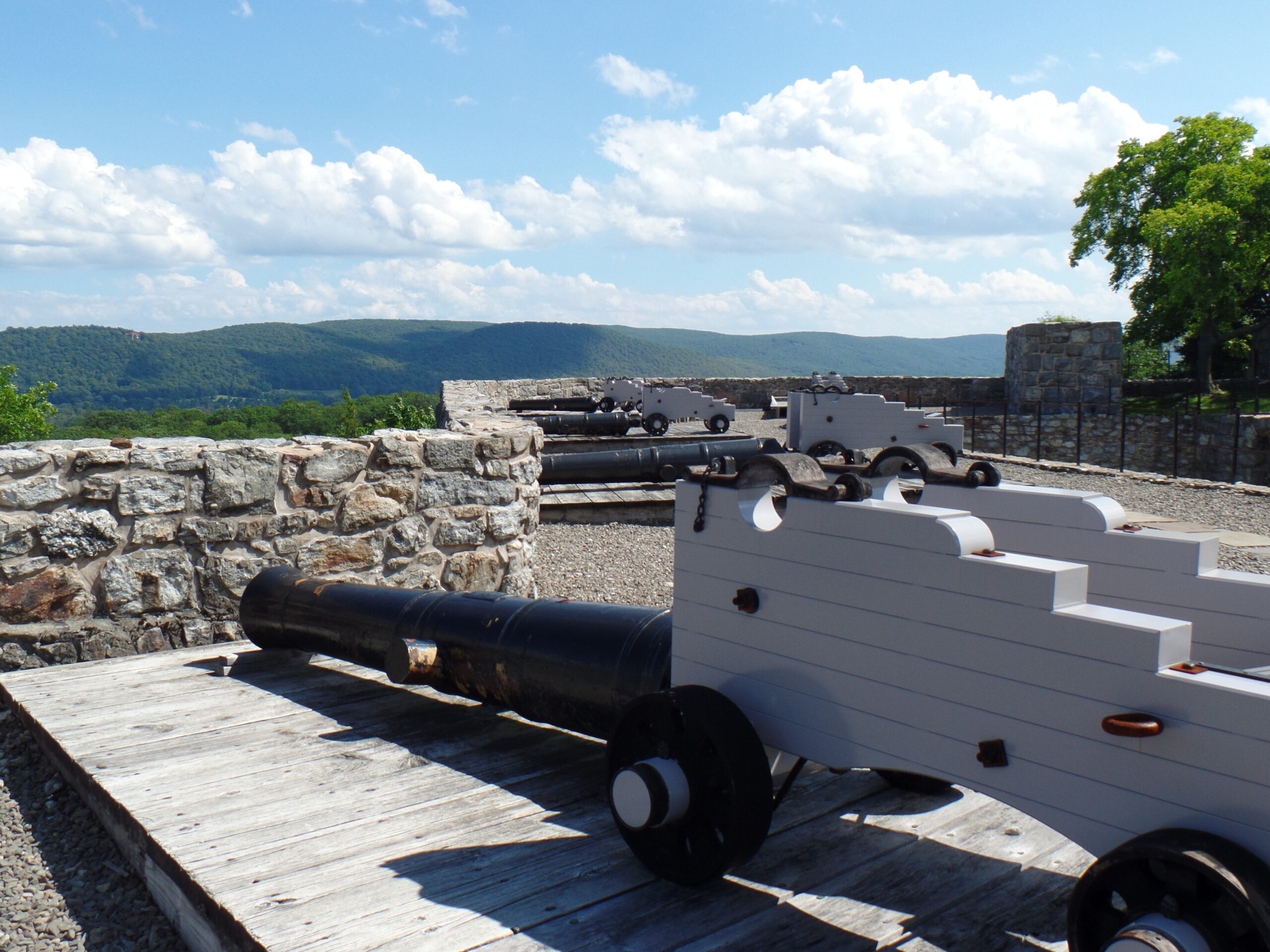
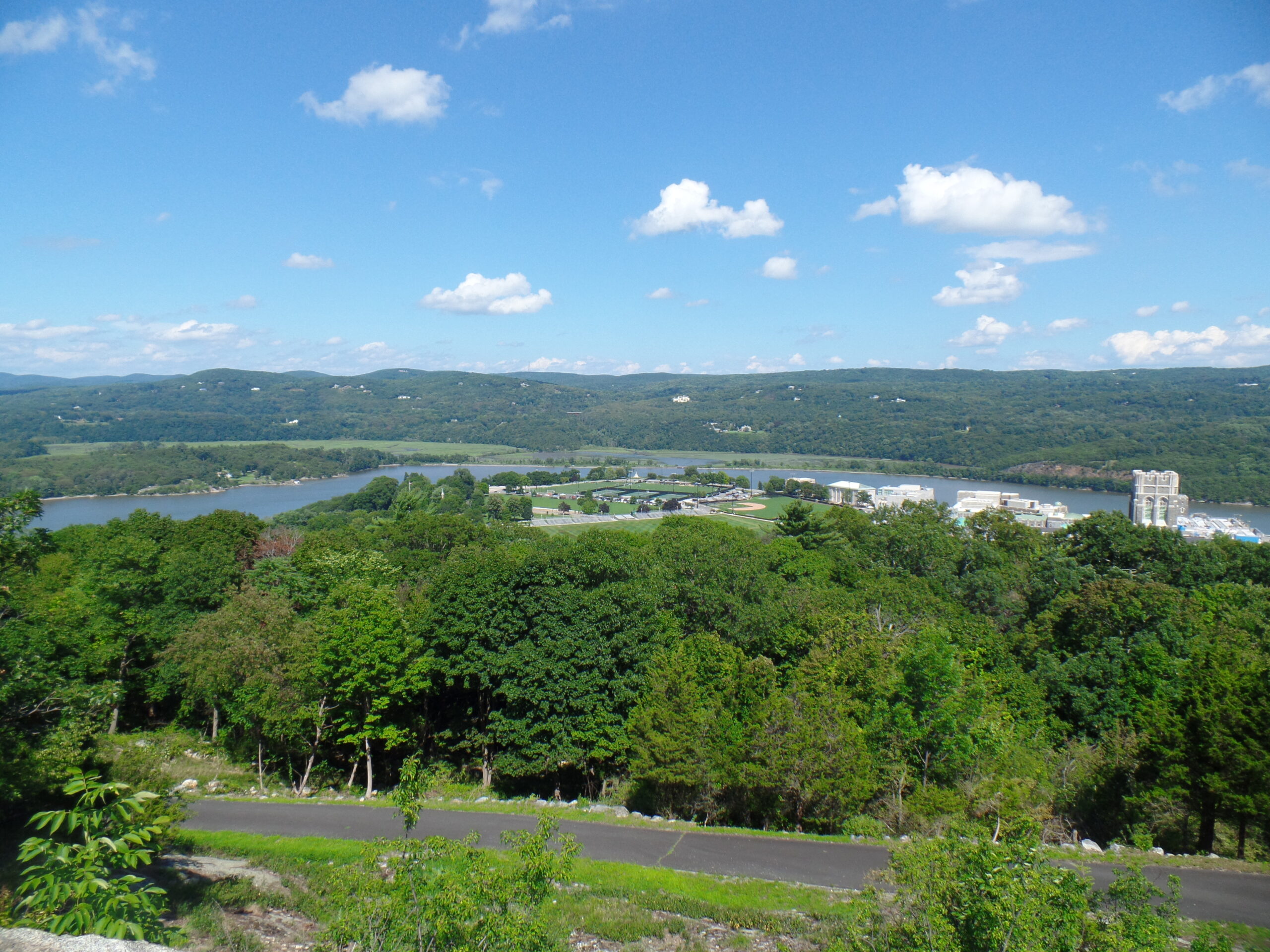
The first major stop — and the one that hit hardest — was Trophy Point, a bluff overlooking a bend in the Hudson River that offers one of the most genuinely stunning views I’ve seen in New York state. On a clear August day, the river stretches out below you in both directions, the Highlands rolling green on either side, and it takes your breath away.
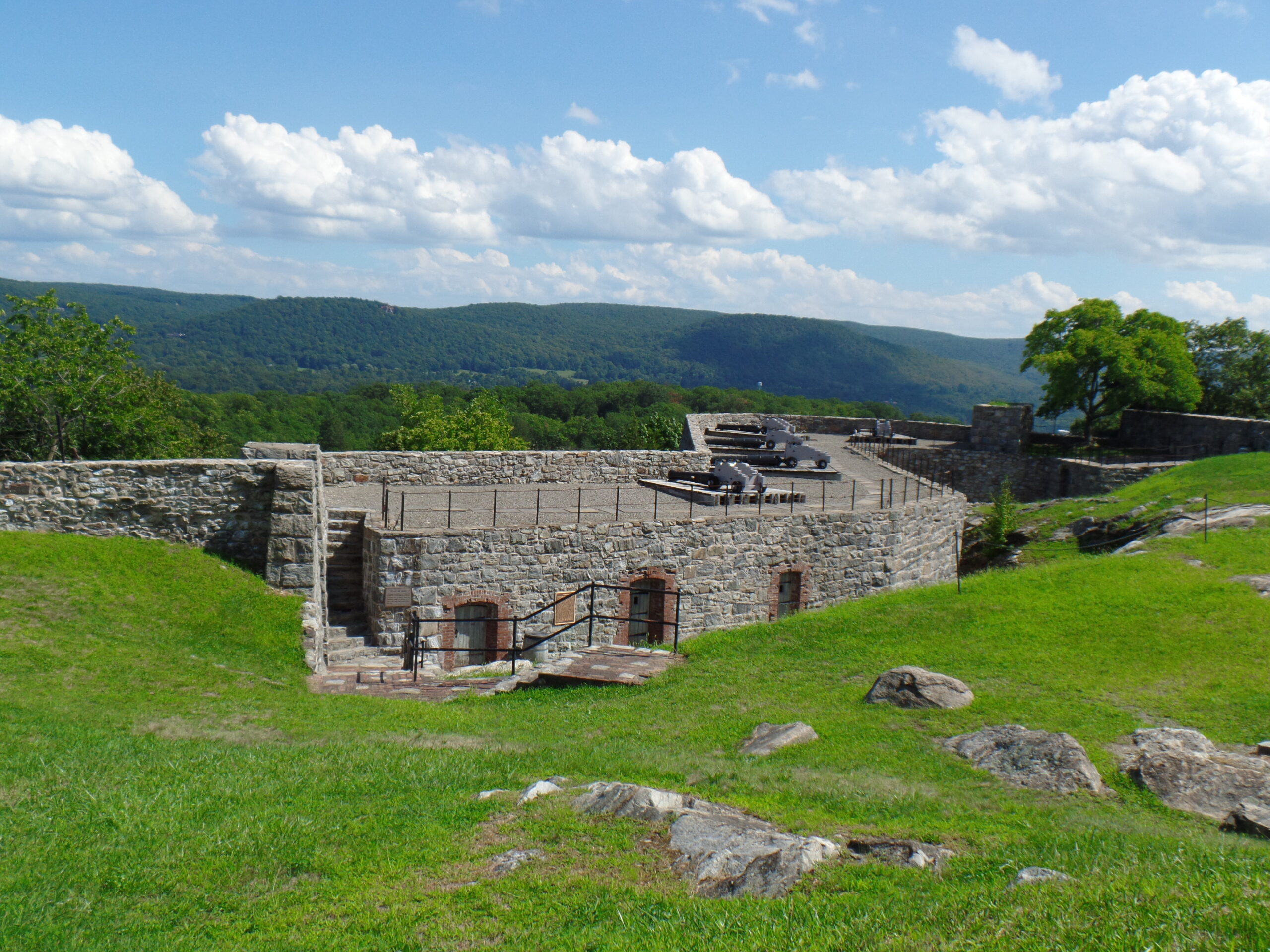
But Trophy Point isn’t just a pretty overlook. It is a monument to American military history arranged in iron and granite. Captured cannons are displayed here spanning conflicts from the Revolutionary War through the Spanish-American War — artillery pieces seized in battle and brought here to serve, as the academy’s tradition held, as both trophies and teaching tools. In 1837, West Point was formally designated the repository for all U.S. Army war trophies, and the collection reflects that mandate. After the Civil War, nearly fifty captured Confederate cannons were added to the display, each one a physical piece of the country’s most painful chapter.
At the center of it all stands the Battle Monument — a 46-foot column of polished pink Milford granite, designed by Stanford White and dedicated in 1897 by surviving Civil War veterans. It’s reputed to be the largest polished granite column in the Western Hemisphere. The names of 2,230 Union officers and soldiers who died during the Civil War are inscribed around its base. Standing next to it, you feel the weight of the number in a way that a textbook never quite delivers.
Also at Trophy Point: massive iron links from the Great Chain — the actual chain that was stretched across the Hudson River during the Revolutionary War to block British warships from sailing north. Looking at those links and imagining the strategy and desperation behind stringing them across a river is the kind of history that becomes real when you’re standing next to it.
Justin was absolutely in his element. I watched him move from cannon to cannon reading the placards with such intensity, really grasping the history.
The Cadet Chapel: Gothic Grandeur on a Hill
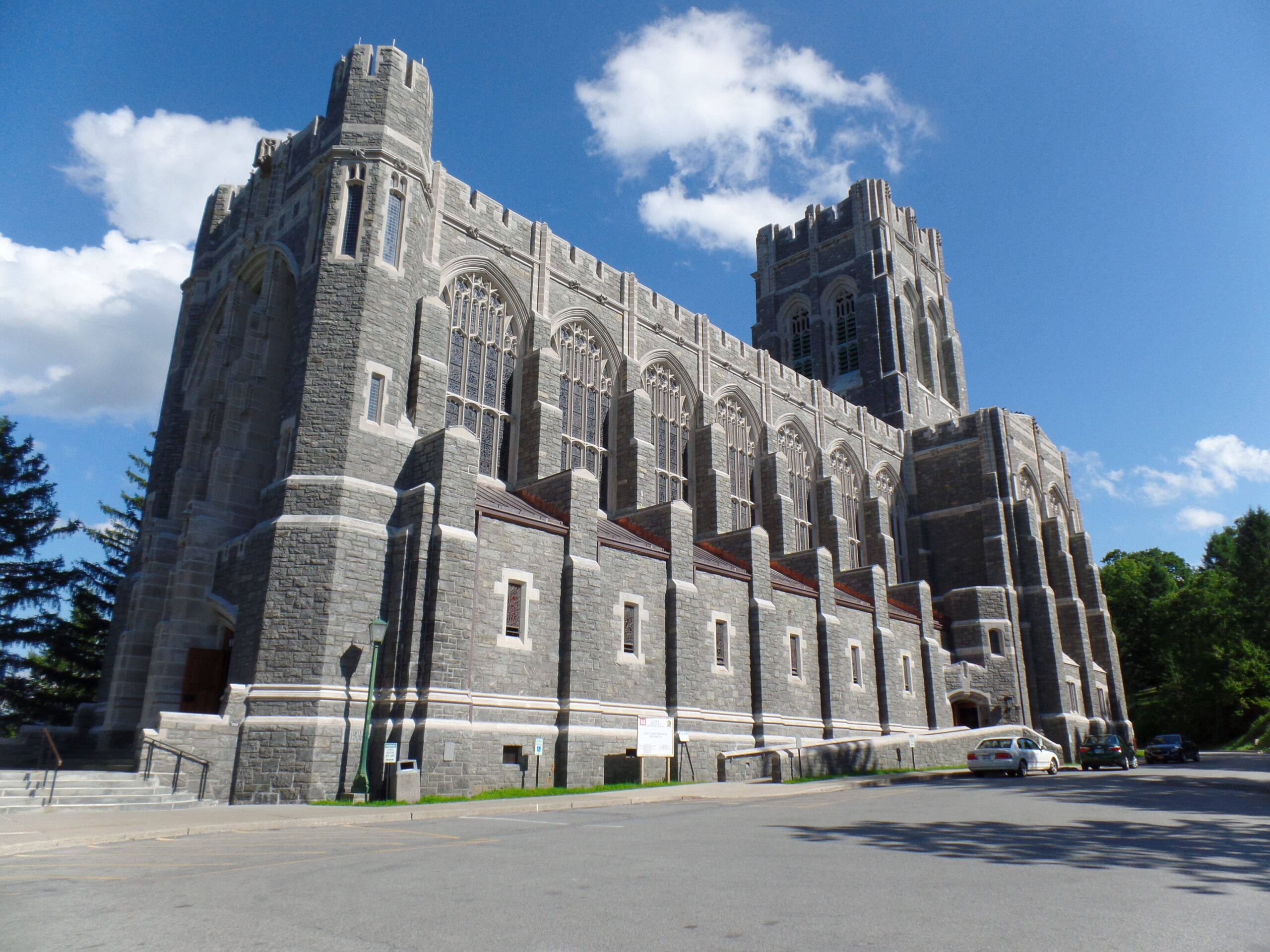
The Cadet Chapel might be the single most visually striking building on the entire post, and that is saying something, because West Point does not do understated. The chapel sits elevated above the rest of the grounds, a commanding Gothic Revival structure built of grey granite completed in 1910. Designed by architect Bertram Goodhue, it is the kind of building that makes you stop and just look at it for a moment before going inside.
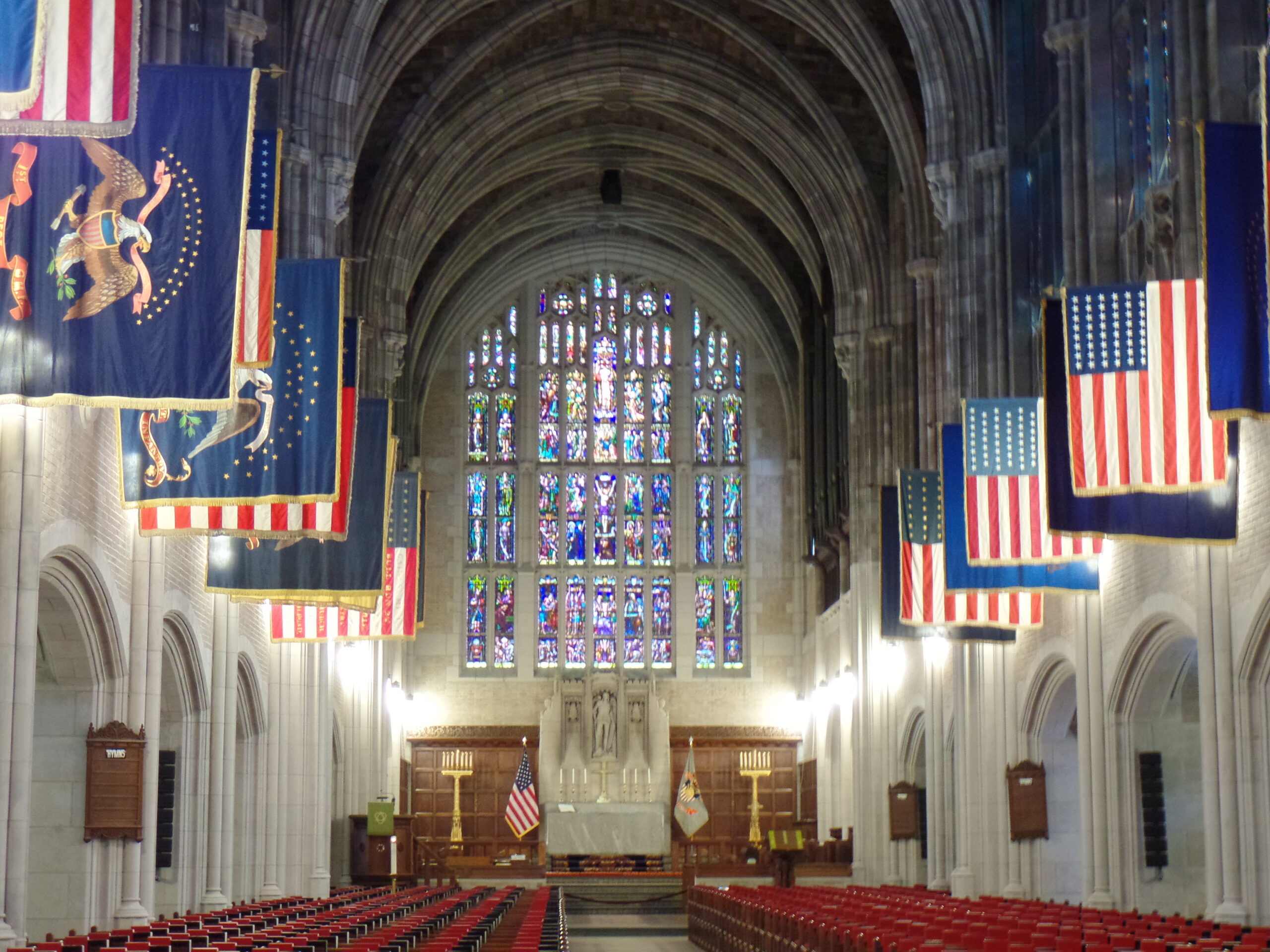
Inside, the stained glass, the stone, the soaring arches — all of it creates an atmosphere that’s difficult to describe to someone who hasn’t stood in it. It is both austere and overwhelming. What you may not know until you’re standing there is that the Cadet Chapel houses the largest church pipe organ in the world, with over 23,000 individual pipes. The organ was first installed in 1911 and has been expanded steadily over the decades through donations from cadets, graduating classes, and families. Even if organs aren’t your thing, the sheer scale of it is remarkable.
This was one of those moments where my childhood visit and my adult visit overlapped — I have a vague memory of the chapel from when my parents took my sister and me, something about the darkness and the height of the ceiling. Standing there again in 2016, I finally understood what I’d been too bored to appreciate the first time.
Where Were the Cadets?
Here’s something worth knowing before you go: if you visit in the summer, the campus will feel different than you might expect. The Corps of Cadets doesn’t spend the summer strolling across the Plain in formation. Summer at West Point is Cadet Summer Training — an intensive stretch of military training, field exercises, and leadership development that disperses cadets to field training at Camp Buckner and other locations. Incoming new cadets are also going through their initial basic training, known as “Beast Barracks,” from late June through mid-August.
What this means practically is that the grounds are quieter in summer. You won’t see the synchronized march formations and full corps parades that West Point is famous for — those are a fall and spring phenomenon, tied to the academic year.
I actually remember seeing cadets marching in formation from my childhood visit, though I was too young and too uninterested to appreciate it. There is something genuinely striking about watching hundreds of people move as one, perfectly timed, in those grey uniforms. It’s the kind of thing that even a bored twelve-year-old notices. If that’s something you want to see, plan your trip for the academic year — fall weekends in particular are when the full corps parades happen on the Plain, and by all accounts they’re worth building a trip around.
The Museum: More Than Worth Your Time
Adjacent to the visitor area and entirely free to enter is the West Point Museum — a collection that covers military history in a breadth that frankly surprised me. It holds one of the most extensive collections of military artifacts in the Western Hemisphere, covering everything from the Revolutionary War through modern conflicts. Weapons, uniforms, maps, equipment, and the personal effects of some of history’s most consequential military figures.
If you’re a history person like Justin, block out extra time here. If you’re not a history person, you may become one.
Ten Years Later: Why I’d Go Back Again
Here’s what I understand now that I didn’t understand at twelve: West Point isn’t boring. I was boring. Or rather, I was just young enough that the weight of what I was standing in the middle of hadn’t landed yet.
Returning as an adult — especially with someone who loves history and brought genuine enthusiasm to every stop — completely reframed what the place is. It’s not a museum. It’s not a tourist attraction in the traditional sense. It’s an institution that has been continuously shaping the people who lead the American military for over 200 years, and when you’re standing on the grounds, that continuity is palpable. The cannons at Trophy Point were captured by soldiers. The names on the Battle Monument belonged to real people. The cadets who weren’t marching that August were out somewhere doing things that would shape who they’d become as officers.
We actually went back to West Point in 2021 to watch a football game. That was fun too, although a very different experience.

If you’re in the New York area and you haven’t been — or if you went as a kid and don’t remember it — give it another shot. Book your tickets in advance, wear comfortable shoes, and go with someone who loves history or is willing to let themselves be surprised by it.
You might find, like I did, that the place you wrote off at twelve has a lot to say. And that a visit like this, made such an impression, that Justin and I have visited numerous forts in all parts of the country.
Read about our visits to: Fort Jefferson, Fort Ticonderoga, Hadrian’s Wall, Fort Sumter, and a few other small forts here and there.
West Point Tours depart from the Visitors Center in Highland Falls, NY. Tours require advance reservations and ID for adult visitors. The West Point Museum is free and open to the public without a tour ticket.