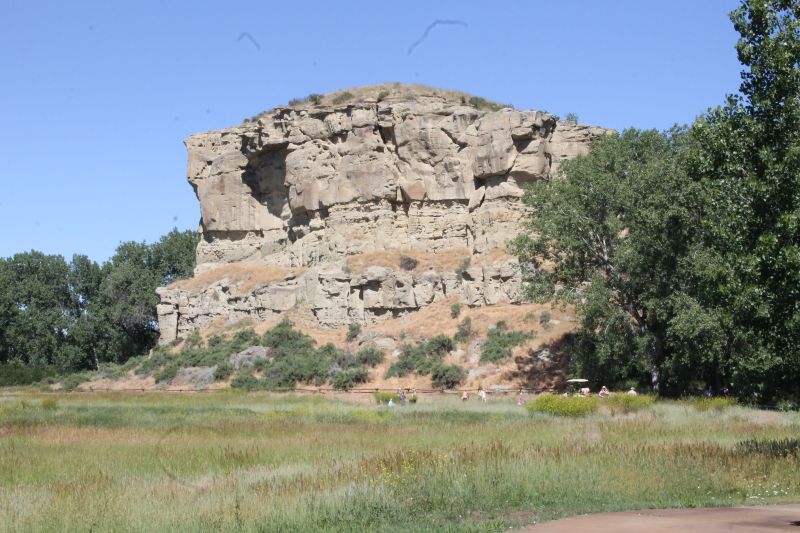
Kicking off our Montana road trip, we made our first stop at Pompey’s Pillar National Monument, about 25 miles east of Billings. With perfect weather and brilliant blue skies overhead, it was the ideal introduction to Big Sky Country.
A Piece of Living History
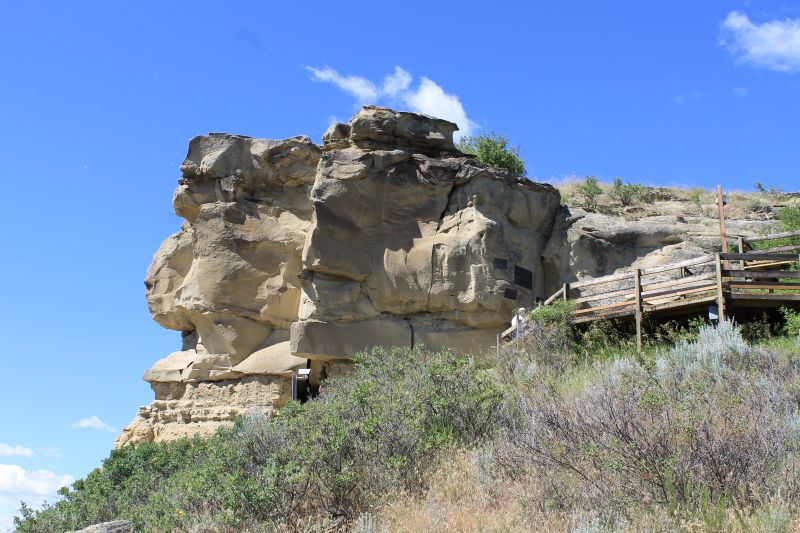
Pompey’s Pillar is more than just a striking sandstone formation rising 120 feet above the Yellowstone River valley. For over 11,000 years, people have recognized this remarkable landmark, leaving their marks on its surface. The rock face is covered with hundreds of carvings, petroglyphs, and inscriptions that tell the story of countless travelers who passed this way.
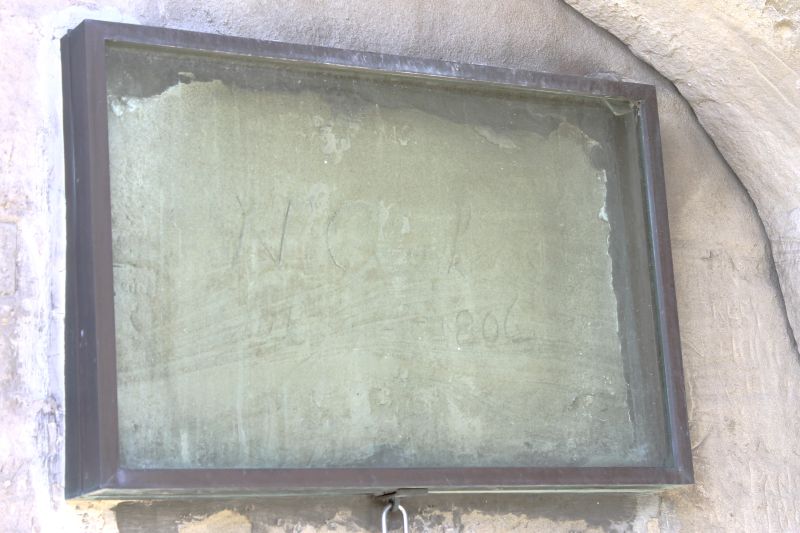
The monument’s most famous marking belongs to Captain William Clark of the Lewis and Clark Expedition. On July 25, 1806, Clark climbed the rock and carved his name and the date into the sandstone. It’s the only remaining physical evidence from the entire Lewis and Clark Expedition that you can still see in its original location today. Standing in front of that signature, you can’t help but feel connected to that moment over 200 years ago when Clark stood in the same spot, marveling at the “most extensive view in every direction.”
The Boardwalk Experience
The well-maintained boardwalk makes the climb to the top accessible and enjoyable. At about 1,000 feet long with around 200 steps, it’s a moderate walk that rewards you at every turn. The first landing brings you face-to-face with Clark’s famous signature, protected behind glass but still clearly visible. From there, you can continue to the summit for those sweeping Montana views that impressed Clark so much.
One of the best parts of our visit was how uncrowded it was. Without hordes of tourists, we could take our time at each viewing point, really absorbing the history and the landscape. The path and viewing deck were in excellent condition, making the experience both safe and comfortable.
Worth the Stop
Whether you’re a history buff, a Lewis and Clark enthusiast, or simply someone who appreciates unique natural landmarks, Pompey’s Pillar delivers. The combination of indigenous history, exploration heritage, and stunning river valley scenery makes it a perfect stop on any Montana itinerary.
The visitor center (open seasonally from May to October) offers exhibits about the expedition and the area’s native cultures, but even if you visit when it’s closed, you can still walk the three-quarters of a mile to the site and explore the grounds during daylight hours.
Perfect weather, great conditions, and a genuine piece of American history—it was an excellent way to begin our Montana adventure.
Other posts from this trip: Glacier National Park or see other National Parks / Monument posts.