The phone rang on an ordinary afternoon, and my cousin’s voice carried an excitement. They were booking a skydiving trip. Did I want to come? I felt that familiar flutter of possibility mixed with dread. It would be fun, I told myself. I’d be surrounded by family, people I trusted. But underneath those rational thoughts, a louder voice insisted: I could never willingly jump out of a plane, even strapped to an experienced professional with a perfectly good parachute. I thanked them for thinking of me and politely declined.
A few weeks later, I sat watching video after video of my cousins free-falling through clouds, their faces lit with pure joy and adrenaline. They looked fearless, invincible even. A small part of me wondered if I’d made a mistake. Maybe I should have gone. Maybe I’d missed out on something transformative.
Then, nearly a decade later, my college roommate posted her skydiving video from her 35th birthday celebration. I clicked play, expecting to see the same exhilaration I’d witnessed in my cousins’ footage. Instead, I watched her terrified face as she approached the plane door. She cried. She screamed, not in delight but in genuine fear. She cursed at the instructor. And yes, she might have even peed her pants a little. The whole way down was more fear, at no point did she enjoy it.
I felt an unexpected wave of relief wash over me. This, I thought, would have been my video. Every panicked expression, every desperate plea to turn back, every white-knuckled grip—that would have been me. In that moment, I gave myself permission to permanently cross skydiving off my bucket list. Some fears don’t need to be conquered, and that was okay.
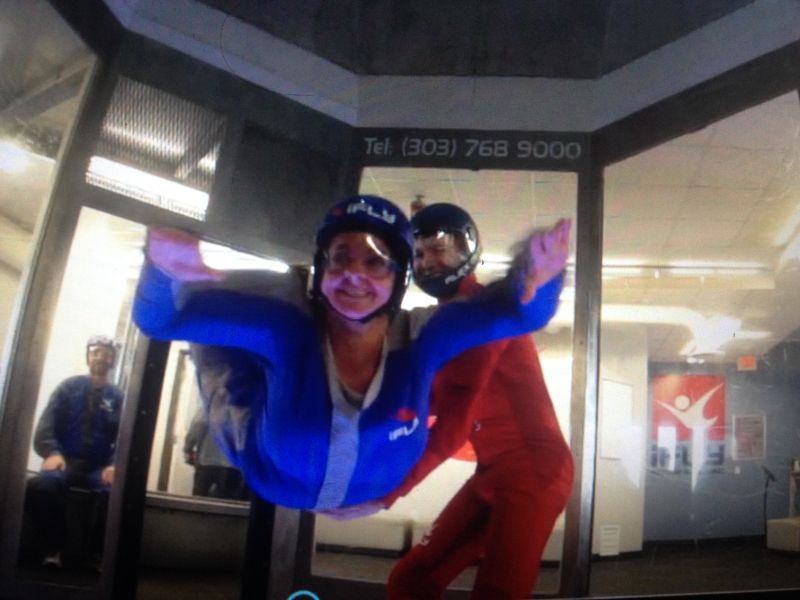
But here’s the thing about bucket list items: sometimes they evolve rather than disappear entirely. While I no longer wanted to jump from a plane at 10,000 feet, I still yearned to know what weightlessness felt like. I wanted that sensation of floating, of defying gravity, without the commitment of hurtling toward the earth. So I booked Justin and me for three one-minute flights at iFLY, an indoor skydiving facility that promised all the sensation with none of the altitude.
The day arrived, and I found myself standing with about ten other people in our group—kids bouncing with excitement, a few people around my age, some older participants who seemed remarkably calm about the whole endeavor. We suited up in a blue jumpsuit and protective goggles. As we lined up near the clear cylindrical wind chamber, I could feel my heart racing. The tube looked narrower than I’d imagined from the outside, though once you stepped inside, the space felt adequate. But that transparency meant everyone could watch you. Every wobble, every mistake, every moment of panic would be on full display.
One by one, people entered the chamber ahead of me for their flight. Most looked graceful, natural even, as the powerful wind lifted them into a controlled float. Then it was my turn. The instructor guided me in, positioning my body in the proper form—belly down, arms slightly bent, legs extended. The wind roared to life beneath me, and suddenly I was suspended in air. Except I wasn’t gracefully suspended at all. I was flailing, rigid, completely unable to find that relaxed state everyone else seemed to master so easily.
The instructor stayed by my side the entire time, constantly adjusting my position, lifting me when I dropped too low, pulling me back when I drifted toward the walls. My first flight was basically him fighting against my inability to surrender to the experience. During my second and third attempts, I wasn’t getting better, I kept going into a U shape. Why couldn’t I achieve a simple, relaxed float? I spent those precious minutes battling against my own body, never quite finding the rhythm that would make weightlessness feel like freedom instead of chaos.
Meanwhile, Justin looked like he’d been doing this his entire life. He caught on immediately, his body instinctively understanding what mine refused to accept. The instructor barely needed to touch him, eventually taking him on a spinning ascent to the top of the chamber before bringing him back down in a controlled spiral. Almost everyone else in our group displayed that same natural ability. They made it look effortless.
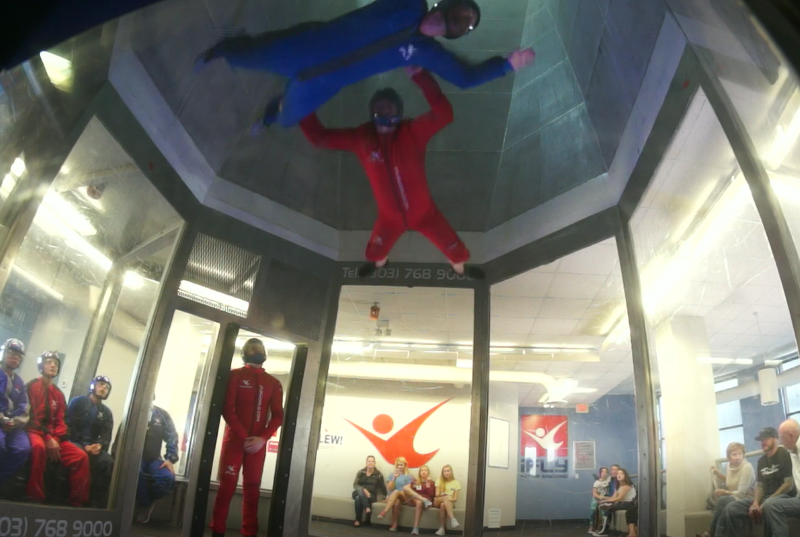
I can’t even bring myself to show anyone my video. My face in those recordings tells the whole story—tension, frustration, a complete inability to let go. There was nothing to actually fear in that controlled environment, with professionals watching every second, yet I couldn’t relax. I couldn’t enjoy what should have been a thrilling experience. After my third and final run, I peeled off my jumpsuit feeling something I hadn’t expected: shame.
This was supposed to be safe, the perfect environment to experience the sensation I’d been curious about for years without any real danger. And I’d let myself down. Yes, I did it—I can say I experienced indoor skydiving—but I did it poorly. I spent the ride home in silence, replaying each awkward moment, wondering why I couldn’t just surrender to the wind and float.
But here’s what I’m learning: bucket list items aren’t always about perfect execution. Sometimes they’re about showing up despite your fears and trying something that pushes you outside your comfort zone, even if you’re terrible at it. I may not have looked graceful or felt that pure weightless freedom I’d imagined, but I stepped into that chamber three times. I kept trying even when it was uncomfortable and embarrassing.
Will I do it again? Probably. I think I need to. Because that feeling of disappointment in myself suggests there’s something there worth exploring. Maybe next time I’ll be able to relax just a little more. Maybe I’ll find that moment of true weightlessness I was searching for. Or maybe I’ll spend another three flights fighting against myself while everyone else soars.