Towering Red Rocks & Unexpected Detours: Our itinerary for 2 Days in Zion National Park
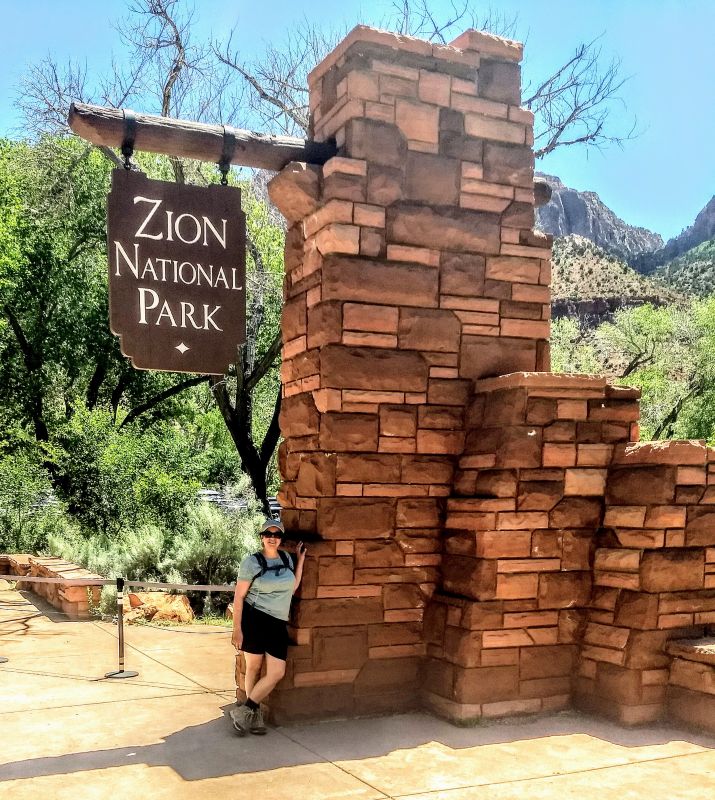
There is a reason Zion National Park is on almost every hiker’s bucket list. The sheer scale of the canyon walls makes you feel incredibly small from the moment you enter. In May 2019, we spent an unforgettable 2 days in Zion. From conquering steep switchbacks to dealing with Mother Nature’s unpredictable schedule, our trip was full of stunning views and great local beer. Here is how we spent our two days in Zion!
About Zion National Park: Something for Everyone
Before diving into the trails, it is worth appreciating just how incredible this park is. Spanning over 146,000 acres (roughly 230 square miles) of southwestern Utah, Zion is characterized by high plateaus, striking sandstone towers, and a labyrinth of deep, beautifully colored canyons carved by the Virgin River.
The Path to Protection
The push to protect this land started when it was originally designated as Mukuntuweap National Monument by President William Howard Taft in 1909 to preserve its unique geological and archeological features. Because the local settlers found the Paiute name hard to pronounce, the name was changed to Zion National Monument in 1918. A year later, on November 19, 1919, Congress officially established it as Utah’s very first National Park to protect its scenic grandeur from commercial exploitation and preserve its natural beauty for generations to come.
An Outdoor Playground
One thing we quickly realized is that Zion truly has something for everyone, and there are so many activities we didn’t even have time to touch on our short trip, including:
- Canyoneering & Rock Climbing: Navigating the technical, hidden slot canyons or scaling the sheer 2,000-foot vertical cliffs.
- Cycling & Horseback Riding: Biking along the canyon floor or taking guided trail rides on horseback.
- River Activities & Camping: Tubing, river trips, and spending nights under the stars at the park’s campgrounds.
- Stargazing: Enjoying the incredibly dark night skies over the canyon.
Whether you want an adrenaline-pumping climb or a quiet place to sit and paint, it’s impossible to be bored here.
Getting Around: Navigating the Zion Shuttle System
If you are planning a trip during the peak season, you will likely become very familiar with the Zion Canyon Shuttle system. For most of the year, the scenic canyon drive is completely closed to private vehicles to protect the environment and cut down on traffic, making the free shuttles the primary method of transportation into the main canyon.
We hopped on the shuttles from the main visitor center parking lot both mornings. The system is incredibly efficient—buses run frequently, and they stop at all the major trailheads along the scenic drive.
Day 1: A Rushing Virgin River & The Closed Narrows
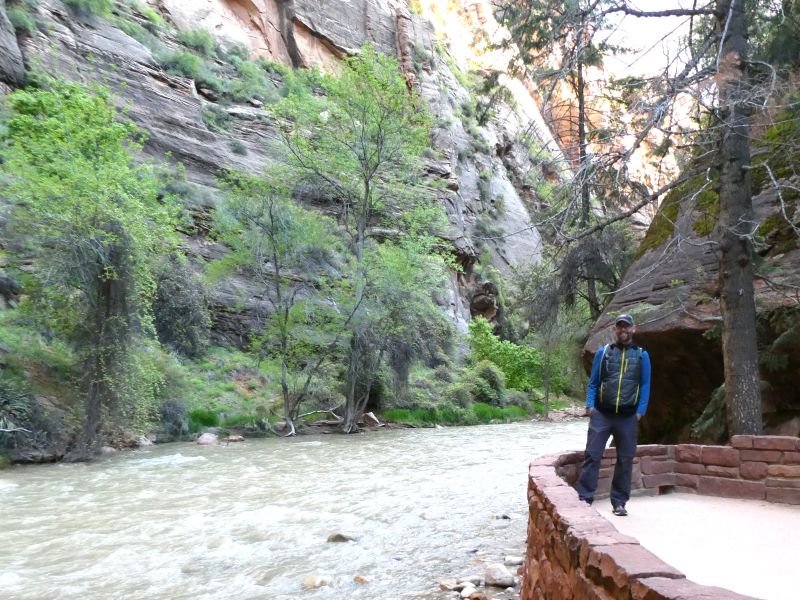
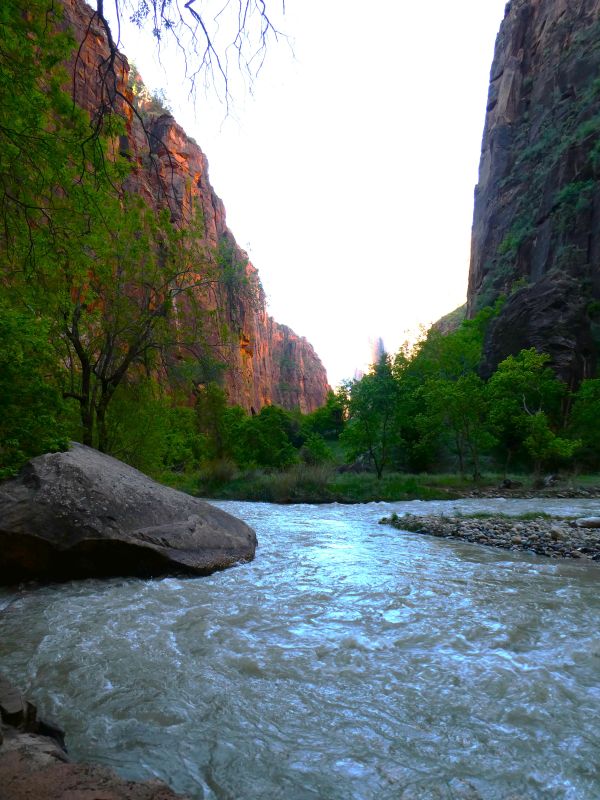
The Narrows is one of the most famous hikes in the park, and one of the reasons we came. But unfortunately, visiting in May means dealing with spring snowmelt. When we arrived, the Virgin River was absolutely roaring! Because the water levels were too high and fast to safely wade through, the Narrows was completely closed for the day/week.
While we were a little disappointed, safety always comes first in the parks. We still took the shuttle to the very last shuttle stop and walked the 1 mile paved path to where the Narrows officially begins. We took some beautiful photos of the rushing river beneath the massive canyon walls, got right back on the next bus, and headed to another trailhead to explore.
A Short, Steep Detour to Weeping Rock
We made our way to the Weeping Rock stop. This trail is notoriously short but incredibly steep! From the parking area, you cross a bridge over the water and head to the left onto a paved, upward-sloping trail. Along the way, there are small trailside exhibits detailing the canyon’s geology, though you do want to watch your step for minor drop-offs on the edge. The paved trail ends at a short set of steps that lead you right under a massive rock alcove, where a steady stream of dripping springs “weeps” from the stone above—it was a spectacular, refreshing detour.
Coral Pink Sand Dunes State Park
After breaking lunch and a beer, we set off for a 2 1/2 hour scenic loop drive of the area. We stumbled upon Coral Pink Sand Dunes State Park, a quiet state park about an hour away — that deserves a post all its own! We continued the loop and ended up in Colorado City, AZ at another Brewery before heading back to Springdale.
Day 2: The West Rim Trail to Scout Lookout
On our second day, we tackled a portion of the legendary West Rim Trail heading up to Scout Lookout, positioned right before the final spine of Angels Landing.
The hike itself was nothing short of amazing – I mean look at these next two photos of parts of the trails. Starting out from the trailhead, you cross the Virgin River and find yourself completely immersed in a lush mix of trees and massive rock walls.
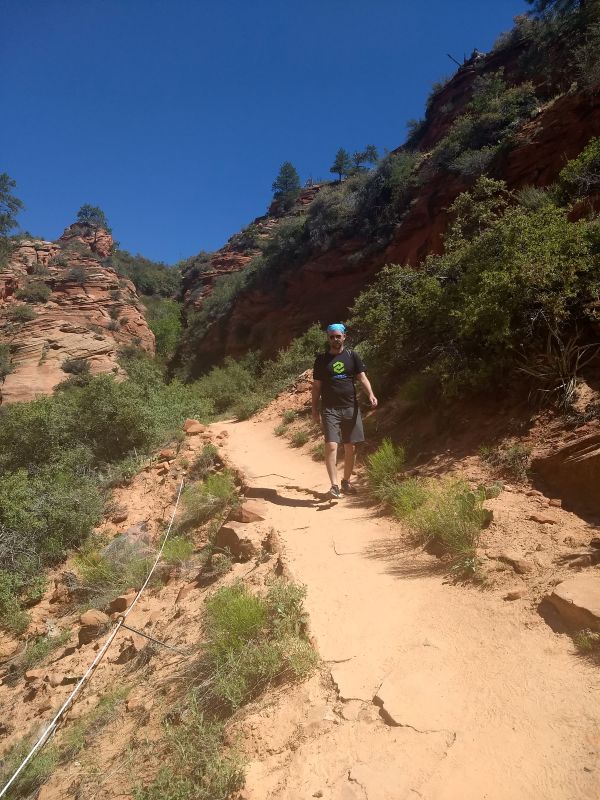
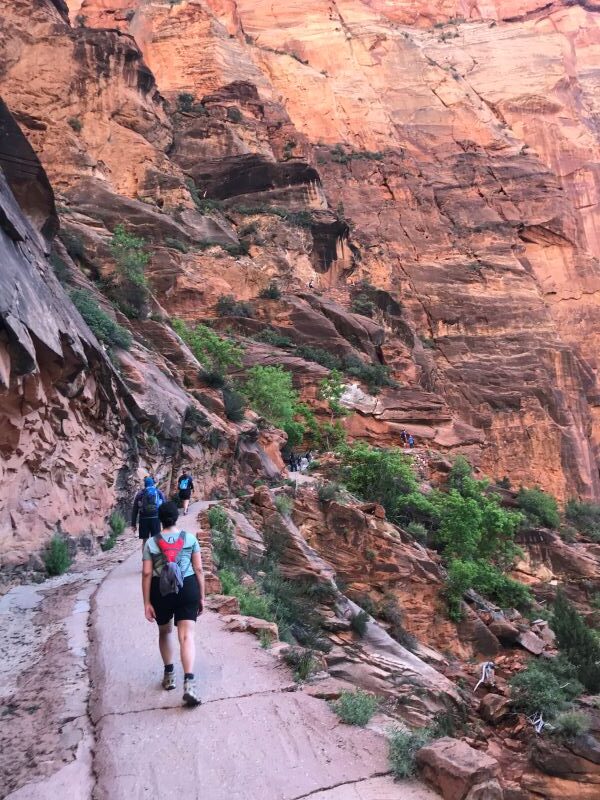
Eventually, the trail opens up into an expansive rock formation area as you steadily ascend the canyon wall. This strenuous hike gains roughly 1,000 feet of elevation, so we found ourselves taking plenty of resting breaks to catch our breath and take in the view.
The trail temporarily flattens out as it enters Refrigerator Canyon, which provides an incredible, cool relief from the canyon heat and the intense incline. The break doesn’t last forever, though! The real climb resumes shortly afterward at Walter’s Wiggles—a mind-boggling, tightly packed series of 21 switchbacks engineered right into the stone wall.
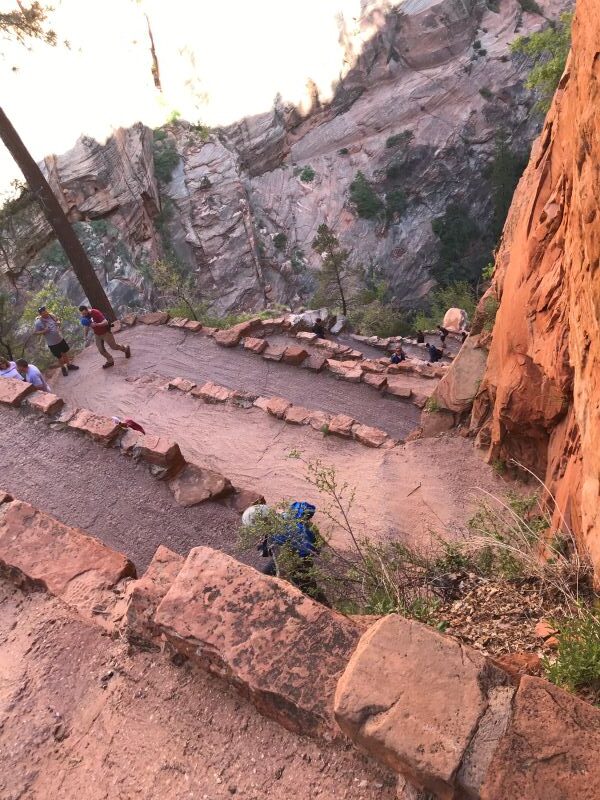
Looking back, the direction we chose was perfect. Pushing up the steady, steep switchbacks of the Wiggles is a phenomenal workout for going up, leaving the long, windy trail for the descent. Trudging back down that way gives you the absolute best panoramic views of the canyon floor, and you’re just so excited to be there taking it all in!
Sitting Out the Ledges at Scout Lookout
Once we cleared Walter’s Wiggles, we emerged onto Scout Lookout, high above the canyon floor. This is the junction for Zion’s most infamous destination—Angels Landing. This is the legendary, single-file path where hikers have to hold onto anchored chains while traversing a razor-thin sandstone ledge with sheer, thousand-foot drop-offs on both sides.
If the park had been empty, we might have considered checking it out. However, because it’s so popular, there were massive lines of people just waiting for their turn to step onto the narrow chains. We don’t really have that kind of desire or patience for crowds on a cliffside, so we happily bypassed the line, sat down to enjoy the stunning, dizzying views from the safety of Scout Lookout, and enjoyed a peaceful trek back down instead. The hike was just a little over 3 hours for us.
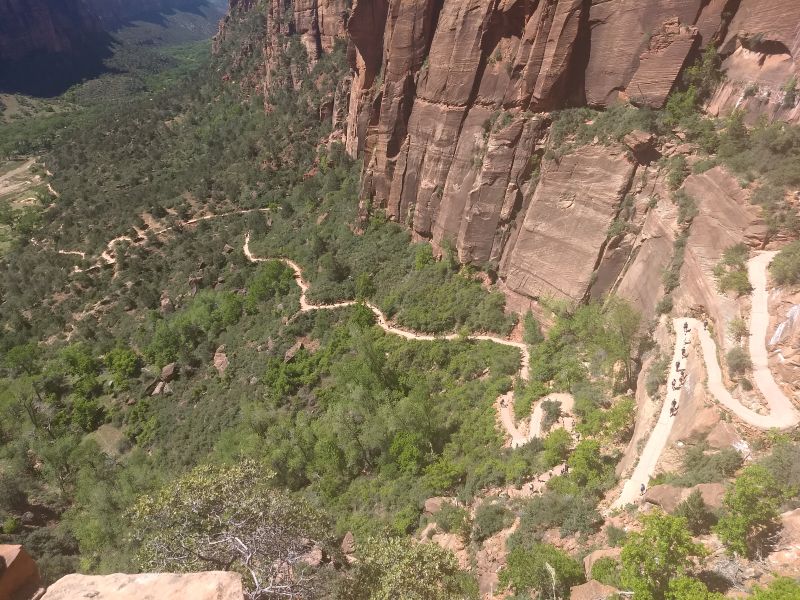
This photo, below, is looking straight down from high up the canyon wall. The long, winding dirt path you see snaking through the trees at the bottom left is the very beginning of the West Rim Trail right after we crossed the Virgin River. Looking at the bottom right corner is a tightly wound, paved set of switchbacks hugging the sheer rock wall—that is the lower canyon ascent before you enter the shade of Refrigerator Canyon.
Relaxing in Springdale & Local Brews
One of the best parts of visiting Zion is its proximity to the charming town of Springdale, located right outside the park entrance. We stayed at a lovely little lodge just outside the gates.
After long miles on the trail, my absolute favorite routine was sitting outside our room in a pair of Adirondack chairs. Oh my goodness, it was just so quiet and peaceful out there! It was the perfect, relaxing way to unwind after two heavy days of hiking.
Of course, no trip of ours is complete without checking out the local craft beer scene. While in the area, we made sure to stop by two fantastic spots:
- Zion Brewery: Located right at the edge of the park entrance, making it the perfect post-hike watering hole.
- Edge of the World Brewery: A great spot to grab a pint, relax, and chat about the day’s trail adventures.
Other Great Things in Area
Arriving Early for a Historic Ghost Town Detour
We arrived in the area on May 11th, the day before we were scheduled to go into the main park gates. To stretch our legs and get a taste of the scenery, we drove just south of the park boundaries to explore Grafton Ghost Town, tucked along the south bank of the Virgin River.
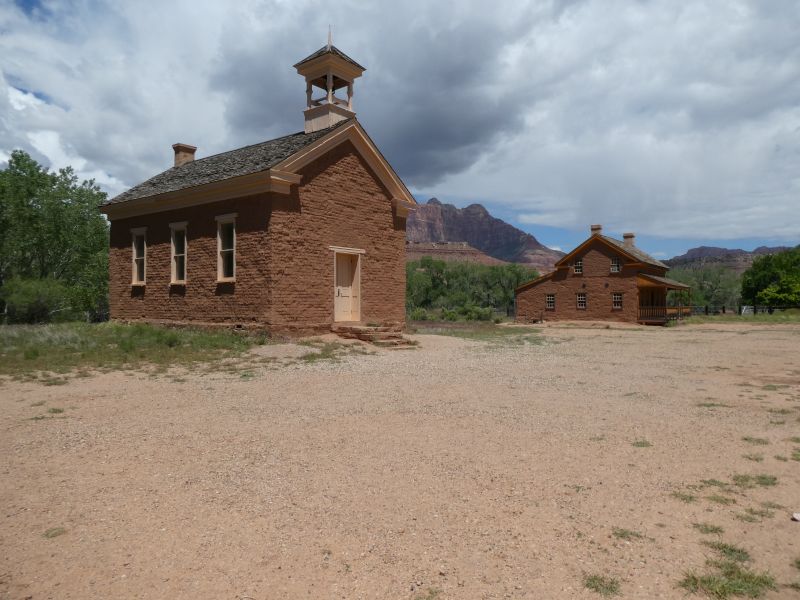
The iconic, rustic building pictured here is the historic Grafton Schoolhouse, which was built in 1886 out of local adobe clay and also served as the town’s church and community hall. If it looks familiar to you, that’s because Grafton is famously dubbed the “most photographed ghost town in the West” and served as a prominent backdrop for the classic 1969 film Butch Cassidy and the Sundance Kid.
Mormon pioneers settled the area in 1859 to farm cotton, but relentless flooding from the Virgin River and severe isolation eventually drove the residents away, leaving it completely abandoned by the 1940s. Today, it’s beautifully preserved and makes for the perfect, relaxing “off the beaten path” excursion to kick off a canyon trip without dealing with a single crowd.
Coral Pink Sand Dunes State Park
Our two days inside Zion were an incredible mix of high-energy climbs and quiet canyon moments. For our third day in the area, we headed out to explore Coral Pink Sand Dunes State Park—but that deserves a post all its own that you can read here!
Check out other National Parks & Monuments I’ve visited.
And, if we planned better, we could have went to Bryce Canyon and Kanab during this trip–but instead we did that 2 years later. You can read about that here.